
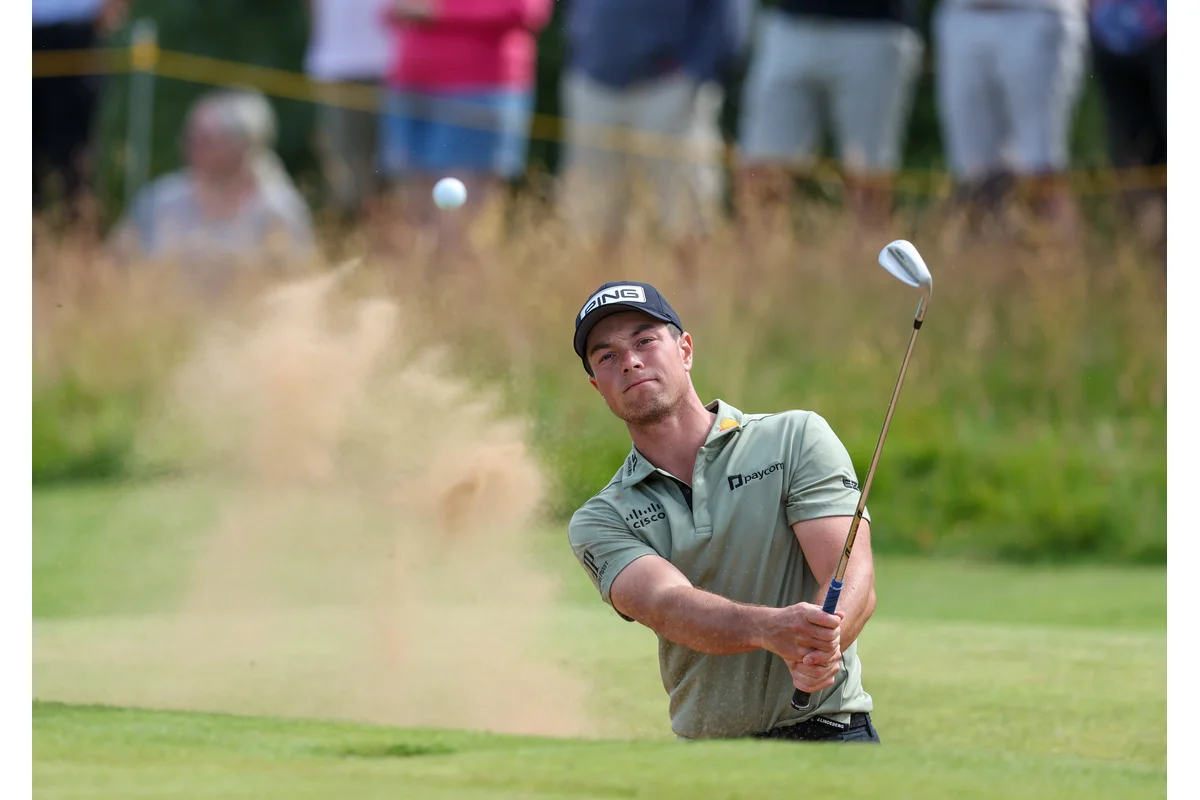
Viktor Hovland expressed his concerns about the PGA Tour’s changing stance on players returning from the LIV Golf league ahead of the 2026 WM Phoenix Open. The Norwegian golfer highlighted that allowing former LIV Golf players back onto the PGA Tour with limited penalties creates uncertainty and raises questions about the organization’s consistency. This debate has gained traction as Brooks Koepka, who left for LIV Golf in 2022, recently returned to the PGA Tour without facing the original one-year suspension stipulated by the Tour’s rules.
Hovland acknowledged that welcoming these players boosts the quality of tournament fields but pointed out the difficult position it places the PGA Tour in terms of credibility. He said,
“I think it just makes the products, the fields better. However, it does kind of put the TOUR in a tricky position now,”
followed by,
“You’ve said one thing for a long time and now we’re changing things. What precedent are you setting then to the future players now if I can go to a rival tour, get paid, and now seemingly come back again without the biggest consequences.”
Background on LIV Golf and PGA Tour Rivalry
The rift between the PGA Tour and LIV Golf has been contentious since the emergence of LIV, backed by Saudi Arabia’s Public Investment Fund, offering lucrative contracts that tempted many players to switch tours. Jay Monahan, then-Commissioner of the PGA Tour, implemented strict penalties for those who defected, including bans and loss of tour privileges. This created a divide between players prioritizing legacy and those drawn to financial rewards.
Despite the turmoil, Viktor Hovland chose to remain loyal to the PGA Tour. He enjoyed significant success in 2023, securing the FedEx Cup and its $18 million bonus, alongside victories at the Memorial Tournament and the BMW Championship’s second playoff event. Reports surfaced about LIV’s interest in Hovland, but he dismissed the overture, citing LIV Golf’s cut-free tournament format as unappealing and emphasizing his preference for competing against a large, competitive field to sharpen his skills.
Brooks Koepka’s Return and Its Implications
Brooks Koepka’s recent return to the PGA Tour has stirred debate among players and analysts. After leaving the Tour in 2022 for LIV Golf, Koepka ended his association with LIV in December 2025 and sought reinstatement. Contrary to initial expectations of a mandatory one-year waiting period, he rejoined the PGA Tour within a month under the newly introduced Returning Member Program.
This program, launched in January 2026, offers select players a route back to the PGA Tour if they meet specific eligibility criteria. These criteria include having won a Major or The Players Championship within the last four years and having no PGA Tour affiliation in the prior two years. Koepka qualified under these terms, enabling a swift return.
Hideki Matsuyama publicly expressed surprise at Koepka’s reinstatement, saying,
“I thought, ‘Oh, he’s coming back…’ I guess they took that measure because he had achieved results at LIV. I think it’s pretty amazing that Brooks had the courage to make that decision.”
Matsuyama also criticized the lack of clear communication from the PGA Tour regarding the rules and this new program:
“But I’m puzzled that the PGA didn’t explain anything to the players. At the very least, I didn’t know that such a rule was in place.”
He questioned the consistency of the policies, asking,
“While there has been a financial hit, what about the non-monetary aspects? What happened to the rule that players who participated in LIV were not allowed to compete [on the PGA Tour] for a year?”
Mixed Reactions From the Golf Community
The return of high-profile players like Koepka enhances the competitive landscape and increases the PGA Tour’s visibility, reinvigorating fan interest and media attention. However, not all professionals welcome the change openly. Analyst Brandel Chamblee had warned earlier that reinstating defectors without stringent consequences would undermine the Tour’s credibility and set a worrying precedent for future players.
Koepka’s initial form since his return has been modest, finishing tied for 56th at the Farmers Insurance Open. Nonetheless, making the cut in his first event after a long hiatus suggests a possible resurgence, and he is scheduled to compete at the WM Phoenix Open shortly.
The Returning Member Program’s Selectivity
The PGA Tour’s Returning Member Program remains a selective channel designed to reintegrate only the highest-achieving golfers who previously left for unauthorized tours. Other notable LIV Golf players, including Patrick Reed, Kevin Na, Pat Perez, and Hudson Swafford, are still required to fulfill waiting periods before they can come back under this framework.
By limiting eligibility to those who have claimed significant victories recently, the Tour aims to balance maintaining competitive quality with managing the reputational risks posed by LIV defections. Still, this approach leaves many pros and observers debating fairness and consistency.
Significance of These Developments for Golf’s Future
Viktor Hovland’s reservations and Hideki Matsuyama’s pointed remarks underscore a broader unease within the PGA Tour ranks about the Tour’s handling of LIV Golf returns. This episode signals a potential shift in professional golf’s power dynamics and governance. With former LIV Golf players reintegrating quickly, the Tour may attract stronger fields but risks alienating loyal members questioning its integrity.
The evolving policies and player movements will undoubtedly influence tournament competitiveness, sponsorship deals, and viewership trends in the coming seasons. How the PGA Tour navigates these challenges could define its standing as the preeminent golf circuit moving forward, as well as the overall coherence and future stability of professional golf worldwide.
