

At the AT&T Pebble Beach Pro-Am last week, Sam Burns tied for sixth place, a respectable outcome that featured his well-known putting skills. Nevertheless, his decision on the par-five 18th hole attracted considerable attention and raised questions about his competitive mindset at this critical moment in the tournament. With the clubhouse leader, Min Woo Lee, two strokes ahead, Burns opted for a conservative iron shot off the tee rather than the aggressive driver that might have given him a chance at an eagle and potentially the win.
Instead of attempting a bold drive, Burns found himself in a bunker to the right of the fairway and ultimately settled for par, a cautious finish that surprised many, given his reputation as one of the strongest putters on the PGA Tour and a five-time winner. This choice triggered discussions about whether Burns was prioritizing a paycheck over an outright victory in a situation where taking a risk seemed justified.
Understanding Burns’ Performance and Untapped Potential in High-Stakes Moments
Despite being only 29 years old and regarded as one of the best putters, Burns’ career achievements reveal an inconsistency in major tournaments. He has only two top-10 finishes in 22 major appearances and has missed seven cuts, highlighting a gap between his talent and results on the biggest stages. His caution at Pebble Beach appeared to echo this trend of hesitancy during crucial moments, casting doubt on his ability to seize opportunities under pressure.
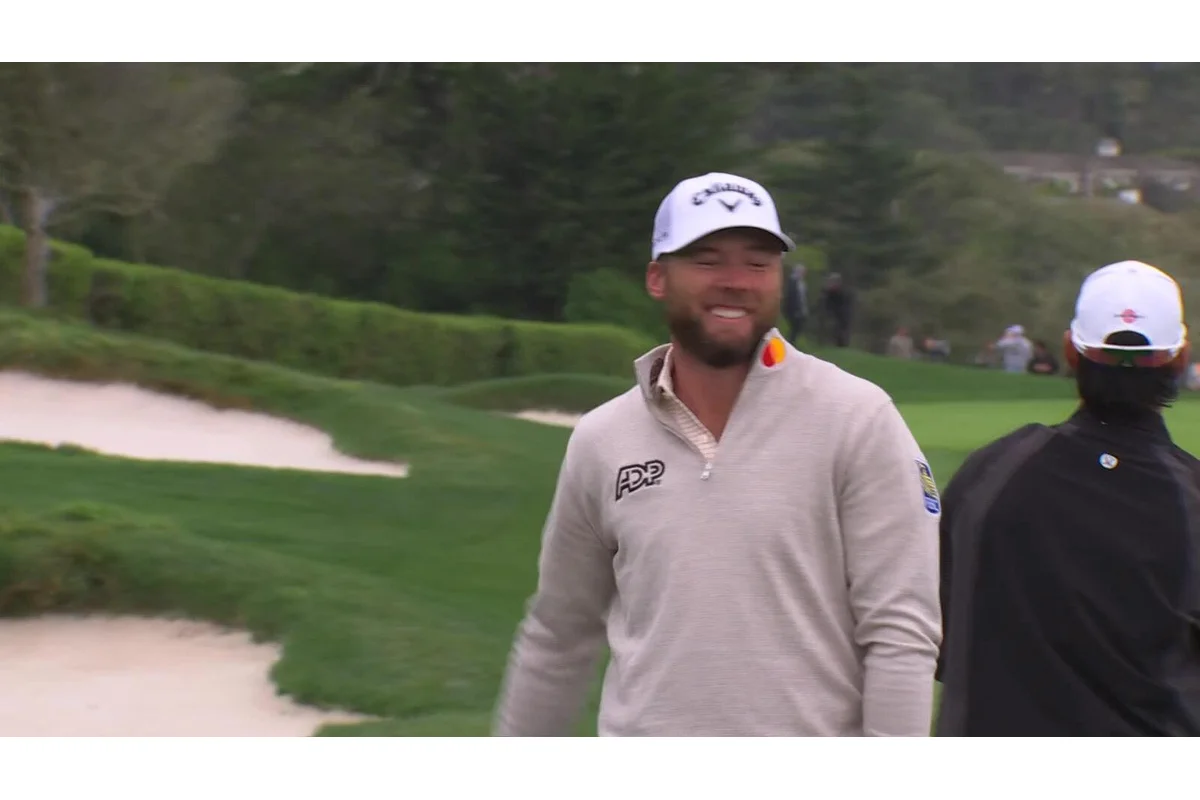
While Burns consistently ranks near the top of leaderboards due to his putting prowess, critics argue that his cautious approach at pivotal holes has limited his number of victories compared to his potential. His performance at Pebble Beach underscored this narrative, as he effectively ended his chances of challenging the lead by playing safe on the final hole.
Expert Insights on Burns’ Final-Hole Choice at Pebble Beach
Johnson Wagner, speaking to Golf on CBS, expressed his surprise and criticism over Burns’ shot selection on the 18th tee box. Wagner described being in the group behind Burns and Fleetwood when he witnessed the decision firsthand.
“I had dropped back after following Scheffler. I had dropped back to the Burns and Fleetwood group,” Wagner explained.
Wagner recounted how after Fleetwood’s strong play on the 17th hole, Burns had his driver ready, intending to hit a powerful tee shot. However, an unexpected shift in the wind and Burns’ visible discomfort led to a consultation with his caddie, Travis Perkins, culminating in the surprising decision to hit an iron instead of the driver.
“Fleetwood makes a great birdie on 17 and tees off first. He pulls three-wood and absolutely sends it just left of the tree, giving himself a chance. If you’re a left to right player with driver in those wins, it’s a very intimidating tee shot. He (Burns) had Driver teed up, he was going to hit it, the wind picked up from behind him, and you could see that he was uncomfortable. He goes over and talks to his caddie, Travis Perkins, and I’m just stunned. Like, Sam Burns is a top player in the world. I’m not gonna say it was a financial decision, but it sure felt that way. So you have a chance to make eagle and have a chance to win this golf tournament, and as soon as he pulled iron, that chance became zero.” – Johnson Wagner, Golf Analyst
Wagner’s analysis points to a mental barrier for Burns, suggesting that a shift in his attitude is necessary if he wants to contend more consistently in majors and add to his list of PGA Tour victories.
Implications for Burns’ Future and Major Championship Aspirations
Burns’ decision at Pebble Beach highlights the psychological challenges players face in clutch moments and emphasizes the need for greater mental fortitude. For a golfer with as much talent as Burns, altering his approach from cautious to assertive in pressure situations could be the key to advancing his career further and securing more wins in significant tournaments.
This moment could serve as a turning point, urging Burns to rethink his risk assessment during critical holes. Success at majors and prominent events often demands calculated aggression, and adapting these traits might allow him to break through his current limitations and fulfill the potential that his putting skill and overall game promise.
