
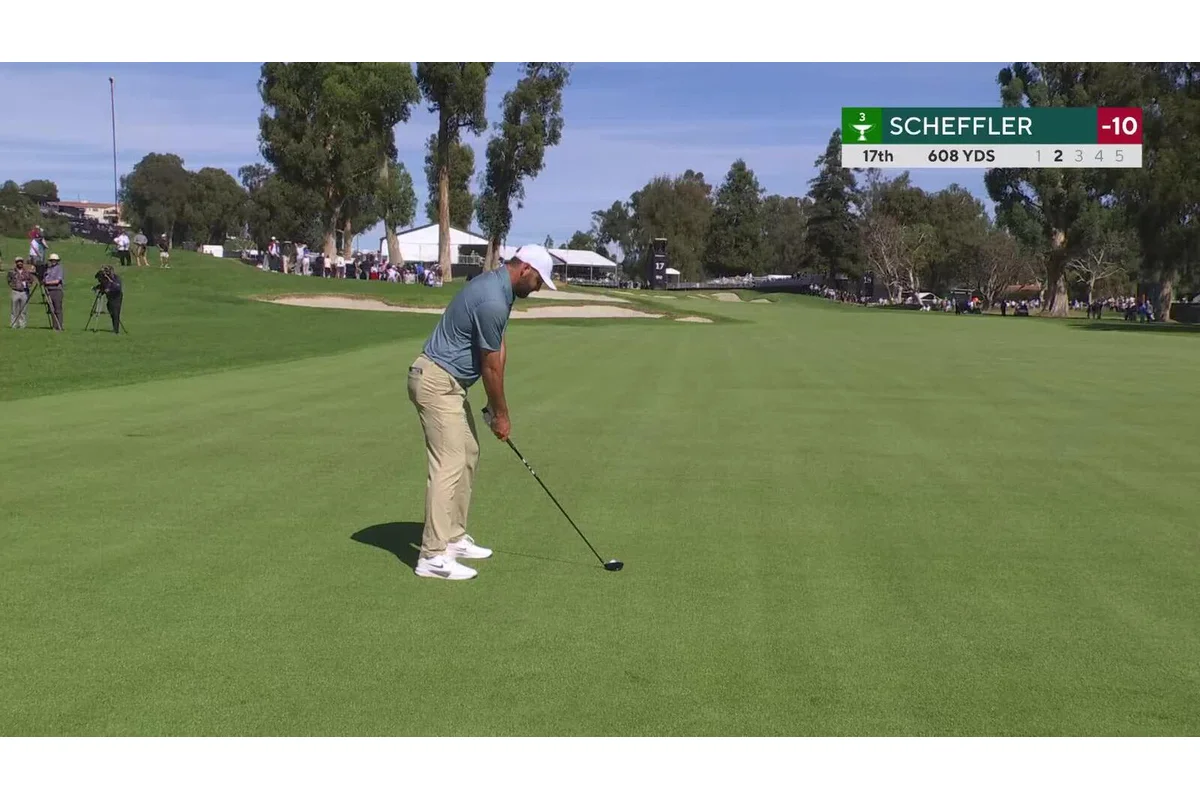
Scottie Scheffler has emerged as one of golf’s most formidable players by focusing on simple yet essential principles. As the current World No.1, his approach to golf fundamentals offers valuable lessons for players at all levels, emphasizing consistency and clarity over complexity.
How Scheffler’s Simple Approach Defies Modern Golf Trends
While many players rely heavily on swing labs, launch data, and perfect aesthetics, Scottie Scheffler has built his success primarily on fundamentals, feel, and a unique personal style. His recent win at the American Express marked his 20th PGA Tour victory, a milestone reached faster than anyone except Tiger Woods and Jack Nicklaus. Only these three golfers have recorded 20 PGA Tour titles and four major championships before turning 30.
Scheffler currently holds the longest active made-cut streak on the PGA Tour with 68 consecutive cuts, chasing after Tiger Woods’ all-time record of 142. Last season, his scoring average stood at 67.99, nearly a full stroke better than the runner-up, approaching Woods’ historical record of 67.79.
I never thought in my lifetime I’d see a player as close to Tiger as this man is,
said veteran tour caddie Jim ‘Bones’ Mackay.
Despite his rising status, Scheffler remains focused on the basics, and his methods, far from flashy, provide lessons that golfers of all abilities can utilize to improve their games.
1. Prioritizing a Consistent and Reliable Grip
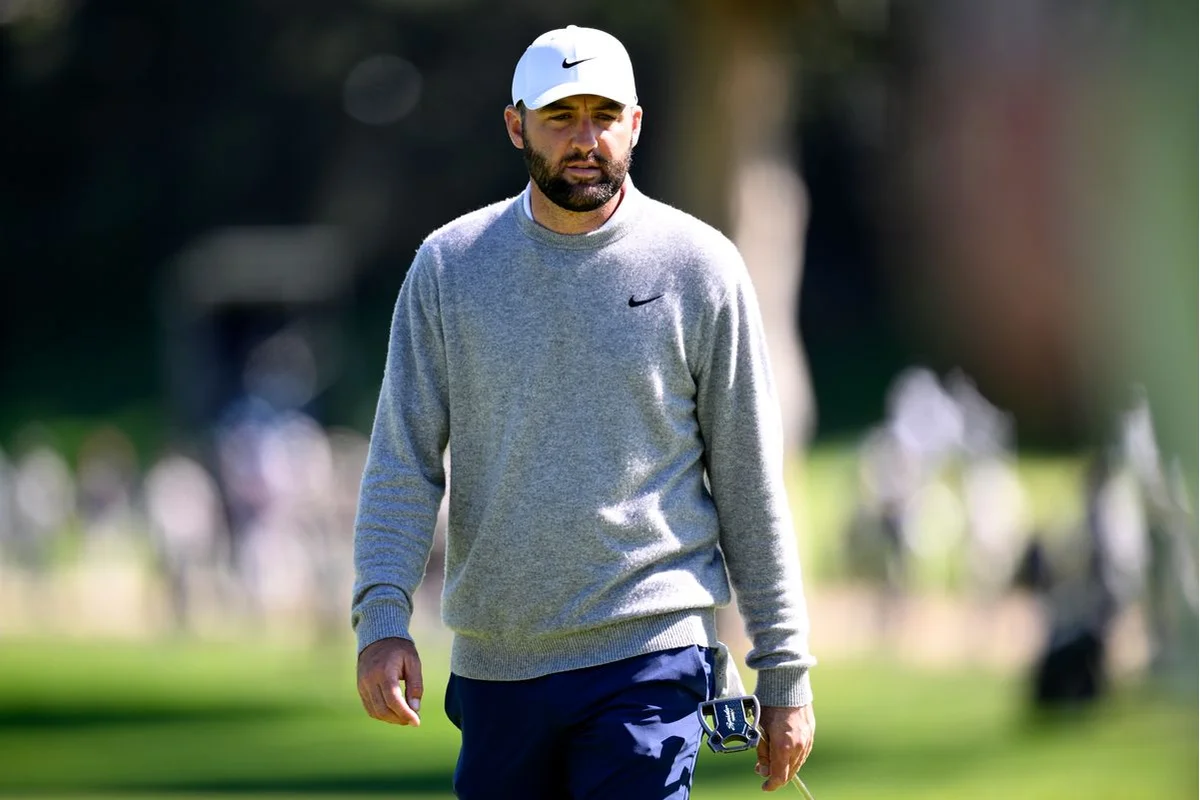
One of the most noticeable differences in Scheffler’s routine is his daily use of a moulded grip trainer on one of his spare clubs—a practice almost unheard of on professional ranges a decade ago. This inexpensive training aid helps ensure consistent hand and finger placement every time he grips the club.
He keeps it so simple. Did we ever think we would see a moulded grip on Tour? We’d have been laughed off the range. But it’s so smart. He gets his alignment right and his grip right every morning, so he’s starting in the same place every single day. The magic is that it’s the same every day. Because your grip drifts.
Former US Open champion Geoff Ogilvy highlighted this focus on grip consistency, explaining how such a simple tool helps maintain precision over time. The grip, while easily overlooked, forms the foundation for all other aspects of the swing.
What impresses me most is his clubface control,
added three-time major winner Jordan Spieth.
He’s maybe the best there’s ever been in terms of clubface control.
The clubface control Scheffler demonstrates is directly tied to his grip work, proving that despite advances in technology and biomechanical analysis, mastering the basics remains essential.
We thought it was too simple, but it’s genius. He’s cracked the code.
Before attempting complicated fixes, golfers should first evaluate their grip’s strength and consistency. Many coaching circles have moved away from traditional grip instruction, but as Jack Nicklaus famously emphasized, setup and fundamentals are critical for success. Scheffler’s example reinforces that a solid foundation offers long-term reliability.
2. Focusing on Results Rather Than Swing Aesthetics
Scheffler’s swing is far from conventional—his footwork and lower body movement have sparked discussion and criticism for being “chaotic.” Yet, he dismisses concerns over appearances in favor of efficiency and accuracy.
When I first came out on the PGA Tour, I think my footwork was kind of how I was known to people,
Scheffler admitted.
I think a lot of people may have viewed it as not that good of a trait in my golf swing. Some people said that it would be hard for me to be consistent, hard for me to play under pressure with that much action going on in my swing.
Despite the skepticism, Scheffler has remained loyal to his longtime coach and resisted pressure to change his swing. His style prioritizes the ultimate goal—where the ball goes—over how the swing looks.
He’s just hitting the golf ball at the target, and he seems to do that better than anyone I’ve ever seen,
Geoff Ogilvy remarked.
He’s more target-conscious than anyone since maybe peak Tiger. Scottie doesn’t care how he’s swinging it – he just cares where the ball goes. We all are a little bit vain about how it looks, but he doesn’t care at all – he just wants the ball to go where he wants it to go so he can beat you.
In an era saturated with slow-motion cameras and endless swing critiques, Scheffler’s disregard for aesthetics underscores a key truth: effectiveness matters more than appearance. This mindset is reminiscent of Jim Furyk, who developed a Hall of Fame career with an unconventional swing described as
a one-armed golfer using an axe to kill a snake in a telephone booth
.
Golfers aiming for improvement should understand that not all peculiarities require correction. Consistency, repeatability under pressure, and controllable ball flight should outweigh cosmetic concerns.
3. Trusting Feel Over Technology During Competitions
On most PGA Tour ranges, players rely heavily on launch monitors like TrackMan to analyze spin rates and launch angles. Scheffler stands out as the rare pro who does not bring such a device during tournament weeks.
He is the only one that doesn’t have the drama box, aka the TrackMan, Thursday through Sunday before his round,
noted former Tour player Colt Knost.
Instead of diving into data, Scheffler focuses on visualizing and feeling his ball flight during warmups.
He literally just goes out there to warm up and hit shots,
said Knost.
Everybody else is paying attention to what’s going on with all the numbers and everything. And he’s like, dude, I’m here to play golf.
Though Scheffler uses technology when he chooses, his competitive routine strips away over-reliance on gadgets. Geoff Ogilvy reminded that Jack Nicklaus recommended the range to find rhythm, not to perfect the swing. Scheffler follows this philosophy closely.
Many legendary golfers built their records without technological crutches, and Scheffler’s example serves as a powerful reminder that accessible information is only beneficial when it doesn’t create dependency.
I love that Scottie has pared it down to the simplest point, and usually everybody ends up copying the best players,
said Ogilvy.
I can’t imagine Tiger would have had the TrackMan out there much.
Golfers can benefit by trusting their own senses during play— observing ball flight and strike feedback—rather than relying too heavily on data devices. This ability to self-correct under pressure distinguishes champions from weekend players.
4. Selecting Golf Balls with Unique Markings for Clear Identification
Scheffler’s preference for golf balls numbered five through eight goes against the norm, as most players avoid high numbers, usually choosing one, two, or three. His particular choice originated from two college incidents where he accidentally played the wrong ball in competition.
Does anyone else think it’s weird that Scottie uses high numbers?
asked Ryder Cup teammate Justin Thomas during the 2024 RBC Heritage broadcast.
I don’t know if I’ve ever seen an elite player use high [numbered] golf balls.
Scheffler’s decision to use less common numbers is a simple way to prevent confusion and mistakes. It reflects his broader approach of eliminating small avoidable errors wherever possible.
While this habit alone didn’t propel him to world No.1, it illustrates a mindset focused on clarity and control, supporting overall consistency.
Golfers should consider the equipment choices that build their confidence, whether in ball type, spin characteristics, or even markings. Sometimes, subtle adjustments like using distinctive ball numbers can reduce doubts and enhance performance.
Taking a Page from Scheffler’s Playbook
Scottie Scheffler’s dominance in modern golf stems from a solid foundation of fundamentals, self-confidence, and a willingness to do things differently. He protects his basics, values measurable outcomes over appearance, trusts his instincts more than external data during play, and methodically removes minor variables that could lead to mistakes.
Scottie is refreshing in this day and age,
Geoff Ogilvy said.
He probably sits back and laughs because everyone’s making it harder than it needs to be.
Golfers of all skill levels can draw from Scheffler’s example: mastering the essentials, focusing on consistency, trusting personal judgment, and eliminating unnecessary complexity can pave the way toward better results, whether or not one possesses an elite swing speed or extraordinary talent.
