
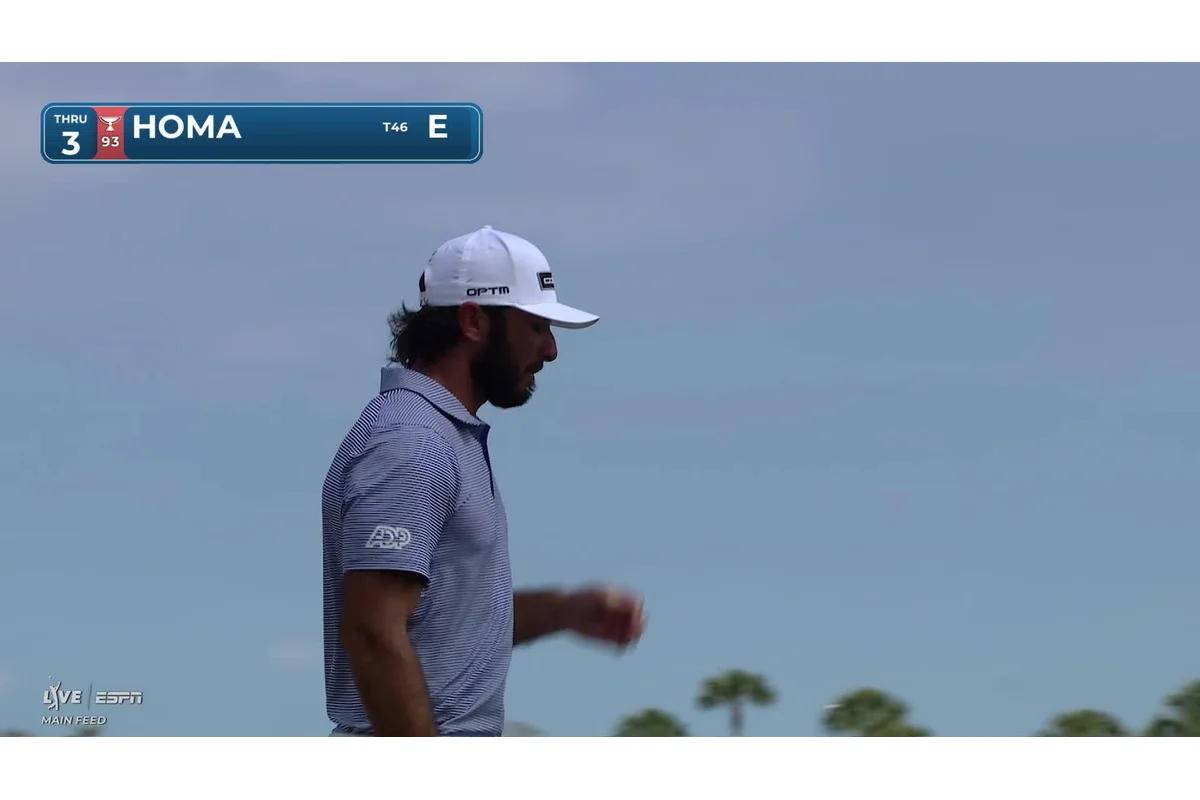
Golf fans witnessed a striking example of slow play at the Cognizant Classic when Max Homa took 155 seconds to execute his second shot on the par-5 10th hole, triggering wide condemnation. This incident, which took place on a clear fairway with 541 yards ahead and no visual obstructions, highlighted ongoing frustrations around the PGA Tour‘s pace-of-play enforcement, reigniting debates over Max Homa slow play controversy during the event in early 2026.
Although the PGA Tour allows 40 seconds per shot or 50 seconds for first shots in certain scenarios, Homa’s two minutes and 35 seconds far exceeded these limits and even the 120-second threshold that constitutes an Excessive Shot Time infraction. His lengthy delay was caught on video the same day it happened, spreading quickly on social media where fans expressed familiar frustration rather than surprise.
The slow pace did not go unnoticed by fellow players either. Homa’s playing partners Ryan Gerard and Michael Brennan were forced to endure the extended wait as their group remained motionless during the prolonged routine. Despite the circumstances, no official slow play penalty was issued, continuing the trend of rare enforcement on the Tour.
Details Behind PGA Tour’s Lenient Slow Play Enforcement
The PGA Tour’s slow play rules require a player’s group to be officially ruled out of position before timings and warnings can be given. The first timing violation results only in a warning without any stroke penalty, and only a second offense in the same tournament leads to further disciplinary action. Because of this layered enforcement process, warnings and penalties for slow play are infrequent.
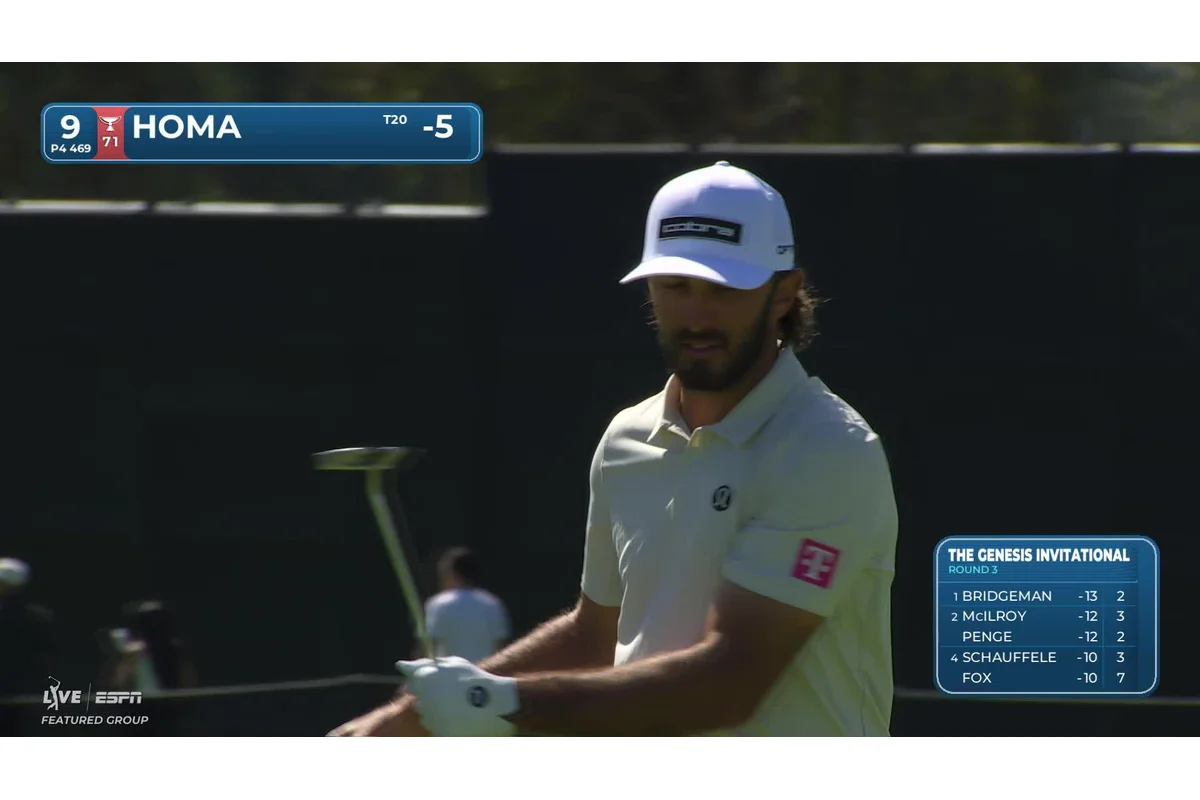
In recent years, penalties for slow play on the Tour have become increasingly uncommon, fueling criticism from both fans and players. Ryder McIlroy has publicly declared slow play as an epidemic since 2019, advocating for solutions such as smaller field sizes and stricter tee times. Even McIlroy’s own group faced timing and warnings in the 2025 Irish Open without penalties being imposed, illustrating how pervasive the issue has become.
Repeated Issues Despite Prior Commitments by Homa
This is not the first time Max Homa has drawn ire for slow play. At the 2023 WGC Match Play event, a putting routine stretching nearly 50 seconds went viral and received millions of views, prompting Homa to promise efforts to speed up his game. He admitted plans to alter his AimPoint straddling putting style, expressing discomfort with its appearance on camera.
His pledge to address slow play, however, did not yield sustained improvements. During the 2025 PGA Tour season, Homa failed to notch any victories and missed the cut nine times in 24 starts. By early 2026, his world ranking had fallen to No. 150, casting doubts on his eligibility for a high-profile $20 million Signature Event appearance like the Cognizant Classic. This slow play episode intensified existing frustrations among fans questioning the Tour’s accountability.
Fan Reactions and Social Media Condemnation
The moment stirred significant backlash online, with some commenters ridiculing Homa’s pace by suggesting he should wear a “Megaslow” cap, while others demanded his removal from the PGA Tour altogether. A noted social media user stated,
“Unrelated. How does the tour ever hand out a slow play penalty if they don’t penalize Homa ⬇️ … 2min-35secs to hit his second on 10.”
— Maybe Yes Sir, Social Media User
Despite these calls, the PGA Tour had not updated slow play enforcement in their 2026 reforms directed at fairness and consistency, omitting concrete measures to curb excessive shot delays. The persistence of these lengthy routines without formal penalties raises questions about what it might take to trigger official disciplinary action.
Significance and Ongoing Debate Over Golf’s Pace
Max Homa’s 155-second shot delay illustrates the persistent pace-of-play challenges facing professional golf. Slow play disruptions not only frustrate fans who expect more efficient competition but also impact fellow players who must endure these delays as part of their rounds. The PGA Tour’s current system, which often results in warnings without penalties, has struggled to deter slow play even in high-visibility moments.
As Homa’s rankings have declined and fans grow more vocal, the incident underscores the need for clearer, stricter enforcement or rule modifications. Following years of concern voiced by players like Rory McIlroy and the sustained attention from fans, the Tour may soon face increased pressure to introduce meaningful consequences that ensure a faster pace. Until then, similar controversies are likely to continue prompting frustration among stakeholders across the golf community.
Unrelated. How does the tour ever hand out a slow play penalty if they don’t penalize Homa ⬇️ … 2min-35secs to hit his second on 10. pic.twitter.com/kMMElrQ7Vb
— Maybe Yes Sir (@Maybe_YesSir) February 26, 2026
