
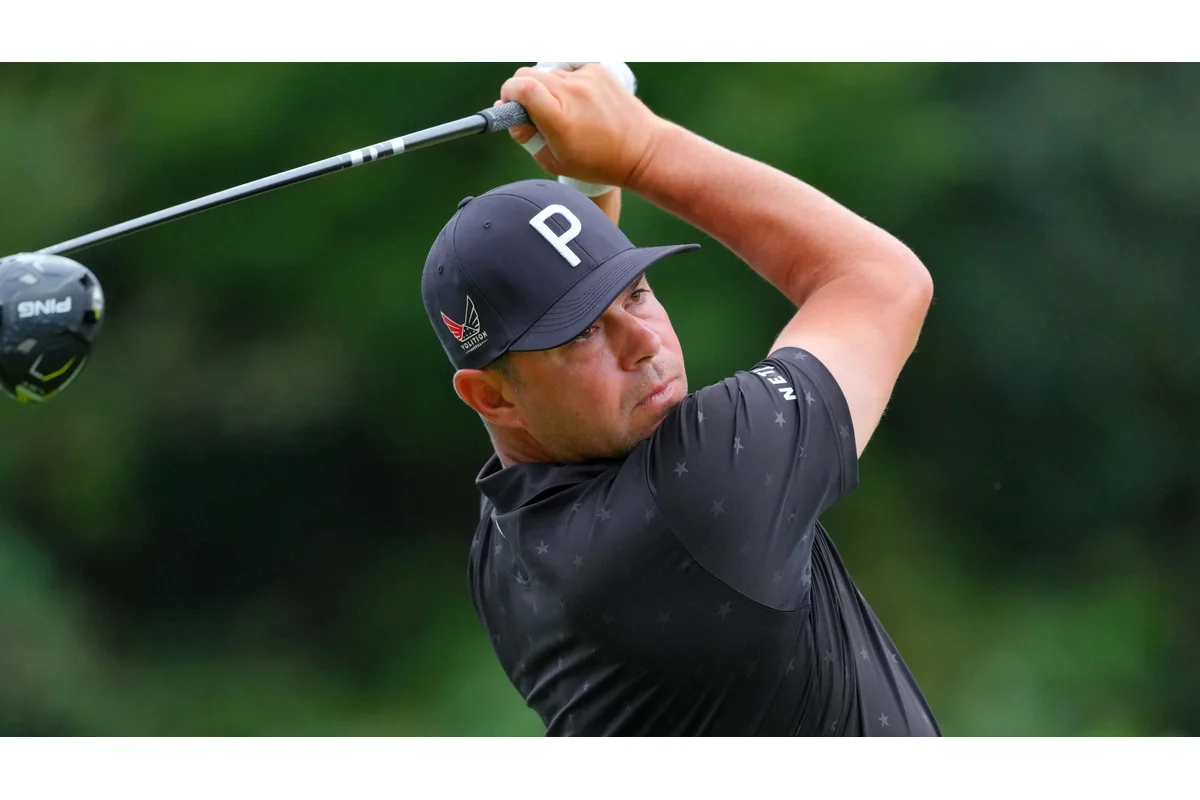
Former US Open champion Gary Woodland has publicly spoken about his ongoing fight with post-traumatic stress disorder after undergoing brain surgery in 2023. The 41-year-old golfer revealed that a year after his operation to remove a brain lesion, he continues to face the psychological challenges stemming from his experience, highlighting the urgency to address his mental health openly.
Details of Woodland’s Diagnosis and Emotional Recovery
Woodland, who claimed his first major victory at Pebble Beach in 2019, disclosed his PTSD diagnosis during an emotional interview with the Golf Channel. Despite returning to professional play in January 2024, he admitted that internally he is still struggling, describing his feeling as “living a lie.” His surgery marked the beginning of a difficult recovery process, both physically and mentally.
I can’t waste energy anymore hiding this, and I’m blessed with a lot of support out here on the Tour,
Woodland said.
Everyone’s just been amazing. Every week I come out and everyone’s so excited and happy that I’m back.
— Gary Woodland, Professional Golfer
I hear that every week – it’s so nice to see you past this, it’s so nice to see you 100 percent – and I appreciate that love and support. But inside, I feel like I’m dying, and I feel like I’m living a lie.
— Gary Woodland, Professional Golfer
Struggles Faced on the Course During Recovery
Woodland recounted a particularly distressing episode at the 2023 Procore Championship in California, where his PTSD symptoms overwhelmed him on the course. He described feeling hypervigilant, reacting strongly when a walking scorer unexpectedly approached him from behind. This triggered a cascade of symptoms including blurred vision and confusion that temporarily halted his ability to compete.
Although his caddie, Brennan Little, urged him to withdraw, Woodland insisted on continuing, determined to push through his difficulties. However, the day remained emotionally fraught, with Woodland admitting to crying privately and struggling to hide his distress throughout the event.
I went into every bathroom to cry the rest of the day. When I got done, I got in my car and got out of there. There are days when it’s tough – crying in the scoring trailer, running to my car just to hide it. I don’t want to live that way anymore.
— Gary Woodland, Professional Golfer
Hope for Others and the Importance of Support
Woodland expressed a desire to use his experience to encourage others dealing with similar mental health challenges to seek help. He emphasized that the battle with PTSD is not one to face alone, reflecting on conversations with veterans who shared similar sentiments about the necessity of support.
I hope somebody that’s struggling sees me out here still fighting and battling and trying to live my dreams,
Woodland said.
I’ve talked to veterans, and one thing I’ve heard from multiple people is you can’t do this on your own, no matter how strong you think you are.
— Gary Woodland, Professional Golfer
I want to live my dreams and be successful out here,
he added.
But I want to help people, too. I realise now I’ve got to help myself first – and hopefully this is the first step in doing that.
— Gary Woodland, Professional Golfer
Impact on Woodland’s Career and the Broader Conversation on Mental Health
Woodland’s openness about his PTSD struggles following brain surgery highlights the often unseen mental health issues athletes can face, even at the highest levels. His willingness to share his journey contributes to breaking down stigma and encourages others in the sports community and beyond to seek support. As he returns to competition on the PGA Tour, Woodland’s story brings awareness to the complexity of recovery after major medical events, both physical and emotional, and signals a growing recognition of psychological well-being in professional sports.
