
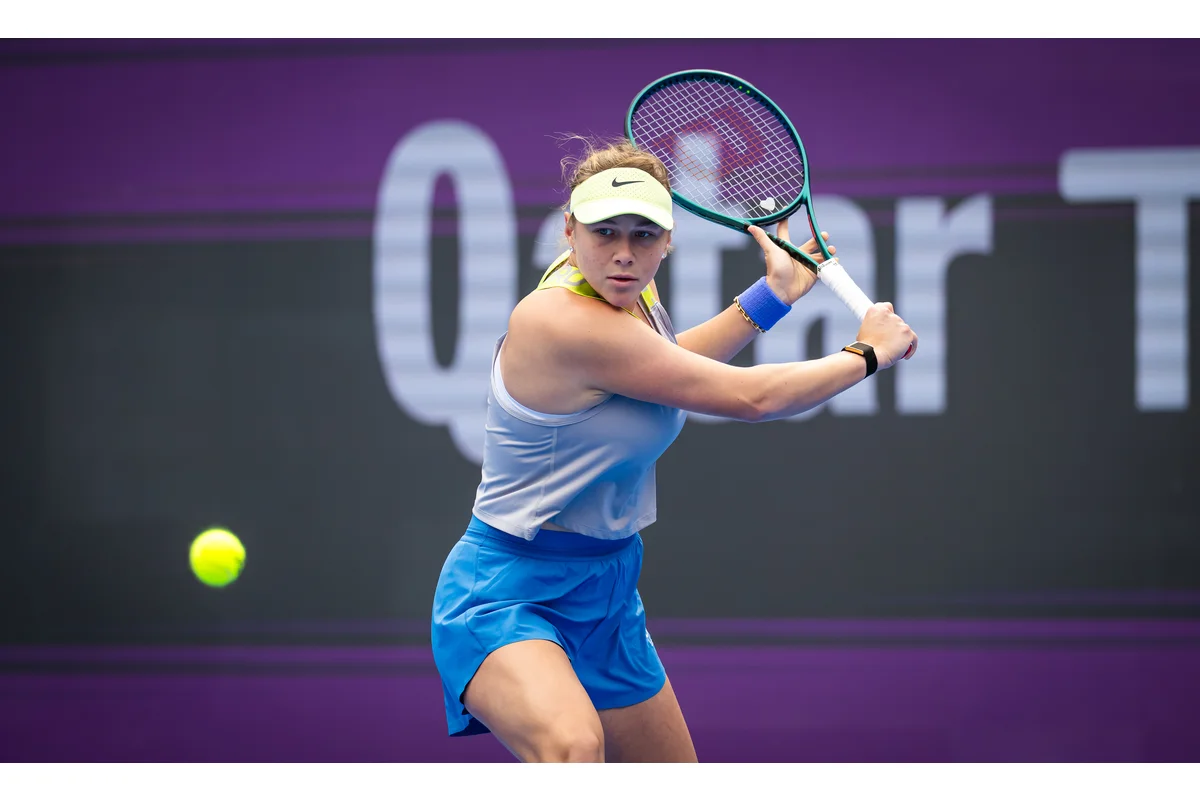
The discussion about whether women’s tennis should adopt best-of-five-set formats at Grand Slam events remains highly contested, with opinions divided after decades of debate. Despite the physical demands involved, many players on the WTA Tour believe they could handle extended matches, but few show enthusiasm for changing the current best-of-three structure. The argument often touches on issues of gender equality and prize money, with some proposing a compromise that women play five sets starting from the quarterfinal stage of Grand Slams. However, this suggestion has not gained wide acceptance among female competitors, including recent comments from Amanda Anisimova and Jasmine Paolini.
Anisimova and Paolini Voice Opposition to Extended Sets for Women
During press conferences held recently, both Amanda Anisimova and Jasmine Paolini were questioned about their stance on women transitioning to five-set matches in major tournaments. Both players expressed skepticism about such a change. Anisimova remarked that since women have always played best-of-three sets, moving to five would be an extreme shift, highlighting the increased physical strain it could impose on female athletes. She stated,
“I mean, we’ve always played best-of-three, so I feel like that would be a crazy change for us. Also very physical on a woman’s body. So, yeah, I prefer to obviously play three sets, for sure.”
?Amanda Anisimova, Tennis Player
Paolini contributed a longer explanation but ultimately reflected similar concerns. She suggested that instead of extending women’s matches, the men’s formats might be reconsidered to reduce sets until the later rounds. Paolini said,
“At the moment, I don’t think it’s a good idea. Honestly, to me, maybe it’s better to reduce the sets of the men maybe until the quarterfinals. I’m not sure… I think also some good matches are of course in the best-of-five, but it’s a tough tournament.”
She further remarked:
“But to the women, I don’t think it’s a good idea, honestly, to me. I mean, we are built different physically. So if the men had a tricky tournament physically, for us, we are different physically, so it’s going to be, I mean, it’s tougher. It’s not a lie. We’re just built different.”
?Jasmine Paolini, Tennis Player
Ongoing Debate Intensifies with Tournament Director’s Support for Change
The idea of women competing in best-of-five matches has resurfaced sharply in recent discussions, particularly after Australian Open director Craig Tiley publicly supported the proposal. He called for the long-standing format to evolve, stating,
“One of the things I’ve been saying now is that I think there should be three out of five sets for women.”
This announcement reinvigorated debates within the tennis community regarding fairness, tradition, and player welfare. Tiley indicated that any move toward adopting five-set matches for women would be considered seriously around 2027, saying,
Certainly, if we’re going to do it and we think it’s the right thing, we’ll definitely go in 2027.
?Craig Tiley, Australian Open Director
Yet, many professional players have not been directly consulted on this significant change, leaving the initiative somewhat disconnected from those who would be most affected. The mixed reactions, leaning heavily toward reluctance, underline the complexity of balancing player health, competitive fairness, and evolving expectations in the sport.
Player Reservations Highlight Challenges of Adopting Five-Set Matches
Given the current resistance, particularly from prominent WTA athletes such as Anisimova and Paolini, it seems unlikely that the women’s game will quickly shift to longer match formats. Their concerns about physical demands and the unique nature of female athletes are central to the debate, emphasizing that a unilateral push for five sets could have unintended consequences. The conversation continues to reflect broader tensions in tennis regarding gender equality and tradition. Unless there is clear, widespread support from players, the idea of extending women’s Grand Slam matches will probably remain on hold for the foreseeable future.
