

Patrick McEnroe, former American tennis player and broadcaster, has raised concerns about the growing dominance of Carlos Alcaraz and Jannik Sinner in men’s tennis, suggesting that their stronghold on Grand Slam titles since 2024 may reduce competitiveness in the sport. McEnroe contrasts this with the women’s tour, where players like Coco Gauff and others contribute to a broader, more competitive field.
Since 2024, Carlos Alcaraz and Jannik Sinner have dominated the major tournaments, splitting every Grand Slam title between them. Alcaraz secured the French Open and Wimbledon Championships in 2024, while Sinner won both the Australian Open and the US Open. This pattern extended into 2025, with Alcaraz winning again in Paris and New York, and Sinner taking victories in Melbourne and London. The Spaniard continued his strong form into 2026 by winning the Australian Open and the Qatar Open.
Throughout the previous season alone, Alcaraz and Sinner collectively won 14 tour-level events—eight for Alcaraz and six for Sinner—further solidifying their dominance. Speaking on the Big T Podcast alongside Brad Gilbert and Alison Riske, McEnroe expressed his apprehensions about this duopoly’s effect on the men’s game.
McEnroe pointed out that the men’s tennis circuit currently lacks players beyond Alcaraz and Sinner who can consistently challenge for major titles. In comparison, the women’s field is led not only by Aryna Sabalenka and Elena Rybakina but also features other strong contenders like Coco Gauff and Jessica Pegula, offering a wider spectrum of players with chances to win Grand Slams.
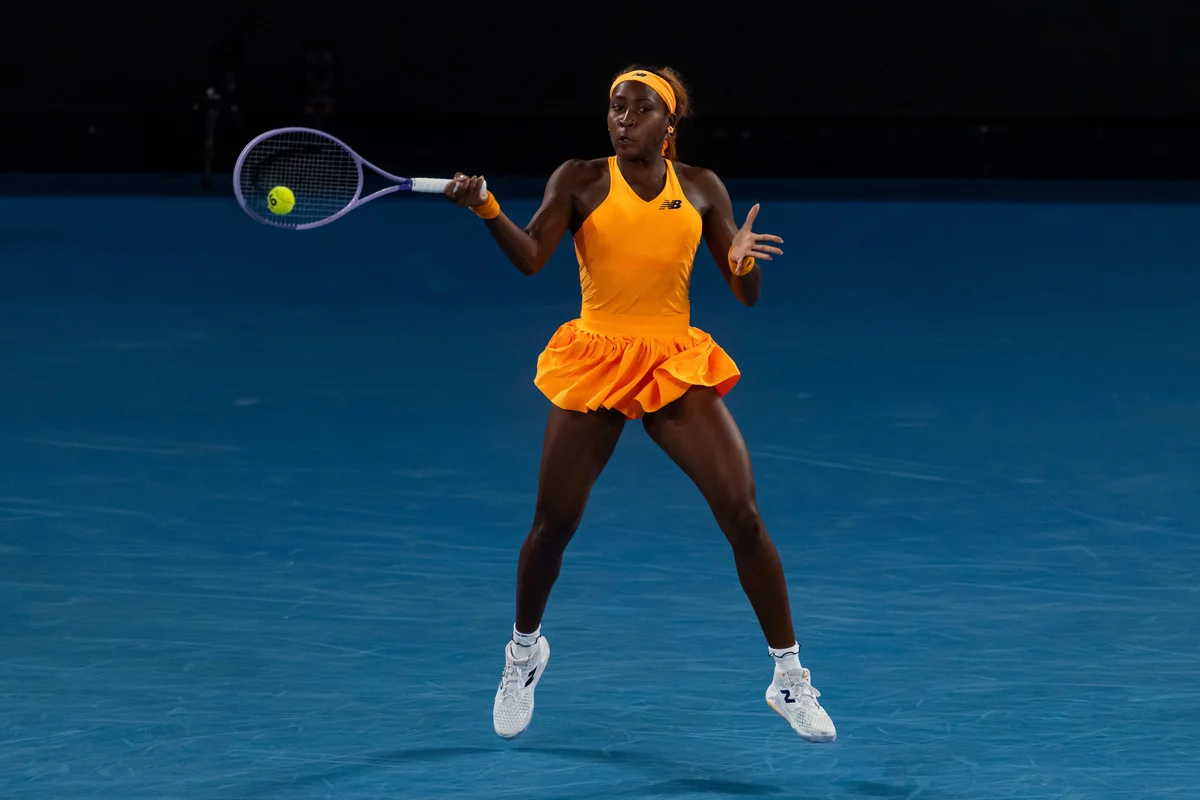
“Having just two guys, I would like to see three, four or five players. Similar to what’s going on in women’s tennis right now. I think you got Sabalenka at the top. You got Rybakina who I was happy to see her win her second major. I think she is that good of a player. Coco Gauff, she is up and down a little bit. Pegula, with a big win over the weekend. There’s a lot more players than you can make the argument on the women’s side that can win majors more so than on the men’s side,”
McEnroe said.
He also warned that the absence of additional challengers in men’s tennis could lead to a stagnation in competition, arguing it may be problematic if only two players dominate the sport for an extended period.
“I think that could be a little problematic moving forward in men’s tennis. We don’t have a third or fourth player that at least can join the Sinner-Alcaraz party,”
he added.
Contrast Between Men’s and Women’s Tennis Grand Slam Winners Highlights Depth Gap
The contrast McEnroe draws between the women’s and men’s games gains credibility when looking back at recent Grand Slam winners. In the previous year alone, four different women claimed major titles: Madison Keys won the Australian Open, Coco Gauff took the French Open, Iga Świątek succeeded at Wimbledon, and Aryna Sabalenka claimed the US Open. This diversity underlines the depth present in the women’s competition.
Adding to this depth, Elena Rybakina won the WTA Finals in 2025 and captured her second Grand Slam title at the 2026 Australian Open, further emphasizing the range of players capable of winning at the highest level. This competitive environment contrasts starkly with men’s tennis, where the same two faces have largely dominated the biggest tournaments over the past three years.
Implications for the Future of Men’s Tennis amid Current Player Dynamics
McEnroe’s observations raise questions about the future trajectory of men’s tennis. While Carlos Alcaraz and Jannik Sinner continue to deliver unparalleled performances and accumulate titles, the scarcity of other contenders capable of challenging their reign could hamper overall interest and development in the sport. Without emerging challengers, men’s tennis risks becoming less unpredictable and less appealing to fans seeking varied competition.
Meanwhile, the presence of players like Coco Gauff on the women’s side exemplifies hope for increased competitiveness and a vibrant WTA tour. Gauff’s potential fluctuations in form are still part of a wider competitive field that boasts multiple contenders, making the women’s game more open and engaging.
As tennis moves forward into 2026 and beyond, the sport’s stakeholders may need to focus on nurturing emerging talents to prevent any potential stagnation in men’s tennis. Encouraging more players to rise and contest major titles can help maintain the sport’s excitement and commercial appeal.

