Hershey Bears Overview
The Hershey Bears are a professional ice hockey team based in Hershey, Pennsylvania. The franchise plays in the American Hockey League (AHL), the primary development league for the National Hockey League (NHL), and competes in the Eastern Conference Atlantic Division. Since joining the AHL in the 1938 to 1939 season, the Bears have become the longest continuously operating member club still playing in its original city, making them one of the most enduring organizations in professional hockey. The Bears have won 13 Calder Cup championships, more than any other AHL team in league history, and have appeared in a league record 22 Calder Cup Finals.
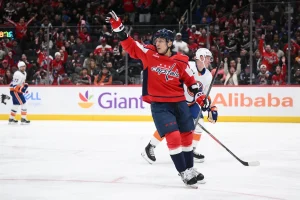
The team has served as the primary development club for the NHL Washington Capitals since the 2005 to 2006 season, a partnership that has produced significant success for both clubs. Hershey Bears home games are played at the Giant Center, located less than half a mile west of Hersheypark Arena, which was the team’s home from 1938 to 2002. The franchise is owned by Hershey Entertainment and Resorts Company, and its team colors of chocolate, tan, cocoa, and white reflect its direct association with The Hershey Company and the community that Milton S. Hershey built. Head Coach Derek King leads the club into the 2025 to 2026 season with Bryan Helmer serving as Vice President of Hockey Operations and de facto general manager.
Founding and Organizational Origins
The history of Hershey hockey begins with a series of amateur matches played in Hershey between college teams starting in early 1931. The first formal hockey game took place on February 18, 1931, at the 1,900 seat Hershey Ice Palace, where Penn A.C. and Villanova University faced each other. Nine months later, Swarthmore Athletic Club moved into the Ice Palace and played its first game on November 19, 1931, against Crescent A.C. of New York City, with 23 year old center Lloyd S. Blinco, a native of Grand Mere, Quebec, in the Crescent lineup. Blinco returned to Hershey the following season and remained continuously associated with Hershey hockey for approximately 50 years as a player, coach, and manager.
The popularity of those amateur games prompted chocolate manufacturer and amusement park operator Milton S. Hershey and his longtime entertainment chief John B. Sollenberger to bring professional hockey to Hershey by sponsoring a permanent team. Mr. Hershey established the Hershey Hockey Club in 1932, now called the Hershey Bears Hockey Club, a subsidiary of Hershey Entertainment and Resorts Company. The Hershey Hockey Club is recognized as the oldest continuously operating professional ice hockey management organization in North America outside of those operating the Original Six clubs of the NHL, all of which were established in or before 1926. The first hockey team that the organization iced was the amateur Hershey B’ars in the newly formed Tri-State Hockey League.
The Hershey Hockey Club has operated four teams across three professional leagues since its founding, with the AHL Bears being the most enduring iteration. After a single 1932 to 1933 season in the Tri-State Hockey League, the circuit reorganized into the seven club Eastern Amateur Hockey League, in which Hershey played first as the Chocolate B’ars in the 1933 to 1934 season, then as the B’ars from 1934 to 1936, and finally as the Hershey Bears from 1936 to 1938. New York sportswriters and the league had criticized the B’ars name as too commercial, and the nickname the Bears from Penn’s Woods had already circulated informally, leading to the permanent name change. The franchise’s official bear head mascot, named Coco, made his debut at Hersheypark Arena on October 14, 1978, and has been a beloved figure for fans ever since.
Growth Into AHL Competition
The Bears made the transition from the Eastern Amateur Hockey League to the International-American Hockey League on June 28, 1938, when the Can-Am and IHL formally merged into a single league. The newly merged IAHL granted an expansion franchise to the Hershey Hockey Club, which at the time still owned and operated the EAHL Hershey Bears and had won the regular season championship of that league three consecutive times. The new Bears took the place of the defunct Buffalo Bisons in the IAHL’s West Division, which allowed the IAHL to play a balanced schedule for the first time in over two years. The IAHL rebranded as the American Hockey League in 1940.
Defenseman Henry J. Hank Lauzon, an original EAHL B’ar, became the first player to sign with the new Bears, and the former EAHL club’s coach, Herb Mitchell, guided the IAHL Bears for their first three seasons. In their very first IAHL campaign, the Bears won the West Division with a 31 to 18 to 5 record, marking the first of 16 regular season division titles in franchise history. Defenseman Herb Kalbfleisch became the first Hershey player to be named a First Team All Star that year, and goalie Alfie Moore earned Second Team honors. The Bears were eliminated in the first round of the Calder Cup playoffs by the Philadelphia Ramblers, three games to two.
The Bears continued to build a foundation for sustained success throughout the 1940s, winning their first Calder Cup in 1947 under second year coach Don Penniston while also claiming a fourth Division title in just nine seasons. Former Boston Bruins coach and Hockey Hall of Fame member Ralph Cooney Weiland guided Hershey through the war years and won regular season titles in 1942 to 1943 and 1943 to 1944. The Bears’ 13 losses in 1942 to 1943 remain the fewest by the club in a single season, and Wally Kilrea’s 99 points that season gave Hershey its first of ten AHL scoring champions.
Hershey Bears Competitive Journey
The Hershey Bears competitive history spans more than nine decades across the American Hockey League, marked by sustained excellence, multiple eras of dominance, and a record 13 Calder Cup championships. From the early days of the EAHL and IAHL through the modern Capitals affiliation era, the Bears have maintained a reputation for strong development, strategic depth, and the ability to compete at the highest level of minor league hockey in North America.
Early Seasons and Development (1938 to 1956)
The Bears immediately established themselves as contenders in the IAHL, winning the West Division in their inaugural 1938 to 1939 season with a 31 to 18 to 5 record. Though they fell in the Calder Cup playoffs in the first round, the team’s early competitive structure was sound. Throughout the 1940s, Hershey developed into a Calder Cup force, capturing its first championship in 1947 with Harvey Bennett, Sr. in goal and a dominant 36 to 16 to 12 record that produced 84 points, 25 more than second place Springfield. In the playoffs, Hershey swept the Western Division champion Cleveland Barons, outscoring them 24 to 3, before winning the Calder Cup Finals in seven games over the Pittsburgh Hornets.
The team sustained that success through the early 1950s, winning division titles in 1951 to 1952 under Johnny Crawford and another in 1953 to 1954, when center George Red Sullivan became the second Bear to win the scoring title and the first to be named the league’s Most Valuable Player. Sullivan’s 119 points in 69 games that season set an AHL regular season scoring record that stood for almost 30 years, and his 89 assists remain an AHL record more than six decades later. In 1948, 21 year old Winnipeg born center Arnie Kullman joined the Bears, and except for 13 games with the Boston Bruins in 1949 to 1950, he played his entire 12 year career in Hershey, finishing with 629 goals and assists and 753 games as a Bear.
Breakthrough in AHL (1956 to 1988)
The arrival of Frank S. Mathers in 1956 marked the beginning of the most dominant era in Hershey Bears history. With the demise of the AHL Pittsburgh Hornets, Bears managers John Sollenberger and Lloyd Blinco acquired seven of the Hornets’ top players, most critically the five time First Team All Star defenseman Mathers, who remained active with Hershey for 35 consecutive seasons as an All Star defenseman, player coach, general manager, and club president. Under Mathers’s leadership, the Bears won more than 1,500 games and six Calder Cup titles, and he was awarded the Lester Patrick Award in 1987 and inducted into the Hockey Hall of Fame in 1992 based on his career in the AHL.
Mathers led Hershey to back to back Calder Cup titles in his second and third seasons as player coach, in 1957 to 1958 and 1958 to 1959. With Bobby Perreault and Gil Mayer in goal, linemates Willie Marshall and Dunc Fisher leading the league in scoring, and Mathers earning All Star honors on defense, the Bears won both the regular season and playoff championships in 1957 to 1958. In 1958 to 1959, Hershey defeated the Cleveland Barons in the first round before upsetting the regular season champion Buffalo Bisons in the Finals, four games to two. Mathers also guided Hershey to Calder Cup titles in 1968 to 1969 and 1973 to 1974, making four championships in 13 seasons under his leadership.
After Mathers stepped down as head coach following the 1972 to 1973 season, former Bears winger Chuck Hamilton took over and led a relatively inexperienced squad including nine rookies to a fifth Calder Cup title in his first season. The Bears defeated the Cincinnati Swords four games to one, the Baltimore Clippers four games to none, and the Providence Reds four games to one, with the championship game played at Hersheypark Arena before a then record crowd of 8,703. In 1979 to 1980, player coach Doug Gibson replaced first year coach Gary Green early in the season after Green was unexpectedly promoted to the Washington Capitals, and Hershey captured its sixth Calder Cup despite finishing four games below .500 during the regular season.
The 1987 to 1988 season stands as one of the most remarkable in AHL history. Hershey became the first professional hockey club outside the NHL to reach the half century mark, and that same year won a then league record 50 regular season games. The Bears swept all three of their playoff series for an unblemished postseason record of 12 to 0, a feat unmatched in professional hockey, and defeated the Fredericton Express four games to two on May 12, 1988, to claim their seventh Calder Cup. Under the Philadelphia Flyers affiliation, Tim Tookey set a still standing franchise single season record with 124 points in 1986 to 1987, and rookie goalie Ron Hextall set a team record with three consecutive home shutouts that same season while winning the AHL Rookie of the Year award.
Modern Program and Current Direction (2005 to Present)
The Washington Capitals returned as the Bears NHL parent club in 2005 after a 21 year span with the Boston Bruins, the Philadelphia Flyers, and the Colorado Avalanche, and the partnership quickly produced results. Under head coach Bruce Boudreau, the 2005 to 2006 Bears returned to the playoffs after a two year absence and won their ninth Calder Cup by defeating the Milwaukee Admirals, four games to two. The following season, Boudreau’s Bears finished with a 51 to 17 to 6 record and appeared to be on the verge of repeating as champions, sweeping through the early playoff rounds before falling to the Hamilton Bulldogs four games to one in the Calder Cup Finals.
The 2008 to 2009 season marked another historic chapter. Head coach Bob Woods guided the Bears to a franchise record 12 consecutive wins and a record 24 game home winning streak at Giant Center, with the team going undefeated at home from November 29, 2009, to March 19, 2010. The 2009 to 2010 Bears won 60 games, breaking the old AHL record of 57, and finished a point shy of tying the single season points record. They rallied from a 0 to 2 deficit against the Texas Stars to win four straight and capture the 11th Calder Cup, becoming the first team in AHL history to win a Calder Cup series after trailing 0 to 2. The Bears have appeared in 22 Calder Cup Finals series, a league record, through the 2009 to 2010 Finals.
Following the 11th championship, the Bears made the playoffs in 2011, 2012, and 2013, though each ended with a first round exit, and the team missed the playoffs entirely in 2014. The 2015 to 2016 season saw the Bears win the Emile Francis Trophy as division champions and the Richard F. Canning Trophy as conference champions, with Chris Bourque earning the Les Cunningham Award as AHL Most Valuable Player and the John B. Sollenberger Trophy as the league’s leading scorer. In 2020 to 2021, the Bears won the Macgregor Kilpatrick Trophy as regular season champions, though no playoffs were held that year due to the COVID-19 pandemic.
The Bears delivered back to back Calder Cup championships in 2023 and 2024, marking the most successful era in recent franchise history. The 2023 team overcame a 0 to 2 series deficit in the Calder Cup Finals to defeat the Coachella Valley Firebirds in seven games, becoming the first team in AHL history to do so. The 2023 to 2024 season shattered multiple franchise records, including 53 wins under the 72 game season format, a franchise record point percentage of .771, and 111 total points. The Bears eliminated the Cleveland Monsters in seven games to claim their 13th Calder Cup, extending their record as the most decorated franchise in AHL history. Head Coach Derek King leads the Bears into the 2025 to 2026 campaign, with Bryan Helmer overseeing hockey operations and the club continuing its long standing relationship with the Washington Capitals organization.
Philosophy and Competitive Strengths
The Hershey Bears have built their identity on Calder Cup excellence and player development, with 13 championships reflecting an organizational commitment to postseason performance and structural discipline. The Capitals affiliation pipeline has consistently produced NHL ready talent, and the franchise’s AHL records for consecutive playoff series victories and consecutive home wins at Giant Center demonstrate the depth of their competitive program across multiple eras.
Key Milestones and Major Moments
The Hershey Bears have accumulated a long list of historic milestones, beginning with their first Calder Cup in 1947 after sweeping Cleveland and defeating Pittsburgh in the Finals. The 1987 to 1988 team achieved a perfect 12 to 0 playoff record, the only unblemished postseason run in AHL history. The franchise reached its tenth Calder Cup in 2010, becoming the first team in AHL history to win a series after trailing 0 to 2. The 2022 to 2023 team made history again by overcoming a 0 to 2 deficit in the Finals to win in seven games, and the 2023 to 2024 squad set franchise records for wins, point percentage, and total points under the 72 game season format. Since 2018, the team has also set the world record for the teddy bear toss charity event eight consecutive times, with the most recent record set at 102,343 stuffed animals in 2025.
Hershey Bears Achievements and Results
The Hershey Bears have accumulated the most decorated achievement record of any franchise in American Hockey League history. With 13 Calder Cup championships, 25 conference titles, and 20 division championships, the Bears have demonstrated sustained excellence across more than eight decades of competition. Their championship totals and Finals appearances establish Hershey as the benchmark against which all AHL franchises are measured.
AHL Achievements
The Hershey Bears have won 13 Calder Cups, the most by any team in American Hockey League history. The franchise captured its first Calder Cup in the 1946 to 1947 season by sweeping the Cleveland Barons in the first round and defeating the Pittsburgh Hornets in the Finals, four games to three. Back to back Calder Cups followed in 1957 to 1958 and 1958 to 1959 under player coach Frank Mathers, and the Bears added championships in 1968 to 1969, 1973 to 1974, 1979 to 1980, and 1987 to 1988. The modern era brought Calder Cup victories in 1996 to 1997, 2005 to 2006, 2008 to 2009, 2009 to 2010, 2022 to 2023, and 2023 to 2024, marking back to back titles for the first time since 2009 and 2010. The 2023 to 2024 season also set a league record for most wins under the 72 game season format with 53 victories.
Conference Achievements
The Hershey Bears have won 25 conference championships across their history, spanning from the 1940 to 1941 season through the 2023 to 2024 campaign. Conference titles were captured in 1940 to 1941, 1941 to 1942, 1944 to 1945, 1946 to 1947, 1948 to 1949, 1953 to 1954, 1957 to 1958, 1958 to 1959, 1960 to 1961, 1962 to 1963, 1964 to 1965, 1968 to 1969, 1973 to 1974, 1975 to 1976, 1979 to 1980, 1985 to 1986, 1987 to 1988, 1996 to 1997, 2005 to 2006, 2006 to 2007, 2008 to 2009, 2009 to 2010, 2015 to 2016, 2022 to 2023, and 2023 to 2024.
Divisional Achievements
The Bears have claimed 20 division titles, beginning with the 1938 to 1939 season and continuing through the 2024 to 2025 campaign. Division championships were won in 1938 to 1939, 1943 to 1944, 1946 to 1947, 1951 to 1952, 1966 to 1967, 1967 to 1968, 1968 to 1969, 1975 to 1976, 1980 to 1981, 1985 to 1986, 1987 to 1988, 1993 to 1994, 2006 to 2007, 2008 to 2009, 2009 to 2010, 2014 to 2015, 2015 to 2016, 2020 to 2021, 2023 to 2024, and 2024 to 2025. The 2020 to 2021 division title also earned the Bears the Macgregor Kilpatrick Trophy as regular season champions, and the 2023 to 2024 division championship was part of a record setting season.
Series Achievements
Beyond the Calder Cup and conference titles, the Hershey Bears have earned nine regular season titles in 1942 to 1943, 1957 to 1958, 1980 to 1981, 1985 to 1986, 1987 to 1988, 2006 to 2007, 2009 to 2010, 2020 to 2021, and 2023 to 2024, the most recent of which set franchise records for wins, point percentage, and total points. The Bears have also set AHL records for consecutive playoff series victories and consecutive home wins at Giant Center, with a 24 game home winning streak set from November 29, 2009, to March 19, 2010. The franchise has been home to multiple Hockey Hall of Fame members and AHL Hall of Fame inductees, including Frank Mathers, who became only the second individual elected to the Hockey Hall of Fame based primarily on an AHL career.