
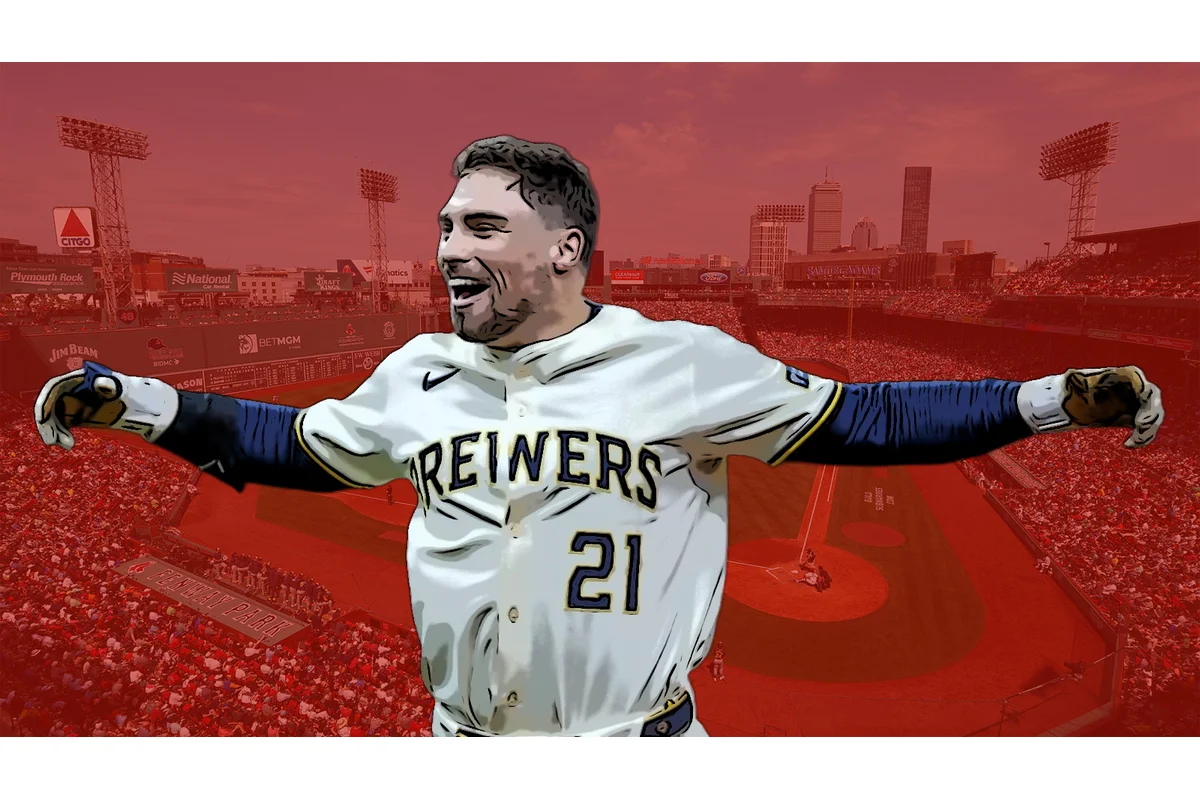
The Milwaukee Brewers entered the 2025-26 offseason after their most successful regular season ever, winning 97 games and securing the top postseason seed. Despite this achievement, a sweep by the Los Angeles Dodgers in the National League Championship Series raised concerns about whether the roster needed substantial changes to break the franchise’s World Series drought in 2026. Central to their offseason moves was the trade involving Caleb Durbin, reflecting a larger strategy focused on building sustained competitiveness rather than short-term fixes.
Rather than focusing solely on immediate success, the Brewers are prioritizing maintaining a competitive roster over multiple seasons. President of Baseball Operations Matt Arnold has emphasized a forward-looking approach, recognizing that regularly reaching the postseason is essential to eventually winning a championship. Milwaukee’s offseason maneuvers reflect this vision, aiming to convert current strengths or potential future declines into young, controllable starting pitching—a key asset in modern baseball.
This approach was highlighted in the six-player trade with the Boston Red Sox, where the Brewers sent Caleb Durbin, Andruw Monasterio, Anthony Seigler, and a Competitive Balance Round B draft pick to Boston. In return, Milwaukee acquired two promising left-handed pitchers, Kyle Harrison and Shane Drohan, along with infielder David Hamilton. This trade exemplifies the Brewers’ commitment to investing in pitching talent with multiple years of team control.
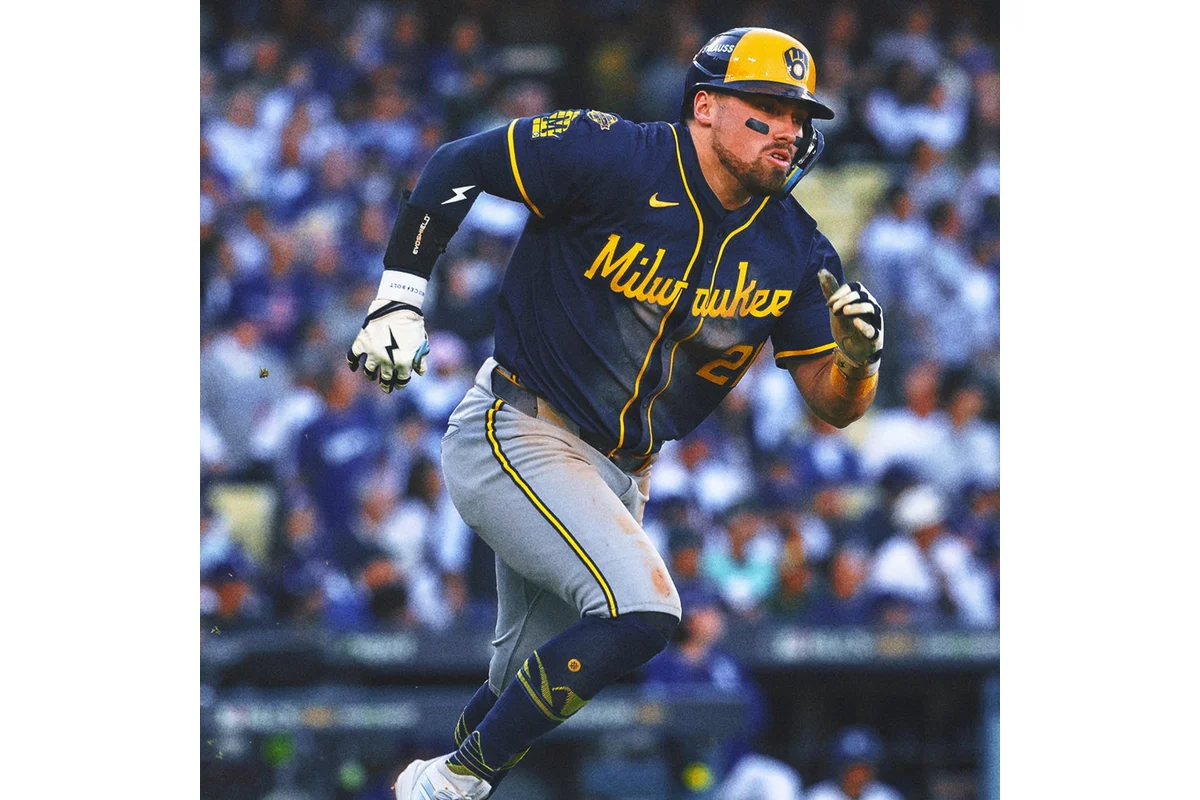
Matt Arnold expressed enthusiasm about adding young arms, stating on a team media Zoom call,
“Our ability to add multiple arms, young arms, controllable arms, is something that’s really exciting for us when you talk about the addition of guys like Sproat, plus Harrison, plus Drohan. The combination of adding those guys is really exciting.”
Why Controllable Starting Pitchers Are a Priceless Commodity
Controllable starting pitching has become one of the most sought-after commodities in today’s game due to escalating costs on the free-agent market. Established starters now often command eight-figure salaries, and even former Brewers like Adrian Houser are slated to earn $11 million annually over the next two seasons. In stark contrast, Kyle Harrison and another young arm like Sproat are projected to make under $1 million per season despite potentially offering greater on-field value. This discrepancy exposes a market inefficiency that the Brewers are capitalizing on through trades such as the one involving Durbin.
Assessing the Trade: Why Milwaukee’s Exchange Is Strategic Despite Losing Durbin
Caleb Durbin, a highly versatile and promising player, was acquired by Milwaukee last year in a trade for Devin Williams and quickly became an integral part of the Brewers’ lineup. His defensive skills and baserunning add tangible value, cushioning what could be offensive inconsistencies. Still, when considering the positional value, a utility infielder cannot match the worth of controllable left-handed starting pitchers. This perspective explains why Milwaukee agreed to trade Durbin before his second full MLB season despite his Rookie of the Year finalist status.
While fans and analysts debate the wisdom of the Brewers parting with Durbin, the front office’s decision receives a positive evaluation; the Brewers earned a grade of B for their side of the deal, while Boston’s return rates a C+. Milwaukee acquired two emerging left-handed starters—Harrison and Drohan—each either newly debuted or close to reaching the big leagues. Such pitchers with team control are rare and highly prized, making this trade a significant haul for Milwaukee, especially given that they surrendered three utility infielders and a draft pick.
Examining the Players Milwaukee Traded Away
Caleb Durbin’s Offensive Outlook
Durbin posted a solid 2025 campaign, hitting .256/.334/.387 with an OPS+ of 101, placing him just above league average. However, his power numbers are likely inflated by an uneven approach—relying heavily on pulling fly balls to boost slugging. Metrics suggest that this method is not sustainable; with expected slugging in the 16th percentile and modest exit velocities and hard-hit rates, projecting Durbin to replicate or improve upon his roughly ten home runs in 2026 is doubtful. If he regresses modestly, his OPS+ might settle between 90-95, where his defensive and baserunning skills will still make him a productive player, yet not the game-changing force some anticipated following his rookie success.
Andruw Monasterio’s Role and Future Prospects
Monasterio has been a respected presence in the Brewers’ clubhouse over his three seasons and is valued for his willingness and versatility across the infield and even corner outfield positions. After a full-time role at third base during his rookie year in 2023, his plate appearances have declined gradually. While his three minor league option years provide roster flexibility, breaking into Boston’s major league lineup will be challenging unless injuries create vacancies ahead of him. His inclusion in the trade, offset by the Brewers reacquiring David Hamilton, marginally affects the trade’s overall balance.
Anthony Seigler: Depth and Versatility
Seigler, another utility infielder acquired by Boston, represents a similar type of player to Monasterio—versatile with a high floor but limited offensive upside due to a lack of power. Despite promising Triple-A numbers, his offensive ceiling remains low. Both Seigler and Monasterio join Boston’s 40-man roster, yet carving out significant roles remains unlikely. Given the Brewers’ infield depth—especially prospects like Cooper Pratt and Jesús Made—milking value from these utility infielders now instead of later was a calculated move to avoid future roster congestion.
The Key Returns: Promising Left-Handed Arms and Infield Depth
Kyle Harrison: A Top Prospect Reborn
Kyle Harrison stands out as the centerpiece of the trade return for Milwaukee. Formerly the San Francisco Giants’ top-ranked prospect and a Top 25 overall MLB prospect, Harrison has experienced movement across three organizations in eight months after joining Boston via a trade last season. His fastball can reach 97 mph while maintaining solid command, complemented by a putting together of effective secondary pitches including a slurve, cutter, and a plus-rated changeup.
The combination of velocity, pitch mix, and movement generated a 30.5% whiff rate in limited 2025 appearances, signaling genuine starting rotation potential. Holding five years of team control, Harrison is a rare and valuable asset that Milwaukee is betting will bolster their pitching staff, even if he doesn’t immediately join the Opening Day rotation.
Shane Drohan: An Emerging Left-Hander to Watch
Though less heralded, Shane Drohan offers substantial upside and should not be underestimated. Ranked 30th in Boston’s prospect list before the trade, the 27-year-old lefty posted a 2.27 ERA across 11 Triple-A starts last season, showing marked improvement particularly in velocity (fastballs up to 96 mph) and slider movement. His command, a former weakness, also improved considerably.
After some forearm inflammation last year, the Brewers received reassurance from Matt Arnold:
“nothing from our end in terms of concerns there. He finished the season really strong…finished with an uptick in velocity and his stuff across the board.”
Though likely to start 2026 back in Triple-A, Drohan’s progress makes him an asset capable of contributing in the near future.
David Hamilton’s Return Brings Versatility and Speed
David Hamilton, originally drafted by Milwaukee in 2019 and later traded to Boston, is now back with the Brewers and poised to compete for major league playing time. Although roughly equivalent to Monasterio in terms of roster fit, Hamilton carries added benefits: greater speed and defensive prowess, coupled with left-handed batting. This complements Milwaukee’s current infield situation notably, where left-handed hitters like Hamilton balance out the right-handed tendencies of key players such as Joey Ortiz and Jett Williams.
Hamilton fits the Brewers’ mold, offering speed and discipline at the plate despite limited offensive pop. Matt Arnold summarized his value as:
“plays the way we love to play, very exciting, athletic, good defensive player. Along with the infield depth that we have in the system, [the trade] made a lot of sense for the Brewers.”
Broader Implications: Milwaukee’s Long-Term Roster Planning
This trade reflects Milwaukee’s strategy of transforming a surplus in a particular area—utility infielders—into critical assets in another—left-handed starting pitching. With top prospects like Cooper Pratt, Jesús Made, and Luis Peña approaching the big leagues, finding roster space for Durbin, Monasterio, or Seigler would have been increasingly difficult. By trading these players now, the Brewers have maximized value and boosted pitching depth, a move that may well be rewarded in coming seasons.
While fans may be unsettled by giving up a Rookie of the Year finalist, the acquisition of Harrison and Drohan, combined with the return of Hamilton, represents a calculated investment in controllable pitching talent that can provide sustainable success. This market inefficiency being exploited by Milwaukee could set a precedent in baseball roster management and reshape how teams prioritize prospects and salary allocation in the years ahead.
