
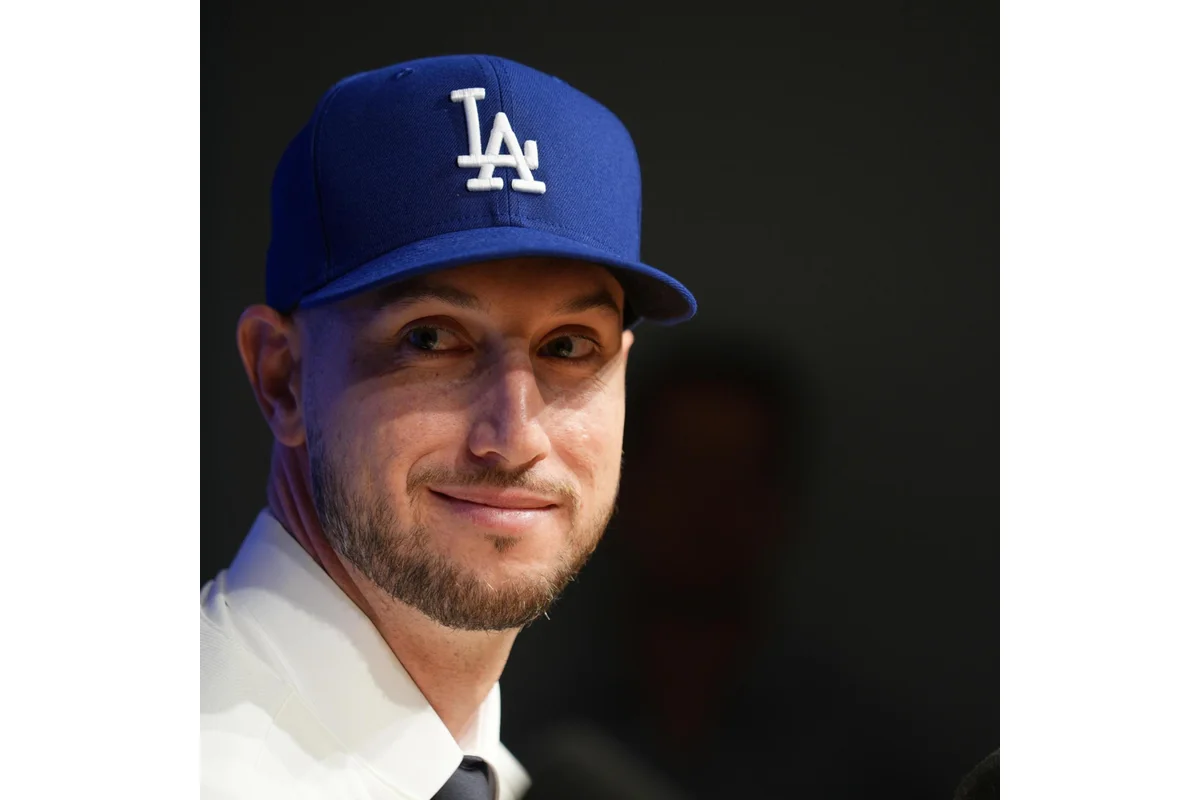
The Los Angeles Dodgers’ recent signing of free-agent outfielder Kyle Tucker has triggered intense debates across social media platforms. Immediately following the announcement, opinions polarized sharply, sparking concerns about competitive balance within Major League Baseball (MLB). This signing, taking place in January 2026, brought into focus deep apprehensions from some baseball fans and commentators who feel the Dodgers’ accumulation of star talent threatens the overall fairness and excitement of the upcoming seasons.
Conflicting Reactions from Fans and Media Figures
The backlash was swift from voices like @guppie2121, who expressed frustration over the Dodgers’ aggressive pursuit of championships, suggesting it diminishes the appeal of watching the sport, particularly during the playoffs. His sentiments captured the fear that the Dodgers’ dominance effectively “buys” championship opportunities, diminishing competitive uncertainty.
Seriously???
No point in even watching baseball this season especially not the playoffs. Dodgers literally buying another ring
— Guppie (@guppie2121) January 16, 2026
Yet, this viewpoint was met by substantial counterarguments, notably from sports commentator Colin Cowherd. Cowherd defended the signing, highlighting that the Dodgers’ success coincides with baseball’s rising popularity. He emphasized that other franchises are also making bold moves, citing the Chicago Cubs’ trade acquisitions of Edward Cabrera and the signing of Alex Bregman, alongside the New York Yankees’ pursuit of Ryan Weathers and the re-signing of Cody Bellinger.
Dodgers, Cubs, Yankees improving is NEVER bad for MLB,
as Cowherd pointedly remarked, signaling that the league’s growth is fueled by multiple teams strengthening their rosters in free agency and trades.
Labor Contract Challenges Heighten Stakes for MLB’s Future
This debate over the Tucker signing arises amid the looming expiration of MLB’s collective bargaining agreement (CBA), with a deadline set for December 1, 2026. The negotiation process is expected to be highly contentious, and many experts predict a work stoppage. More alarmingly, ESPN analyst Jeff Passan warns of a worst-case scenario involving prolonged lockouts if owners push for a salary cap, a proposal strongly opposed by player leadership.

The doomsday scenario (is) that not only are the players locked out, but the sides cannot find common ground thereafter. The greatest threat of an extended work stoppage — baseball’s last was in 1994-95 — would come if owners insist on an overhaul of the game’s economic system to include a salary cap. Player leadership has indicated it won’t even entertain the notion of a capped system.
The Tucker signing debate, therefore, reflects deeper anxieties surrounding the sport’s labor relations and future competitive landscape, raising questions about whether MLB is heading toward greater conflict or continued prosperity.
Philosophical Perspectives Illuminate the Underlying Conflict
To better understand the intensity and intractability of these debates, the analysis turns to the ideas of famed Scottish philosopher Alasdair MacIntyre, who passed away in May 2025. Best known for his influential 1981 work After Virtue, MacIntyre explored the nature of moral disagreements and the erosion of shared ethical frameworks in contemporary culture.
MacIntyre observed that public moral debates, whether about politics or sports like baseball, often involve clashing assumptions and values that go unexplored. The arguments fans make about whether the Dodgers are “ruining” or “saving” baseball illustrate these competing premises well. Without a common foundation for evaluating what “success” and “fairness” mean in the sport, disputes become entrenched and irresolvable.
The Role of Rival Premises in Fan and Commentator Disagreements
For example, @guppie2121 appears to view MLB’s purpose as fostering parity among teams, so that the game remains unpredictable and broadly competitive. In contrast, Colin Cowherd evaluates success through metrics like television ratings, attendance figures, and the concentration of star players in major markets, believing the league benefits from growth and concentration of talent.
The best players are on the biggest brands and in the biggest markets, and it helps. Markets matter except for the NFL, so with that premise, baseball is in a good spot.
— Colin Cowherd, Sports Media Personality
These fundamentally different starting points prevent meaningful consensus. Each perspective, within its own framework, arrives at logical conclusions that oppose the other’s, leaving moral questions about the Dodgers’ impact on baseball effectively undecidable.
When Moral Arguments Become Contests of Emotion
MacIntyre argued that when rational agreement is impossible, people often resort to asserting rather than exploring reasons for disagreement. Fans and commentators invoke justice to support their views but draw upon different ideas of what justice entails. For instance, @guppie2121 condemns the Dodgers’ actions as unequal and unfair, while Cowherd might align with Adam Smith’s economic philosophy, seeing financial growth and prosperity as a form of justice benefiting everyone involved in the sport, including players and staff of smaller-market teams like the Kansas City Royals and Pittsburgh Pirates.
It is unequal and thus unjust for the Dodgers to act in this way!
— @guppie2121, Baseball Fan
The lack of shared moral sources to underpin these claims undermines the potential for reconciliation. Instead, debates risk devolving into emotional showdowns rather than reasoned discussion.
Emotivism Dominates Modern Moral Discourse
MacIntyre described this cultural condition as emotivism, where moral language primarily expresses feelings and attempts to influence the feelings of others, rather than reasoned ethical judgments. He noted that contemporary society acts as if emotivism were the truth, leading to polarized, shout-filled exchanges on forums like Facebook and X.
There seems to be no rational way of securing moral agreement in our culture,
MacIntyre observed, pointing to contentious public conversations marked by contradictory assumptions and irreconcilable positions.
We use moral judgments not only to express our own feelings and attitudes, but also precisely to produce such effects in others.
The dominance of emotivism results in a public square filled with aggression, memes, and winner-takes-all arguments, rather than substantive negotiation or compromise.
Looking Ahead: The Broader Implications for MLB
Two weeks after the initial furor surrounding Kyle Tucker’s move to the Dodgers, the heated debates have largely subsided, a cyclical pattern MacIntyre’s analysis helps explain. Temporary passions flare but soon give way to other distractions, especially when morality rests on subjective preferences rather than shared principles.
However, the broader challenges facing MLB—particularly the pending expiration of the collective bargaining agreement—remain critical. How the league, players, and owners navigate this negotiation could determine whether baseball avoids a damaging lockout or suffers a prolonged halt. The hope is that all parties direct their attention to shared interests and constructive dialogue, moving beyond the fragmented moral posturing witnessed during the Tucker signing debate.
Given the historical significance and economic stakes, the outcome will profoundly influence the sport’s future stability and cultural relevance.
Seriously???
No point in even watching baseball this season especially not the playoffs. Dodgers literally buying another ring
— Guppie (@guppie2121) January 16, 2026
