
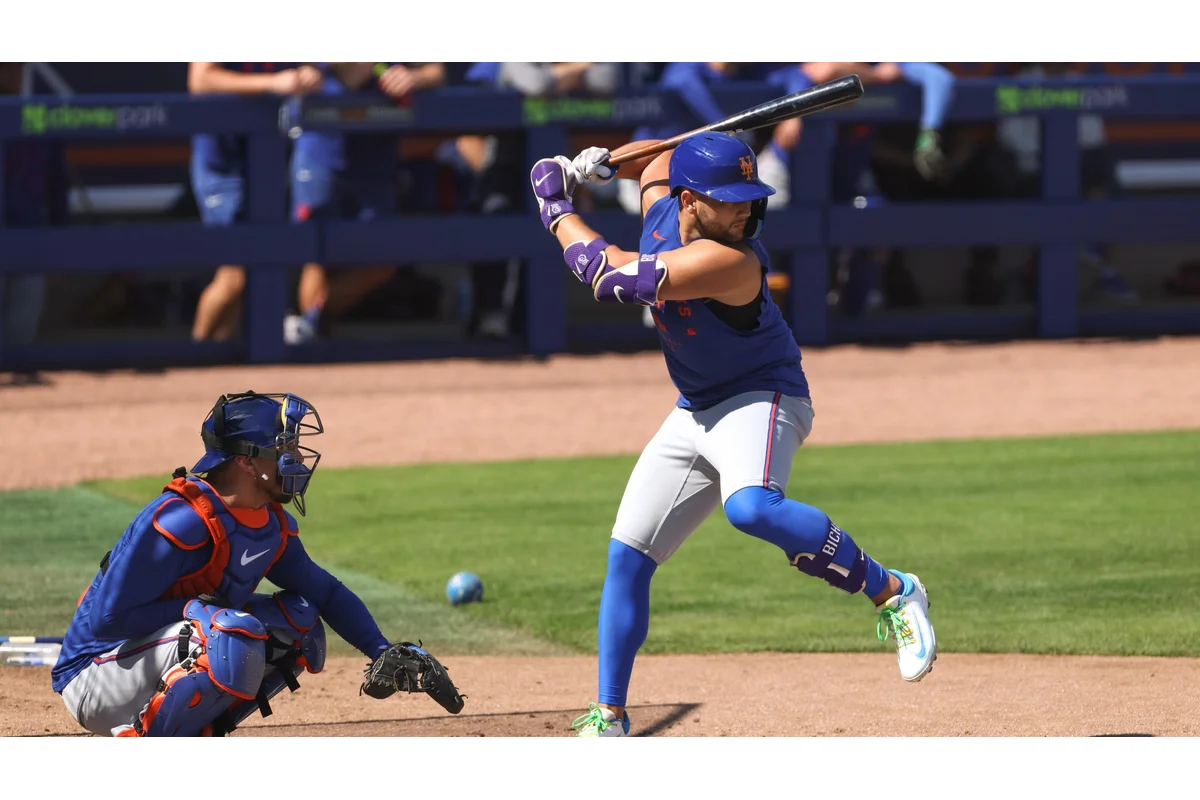
In his first Grapefruit League game with the Mets on Saturday at Clover Park in Port St. Lucie, Bo Bichette took on the unfamiliar role of third baseman, marking a significant change from his career as a shortstop. Although he hasn’t played third base since his days in travel ball, Bichette trained to adapt by analyzing how deep to position himself, calculating angles on balls hit to the left side, and adjusting the timing of his throws. His main focus was testing his reaction to hard line drives—shots he rarely confronted while playing shortstop.
“Getting comfortable with like a hot smash is something that I probably have to work on more,”
Bichette said.
“That’s one play you definitely don’t really get at short that much, and even if you do, you’re so far back, you have a lot of time to react to it. So that’s something I’m looking forward to seeing how I handle it.”
– Bo Bichette, Mets Third Baseman
Early Plays Highlight Bichette’s Fielding Adjustments
The early innings provided Bichette with opportunities to test his skills at third base. In the fourth inning, Miami Marlins’ Jacob Marsee hit a sharply struck low line drive towards left field. Bichette lunged but was unable to catch it, as the ball fell safely for a single. The same inning saw Bichette make a strong backhanded catch on a chopper just past the third base bag with runners on second and third with two outs. He delivered a timely throw across the diamond; however, the throw was off target and struck the runner Connor Norby as he scored.
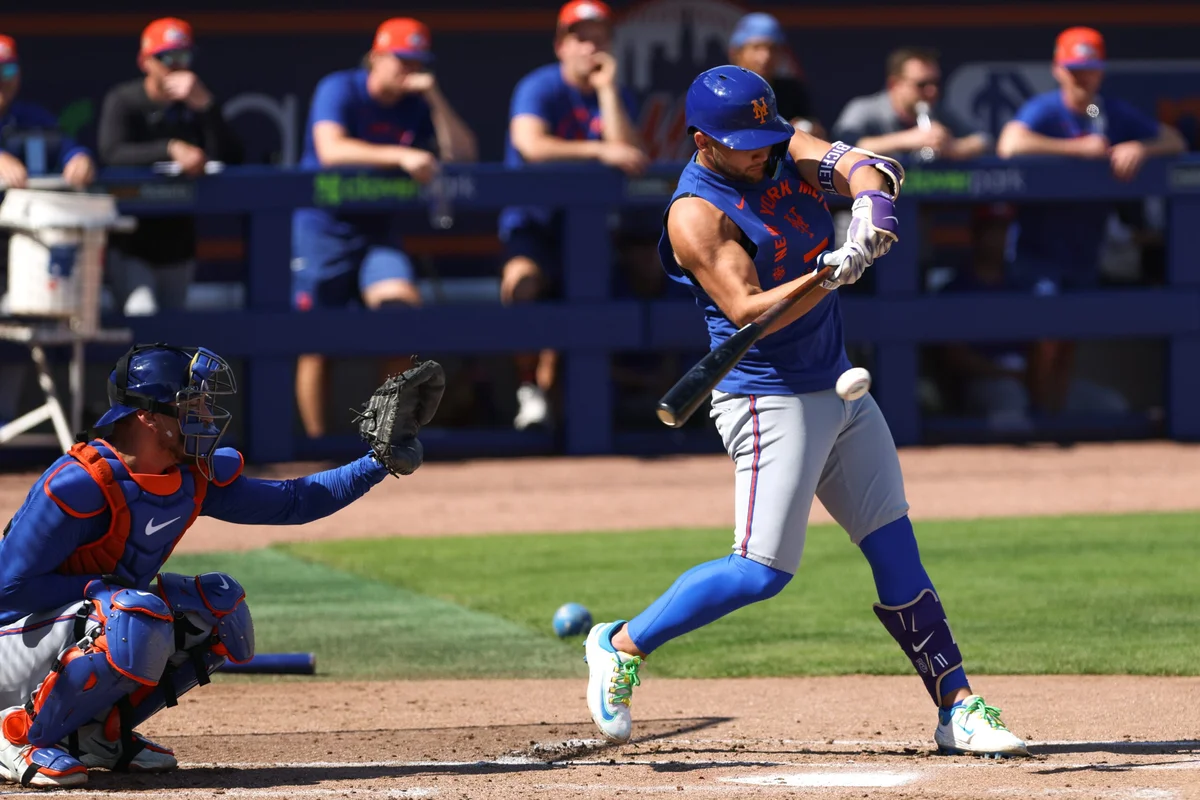
Manager Carlos Mendoza praised Bichette’s instinct, especially on challenging plays.
“He took a very good angle there,”
Mendoza explained.
“I think it’s just more — especially here in spring training with some of the hard fields that we’re going to be playing on — like the in-between hops. On that one, he created a long hop, which was the right play.”
– Carlos Mendoza, Mets Manager
Spring Training Offers Vital Learning Opportunities for Bichette
Bichette played four innings in the game, focusing mostly on his defensive responsibilities at the new position. Although he is still far from mastering third base, no one expected him to arrive fully prepared to handle every aspect of the spot this early in spring. The reps he gains now are essential to his progress.
“Good positioning, he was engaged, especially with the dugout about having guys who were potential bunters or guys who are going to get the head out swing-wise. Starting up, moving as the pitcher is going through the wind up, moving depth-wise… I thought overall was an average, decent day with not so much action.”
– Carlos Mendoza, Mets Manager
During practices and game situations, Bichette has quickly recognized that some plays at third base share similarities with those at shortstop, but the position carries unique challenges as well.
“I noticed right away the viewpoint is different. I can’t really look at the hitter, I kind of have to look at the contact point. So, there is definitely a lot of stuff I can learn in the game, which I think will be the most important, but reps are also very important.”
– Bo Bichette, Mets Third Baseman
Developing Reaction Skills for Difficult Third Base Plays
The Mets are especially interested in seeing how Bichette manages quick plays near the bag, particularly slow rollers and bunts that demand lightning-fast reads and decisions. In this debut game, Bichette was not tested with plays that required charging in or attempting double plays. He still faces challenges like gauging the time he has to make a play and how much space is available, particularly when runners are on base.
Manager Mendoza weighed in on the complexity of third base plays:
“I think that chopper where he has to make a decision right after contact, that’s a tricky one for the third baseman. Short stuff. You get time to read the ball off the bat, but there, you don’t have much time. It’s just the reaction, whether you want to go get it or you want to create some space and move back, positioning is important as well. A no-one-on, double-play situation, guys that can bunt, just getting in a habit of looking in the dugout. There’s a lot that once we start playing games, as a third baseman, you’ve just got to get used to.”
– Carlos Mendoza, Mets Manager
Bichette Embraces His Unique Style at Third Base
Bichette’s approach to adapting to third base involves relying on his natural athleticism rather than trying to conform completely to conventional methods. He remains determined to define his own playing style through regular game experience.
“I’m just letting my athleticism take over and playing the position how Bo Bichette plays it, and not necessarily how anybody else plays it,”
Bichette said.
“There are a ton of great third basemen, yet they play it completely different than each other. So just trying to figure out who I am over there.”
– Bo Bichette, Mets Third Baseman
Looking Ahead: What Bichette’s Transition Means for the Mets
The decision to move Bo Bichette to third base reflects the Mets’ effort to maximize his talents despite the adjustment challenges. With ongoing spring training and game repetitions, Bichette is expected to improve his defensive consistency and reaction times. His ability to handle in-game pressure and enhance positioning will be crucial as the regular season approaches.
As Bichette gets more comfortable at third base, the Mets gain a versatile infielder capable of contributing both offensively and defensively. The watching eyes of the Mets organization, led by Carlos Mendoza, anticipate growth in Bichette’s readiness to face fast-paced, complicated plays, especially against runners and bunt attempts. His daily progress through workouts and games will likely shape his role and the team’s defensive strategies moving forward.
