Miami Marlins Overview
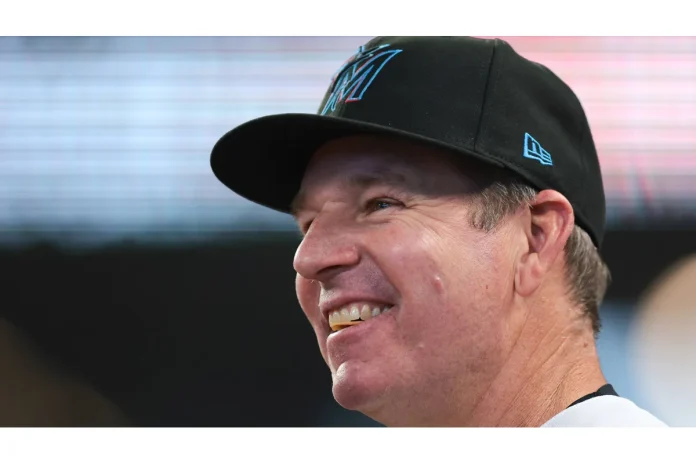
The Miami Marlins are a professional baseball team based in Miami, Florida, competing in Major League Baseball as a member of the National League East Division. Founded in 1993 as the Florida Marlins, the franchise has captured two World Series championships in 1997 and 2003, both won as a wild card entrant. The Marlins play their home games at LoanDepot Park, a baseball-specific stadium in downtown Miami that has hosted the club since 2012. The team is owned by Bruce Sherman, with Caroline O’Connor serving as President of Business Operations, and is currently managed by Clayton McCullough.
Across more than three decades, the Marlins have developed a distinctive identity shaped by early on-field success, frequent roster turnover, and an evolving visual brand. Team colors include midnight black, Miami blue, Caliente red, and slate grey. Despite holding one of the lowest winning percentages and fewest postseason appearances among active MLB franchises, the club remains notable for its championship pedigree and its commitment to player development.
Founding and Organizational Origins
The Miami Marlins were established as an expansion franchise awarded by the National League on June 10, 1991, to Wayne Huizenga, the chief executive officer of Blockbuster Entertainment Corporation. Huizenga paid a $95 million expansion fee, and the team began operations in 1993 as the Florida Marlins. The franchise adopted the “Marlins” name from previous minor league clubs that had carried it in South Florida, including the Miami Marlins of the International League in the late 1950s and Florida State League teams in the 1960s and 1980s.
The Marlins drafted their initial playing roster in the 1992 MLB Expansion Draft and selected Rene Lachemann, a former catcher and veteran coach, as the franchise’s first manager. The team won its first regular season game on April 5, 1993, against the Los Angeles Dodgers at Joe Robbie Stadium, with Charlie Hough as the starting pitcher and Jeff Conine going 4-for-4 to earn the early nickname “Mr. Marlin.” Gary Sheffield and Bryan Harvey became the club’s first All-Star selections that year, and the team finished ahead of the New York Mets in the standings with a strong inaugural attendance of more than three million.
Growth Into Major League Baseball Competition
The Marlins shared Joe Robbie Stadium with the Miami Dolphins of the National Football League for nearly two decades after entering MLB. In 2012, the franchise relocated to Marlins Park in downtown Miami, a stadium designed exclusively for baseball, and changed its name to the Miami Marlins as a condition of the agreement with Miami-Dade County. The team adopted new logos, colors, and a refreshed visual identity to mark the transition.
Under the early stewardship of executives including Donald A. Smiley, the Marlins expanded their baseball operations, scouting, and player development systems. Subsequent front office leaders built out one of MLB’s most productive farm systems, helping develop stars such as Miguel Cabrera, Dontrelle Willis, and José Fernández. In 2020, the franchise also made league history by hiring Kim Ng as the first woman to serve as general manager of a major American professional sports team.
Miami Marlins Competitive Journey
The Marlins’ competitive journey is defined by two early championship peaks separated by long stretches of rebuilding, with the franchise qualifying for the postseason only four times since its founding. Each playoff appearance has come as a wild card, and the team has never won a division title, won consecutive playoff berths, or captured more than one World Series in a multi-year run.
Early Seasons and Development (1993-1996)
The Florida Marlins opened play in 1993 and finished fifth in the newly created National League East, drawing more than three million fans in their first year. After trading rookie reliever Trevor Hoffman to the San Diego Padres for Gary Sheffield, the Marlins ended 1994 last in the division during the players’ strike and finished fourth in 1995. The team recorded an 80-82 mark in 1996 under manager Rene Lachemann before John Boles took over midway through the season.
Despite the uneven on-field results, the early Marlins built a foundation through aggressive trades and player development, accumulating young talent that would fuel future playoff pushes. Sheffield emerged as an All-Star caliber third baseman, while Conine became a steady presence in the lineup and a clubhouse leader. Those investments set the stage for a transformative managerial hire heading into 1997.
Breakthrough in Major League Baseball (1997-2003)
The Marlins’ first major breakthrough came in 1997, when former Pittsburgh Pirates manager Jim Leyland took the helm. Florida finished nine games behind the Atlanta Braves in the East but captured the NL wild card berth. A roster blending veterans such as Moisés Alou, Bobby Bonilla, Darren Daulton, and Jim Eisenreich with young stars Luis Castillo and Édgar Rentería swept the San Francisco Giants in the Division Series and upset the Braves in the National League Championship Series. In the 1997 World Series, the Marlins defeated the Cleveland Indians in seven games, with Rentería’s walk-off single in the eleventh inning of Game 7 delivering the franchise’s first title.
The second breakthrough arrived in 2003, when the Marlins overcame an injury-plagued regular season to claim another wild card spot. Rookies Dontrelle Willis and Miguel Cabrera, both promoted from the Carolina Mudcats, provided a spark, while veterans Iván Rodríguez and Ugueth Urbina helped stabilize the lineup and bullpen. Trailing the Chicago Cubs three games to one in the NLCS, Florida staged a comeback fueled by the infamous Steve Bartman play and won Game 7 in Wrigley Field. The Marlins then defeated the heavily favored New York Yankees in six games to claim their second World Series title, with Josh Beckett earning series MVP honors and Jack McKeon becoming the oldest manager to win a championship.
Modern Program and Current Direction (2012-Present)
Since moving into LoanDepot Park in 2012, the Marlins have worked to balance competitive spending with long-term roster construction. The club invested heavily in stars such as Giancarlo Stanton, who won the 2017 National League MVP Award, and has continued to develop a steady pipeline of young position players and pitchers. Despite those efforts, the franchise has reached the postseason only twice since 2003, returning in 2020 with a wild card sweep of the Chicago Cubs and again in 2023.
The Marlins continue to operate under the ownership of Bruce Sherman, with Peter Bendix serving as President of Baseball Operations, Gabe Kapler as General Manager, and Clayton McCullough leading the dugout as manager. The team is in the midst of another rebuild aimed at sustainable contention, supported by improvements to scouting, analytics, and player development. The club’s ongoing relationship with its fan base remains a central focus, with new uniforms, fan initiatives, and stadium experiences rolled out in recent seasons.
Philosophy and Competitive Strengths
The Marlins have long emphasized player development, aggressive trades, and the discovery of undervalued talent over the high-end free agent market. That approach produced championship rosters in 1997 and 2003 and has continued to define the organization’s identity. The franchise’s strengths typically lie in pitching development, with a tradition of unearthing starters such as Willis, Beckett, and Fernández, and in creating lineups built around athletic position players.
Key Milestones and Major Moments
Among the Marlins’ most important milestones are their two World Series championships in 1997 and 2003, the franchise’s relocation to LoanDepot Park in 2012, Giancarlo Stanton’s 2017 NL MVP Award, and Kim Ng’s 2020 hiring as the first woman general manager in MLB history. The 2023 wild card berth under Ng also marked the first time a woman general manager led a Major League Baseball team into the postseason.
Miami Marlins Achievements and Results
Across more than three decades, the Miami Marlins have compiled a verified list of accomplishments that includes two World Series championships, two National League pennants, and four wild card berths, despite never winning a division title. The franchise’s two championships both came during their initial playoff appearances, and each was followed by a major roster teardown and rebuild.
Major League Baseball Achievements
The Marlins have won two World Series championships, capturing the title in 1997 against the Cleveland Indians and in 2003 against the New York Yankees. Both championships were won as wild card entrants, making the Marlins the first team in MLB history to win the World Series as a wild card. The franchise has also earned two National League pennants, matching its World Series totals in 1997 and 2003.
Conference Achievements
The Marlins have won two National League pennants, the first in 1997 over the Atlanta Braves and the second in 2003 over the Chicago Cubs. Each pennant marked the franchise’s deepest playoff run and was followed by a World Series title. The Marlins have made four National League Division Series appearances in total, splitting their 2020 and 2023 wild card matchups before falling in later rounds.
Divisional Achievements
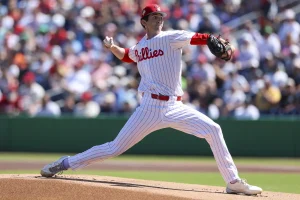
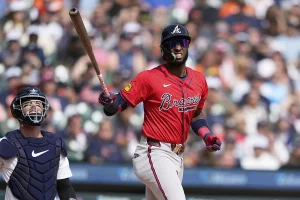
The Marlins compete in the National League East Division and have never won a division title, making them one of only two active MLB franchises, along with the Colorado Rockies, without a division crown. Despite that distinction, the club has posted several competitive divisional seasons, including its strong 1997 and 2003 wild card campaigns. The team’s focus remains on building sustained success within a competitive division that includes the Atlanta Braves, New York Mets, Philadelphia Phillies, and Washington Nationals.
Series Achievements
The Marlins participate in the Citrus Series, an interleague rivalry with the Tampa Bay Rays that reflects the geographic connection between the two Florida franchises. Tampa Bay currently leads the series, 81-60, by recent historical counts. Beyond the Citrus Series, the Marlins have developed notable storylines with National League opponents through postseason matchups, including their 1997 NLCS win over the Atlanta Braves and their dramatic 2003 NLCS comeback against the Chicago Cubs.