
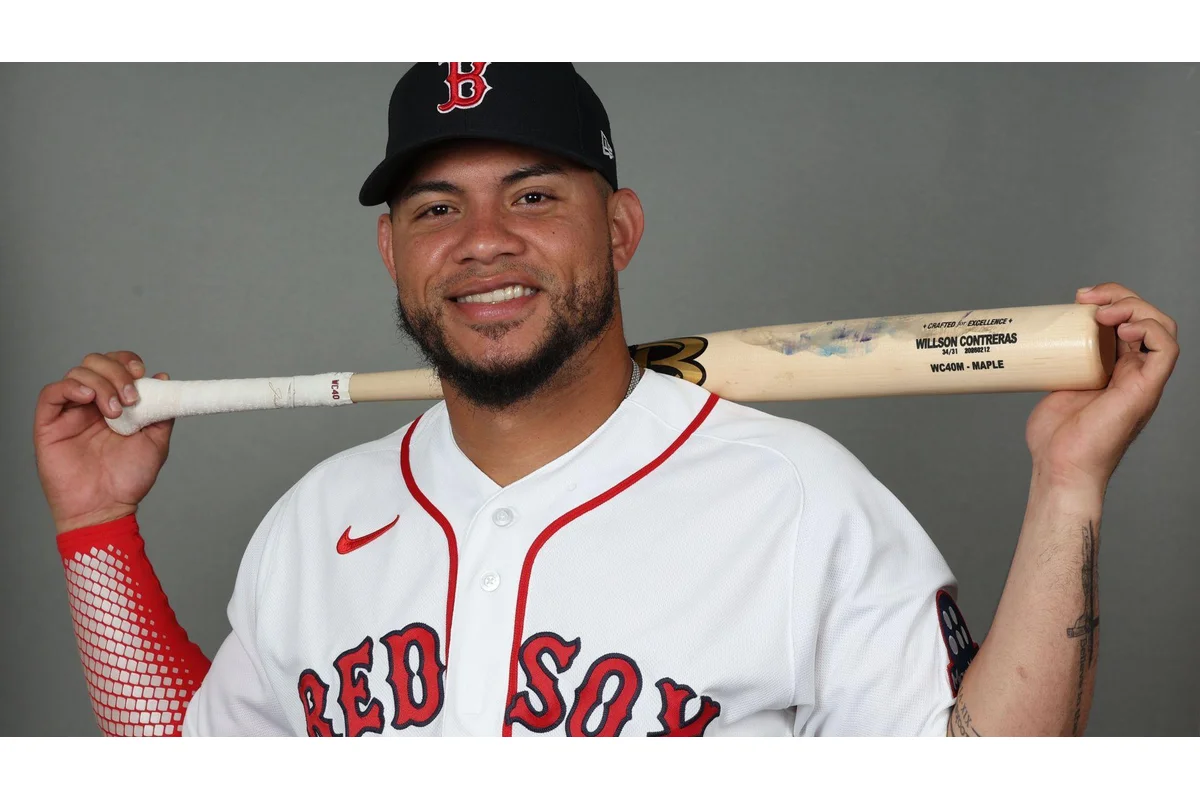
FORT MYERS, Fla. — Willson Contreras etched his name into Red Sox lore by successfully executing the franchise’s very first Automatic Ball–Strike (ABS) challenge during a spring training game on Saturday. Manager Alex Cora has encouraged his players to actively engage with the ABS challenge technology this spring, knowing many key players will soon depart for the World Baseball Classic, limiting their practice time with the system before the regular season starts.
With two outs in the top of the first inning against the Minnesota Twins’ complex, Contreras took the initiative and requested a challenge, leading to a successful overturn of an umpire’s call.
Contreras’s Perspective on the New Challenge System
Contreras shared his reaction after the call,
“It was good to have that reaction, because I was so convinced that it was low,”
Contreras told the Herald.
“But at the same time, you start doubting a little bit because they delayed the call.”
As a longtime catcher transitioning to first base last season, Contreras believes his experience behind the plate provides an edge in adapting to the league’s new technology system.
He elaborated during his postgame media session,
“It’s different when you’re catching than hitting, but when you’re a first baseman you don’t know the strike zone, the umpire, anything like that. You just know your strike zone, you’ve been playing for so many years that you have an idea of what is (a) ball and strike. But it definitely helps, for sure.”
Understanding the ABS Challenge Rules and Team Strategies
Under the ABS system, teams are allocated two challenges per game usable by the pitcher, catcher, or hitter. A successful challenge preserves the team’s right to use another challenge, and in extra innings, if no challenges remain, teams receive one challenge per inning. This mechanism aims to reduce umpire errors while adding strategic complexity for players and managers alike.

Cora has expressed enthusiasm for the increased challenge opportunities in spring training but revealed that MLB managers’ requests for more challenges were denied. As a result, teams are focusing on educating players about when and how to use them prudently, balancing impulse with strategy.
Player Reactions Reflect Mixed Experiences with ABS Challenges
Roman Anthony praised the system’s impact, saying,
“I think it’s huge, I think it can change the course of a game, especially late in the game. I challenged quite a bit (in Triple-A). … It’s great for me. It’s turned a lot of strikeouts into walks, or it’s changed a lot of counts for me where I was able to kind of reset the count and do damage. So I think it should be great for the game.”
Contreras also highlighted the educational benefits, stating,
“I think it’s good to have the opportunity to challenge yourself and see how good you are with your eyes, and it’s also good for the umpires to have an idea that the strike zone changes for different guys.”
Pitchers Encouraged to Avoid Using Challenges
The Red Sox have signaled they prefer pitchers not initiate challenges. Payton Tolle clearly supports this stance, remarking, “Absolutely not,” when asked about pitchers using challenges.
“I think everything’s a strike! It could be four balls off and I’d think it’s a strike. So I’m going to leave that to the higher powers of catchers.”
For younger players like Tolle and Anthony, who gained experience with ABS in the minors, the current spring training serves as a chance to refine their understanding of when to apply challenges effectively.
Adjusting to the Stakes of ABS Challenges in Major League Games
While ABS challenges offer a strategic tool, the shift to the majors brings higher stakes. Anthony admitted the temptation to overuse challenges was present in Triple-A where development takes priority over results, but cautioned that in MLB, challenges can directly influence wins and losses.
“There were times where I got a little greedy for sure,”
he admitted with a smile.
“But at the same time, I feel like I have a good feel for the zone.”
He further emphasized the importance of timing:
“I think the biggest thing, not just for me but for everyone, is just that the situation of the game is huge for challenging. I think when you lose (challenges) too early, I’ve seen it kind of go the other way where you’re late in the game and you don’t have one. … I think they’re going to be a slept-on component of this game, that people are going to realize how much they really matter, I think once the regular season starts.”
Contreras Stresses Situational Awareness in Challenge Decisions
Contreras believes that being mindful of game context is crucial for maximizing the benefits of the ABS system.
“We have to be aware of the situation first,”
he told the Herald.
“I know this is a game of emotion, ups and downs, and you can get greedy at times, and also you can get picky with the strike zone.”
He added,
“I think the most important thing is just to know when to challenge. If it’s a good situation, like bases-loaded, and you are convinced that it was a ball that was called a strike, why not? We won’t get it 100% right, but at least we will have the conviction.”
Team Response Highlights Unity and Enthusiasm for ABS
Following Contreras’s successful challenge, his teammates’ exuberant celebrations underscored how much the new system has energized the squad. Payton Tolle recalled,
“Everybody in the dugout (was) hooting and hollering about it.”
Contreras, formerly of the Cubs and Cardinals, noted how quickly the Red Sox clubhouse welcomed him and emphasized the team’s collective mindset. “Their reaction was priceless,” he said.
“I’ve been playing for three teams. This team for me, it seems like they’re really special.”
He elaborated,
“Every guy that comes here, that comes up, is trying to do the job. They work with a focus, with a goal, and it’s really hard to see that with a lot of guys. Because a lot of guys might come to the field just to come and do whatever they need to do, but this team is different, because they give goals. And we’re working toward something, which is the World Series.”
Red Sox Use Spring Training to Navigate ABS Challenges and Prepare for Season
The Red Sox are using spring training to navigate the complexities of the ABS challenge system as they prepare for the rigors of the regular season. Contreras reflected on the timing:
“If we get it wrong, this is the right time to challenge, and if we get it right, it’s applause.”
As the league adjusts to the ABS technology, the Red Sox’s early embrace, led by players like Contreras and guided by Cora’s strategy, may pay dividends in pivotal moments throughout the season.
