
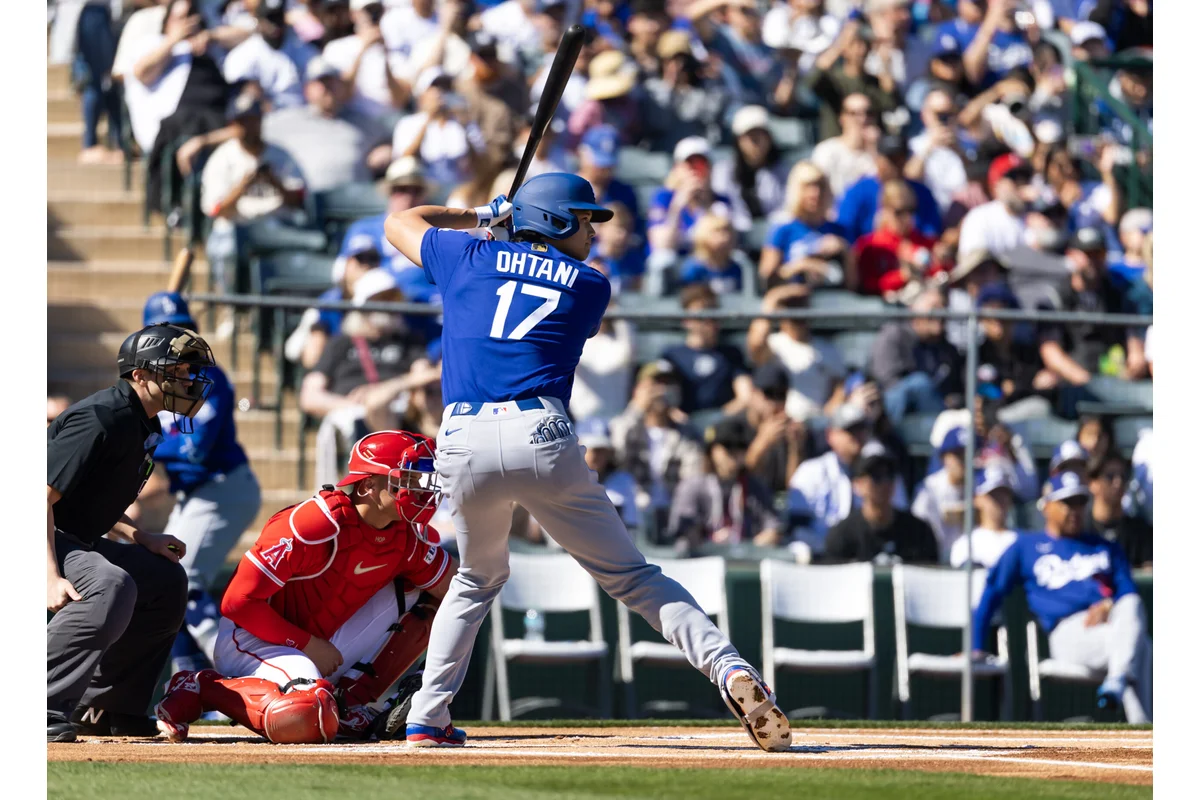
With Major League Baseball’s collective bargaining agreement set to expire this December, fears of a lockout are mounting as team owners push aggressively for implementing a salary cap and a salary floor. While the league and commissioner Rob Manfred claim these measures are intended to foster competitive balance, the initial cap proposal reveals a different agenda, casting doubt on the owners’ commitment to fairness.
Owners’ Salary Cap Plan Highlights Their Lack of Interest in True Parity
Team owners have repeatedly argued that franchises such as the Los Angeles Dodgers undermine the game by maintaining disproportionately high payrolls to secure star players. Although the Dodgers’ financial prowess is indeed unique, the salary cap proposal emphasizes what players have long suspected: smaller market teams could spend more than they currently do. Analysis of projected 2026 payrolls shows that nearly half of MLB teams fall below the proposed salary floor range of $140 million to $160 million.
For example, the Miami Marlins are projected to spend only $78.1 million, far below even the lower end of the cap floor. Eleven teams currently operate beneath the $140 million floor, increasing to thirteen if the $160 million threshold is used. This discrepancy questions the owners’ claim that a cap is necessary to enhance parity—if revenue restrictions truly motivated them, many teams would have already increased spending to the floor level.

Additionally, the substantial gap between the proposed cap, set around $260 million to $280 million, and the much lower floor challenges the idea of equal competition. Unlike leagues such as the NFL and NBA, where the floor usually hovers near 90 percent of the cap, MLB’s wide range effectively allows for significant payroll disparities, limiting the earning potential of top players but failing to ensure competitive balance.
Examining the Real Goals Behind MLB’s Salary Cap Initiative
At its core, the proposed salary cap serves more as a mechanism to restrict the spending power of elite teams and players rather than to level the playing field. For instance, Kyle Tucker’s recent four-year, $240 million contract with the Dodgers epitomizes the kind of high-value deals the owners aim to curb. If the cap were enforced, the Dodgers would be unable to allocate $60 million annually to one player without jeopardizing the rest of their roster’s competitiveness.
This restrictiveness would extend to all teams, effectively capping star player salaries across the board. While top-tier talents like Tucker and Juan Soto would still command significant contracts, the era of record-breaking agreements appears to be the real target of this proposal. Cost control, rather than fostering competitive balance, is the underlying motivation.
The evidence implies that smaller market teams have had the capacity to increase payroll but have chosen not to. Therefore, the salary cap does not solve the stated problem of disparity but instead limits player compensation and manages overall costs to the owners’ advantage.
Alternative Salary Cap Models Propose Closer Alignment to Competitive Balance
Chris Landers of FanSided has suggested a more balanced salary cap structure that contrasts sharply with the current proposal. His plan anticipates a hard cap ceiling set at $210 million in 2027 with a salary floor near $142.5 million, and in 2028, the cap would decrease slightly to $200 million with a floor around $144 million, along with a defined luxury tax threshold.
This approach narrows the disparity between the cap and floor, allowing larger market teams some financial flexibility without the vast gaps seen in the existing proposal. The reduced gap would make the argument for parity more compelling by keeping teams’ payrolls within a closer range.
However, even this structure would restrict high-profile earning potential considerably, a likely reason that the MLB Players Association remains opposed to any salary cap. Still, this model reflects a more genuine attempt at balancing competitive equity rather than simply controlling payroll figures.
Implications of the Current Proposal and What Lies Ahead
The current salary cap proposal underscores the tension between owners seeking to contain costs and players fighting to preserve their earning power. Given the league’s history and team payroll data, it’s evident that parity is not the true driving factor behind the cap push. Instead, the owners appear focused on limiting star salaries and centralizing financial control.
The wide salary range imposed by the cap and floor does little to level competition but significantly caps the incomes of marquee players like Kyle Tucker and Juan Soto. With nearly half of the league’s teams already spending under the proposed floor thresholds, it raises questions about teams’ willingness or ability to spend more and challenges the narrative pushed by ownership.
As negotiations continue, the future of MLB’s financial landscape remains uncertain. If a cap is implemented in its current form, it could reshape contract negotiations and player movement while exacerbating frustrations among the MLBPA and fans alike. Alternatively, pressure to develop a fairer cap system that nurtures genuine competitive balance could influence future proposals, though reaching consensus will be a formidable challenge.
Heyman: Early estimates suggest proposed salary cap might be set around $260M-280M and floor around $140M-160M.
— Underdog MLB (@UnderdogMLB) February 27, 2026
