
In the wake of the tragic 2004 Hendrick Motorsports plane crash that claimed the lives of 10 individuals, Bill France Jr., chairman of NASCAR, alongside Mike Helton, president of the series, personally reached out to team owner Rick Hendrick at his Charlotte, North Carolina home. Both France, who was gravely ill at the time, and Helton represented the uppermost leadership in NASCAR, an organization founded by Bill France Jr.’s father in 1948. This personal visit highlighted the close bonds within the sport’s community despite the enormous loss.
Rick Hendrick recalled the moment, saying,
“And I said, ‘I’ll be all right,’”
and shared that France responded,
“Whatever you need, whatever we can do, I just came here to tell you we’re here for you.”
This interaction provides a humanizing glimpse into the family-centered nature of NASCAR leadership during tough times.
Legal Battle Over Charters Casts a Shadow Over NASCAR
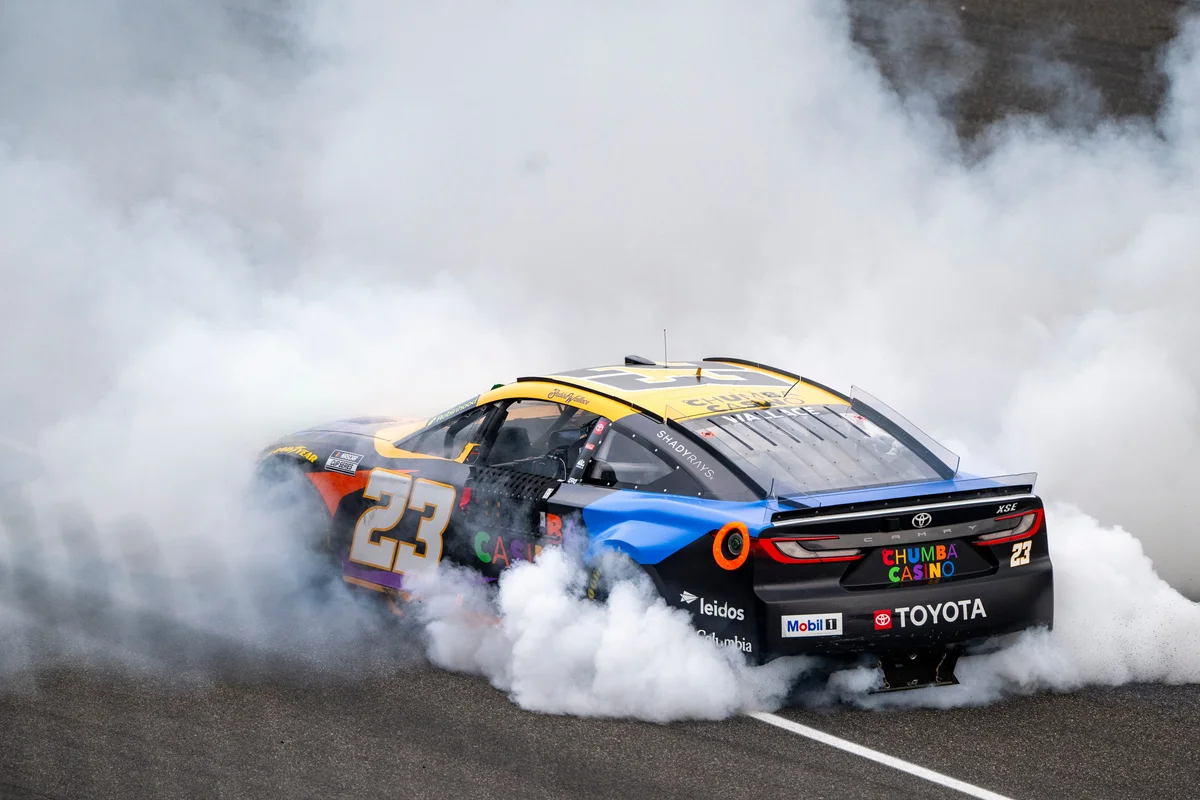
Months later, NASCAR and its leadership faced intense scrutiny and legal challenges after a federal antitrust lawsuit was filed by two teams, including Michael Jordan’s 23XI Racing. The dispute centered on the lucrative charters—rights guaranteeing team entries into races—which teams argued should be permanent to ensure financial stability. NASCAR chairman Jim France refused to make these charters permanent, prompting a two-year negotiation stalemate and eventual court proceedings.
The court case, which included eight days of testimony, painted a starkly negative image of the France family, accusing them of greed and prioritizing wealth while teams struggled financially. The lawsuit pressured NASCAR’s leadership as it revealed significant financial compensations to the France family trust, totaling over $400 million between 2021 and 2024, at a time teams sought financial relief.
Brian France, former chairman and grandson of founder Bill France Sr., expressed sympathy for his family during the trial, stating,
“I felt bad for all of them. A lot of what happened is the nature of lawsuits; lawsuits are never pretty. But for 75-plus years, somebody has had to balance what is good for everybody, all of the stakeholders and certainly the fans.”
Divergent Views from Industry Insiders Reveal Complex Dynamics
While trial testimony was harsh, many in the motorsports world offered contrasting perspectives. Michael Shank, a successful team owner who started by mortgaging his home and received personal financial support from Jim France, criticized the lawsuit’s portrayal. He affirmed,
“These are good people who care about the industry and built it on their backs, and it pissed me off to see how it was twisted.”
Shank’s experience illustrates the personal support and investments behind the scenes often overlooked in legal battles.
Rick Hendrick himself regarded the lawsuit as an unnecessary ordeal, reflecting that such tensions would not have escalated under previous leadership:
“I made a decision when I started to be a private business and to stay private because I didn’t want the pressure of a board or stockholders telling me how to run my business,”
he said, continuing,
“They built a heck of a business… They’re good people and what was portrayed — the greed — I just feel like they got railroaded.”
Jim France’s Role as NASCAR’s Steadfast Leader
At age 81 and the sole surviving son of NASCAR’s founder, Jim France played a critical role during the dispute. His firm stance on the charter issue was a source of contention, leading to an ultimatum for teams to accept a detailed 112-page contract in late 2024. Despite a tight deadline, key teams refused to sign, instead filing the federal lawsuit. The drawn-out mediation process failed, culminating in a courtroom confrontation that exposed tensions and unflattering comments, such as offensive texts from NASCAR’s first commissioner Steve Phelps about Hall of Fame team owner Richard Childress.
Though Phelps advocated for fairer terms for teams, he ultimately adhered to Jim France’s directives. Phelps’s departure from NASCAR earlier in the year underscored the internal strains the leadership faced during this crisis.
Settlement Brings Everlasting Charter Security and Boosts Their Value
The dispute ended on the ninth day of trial when the France family agreed to a settlement that transformed team charters into “evergreen” agreements. Instead of subject to cancellation, charters would now be renewed alongside each new media rights deal, dramatically increasing their market value—from $45 million, the last sale price in 2025, to nearly $100 million overnight. NASCAR currently issues 36 charters for 40 starting positions at every race, underscoring their importance.
The France Family’s Enduring Influence and Future Prospects
Brian France noted the family’s heavy burden during this turbulent period. Jim France stepped into the chairman role following Brian’s 2018 resignation after a DUI arrest, marking a generational change in leadership. Lesa France Kennedy, Brian’s sister and a Duke economics graduate, serves as NASCAR’s executive vice chair but is primarily focused on running family-owned racetracks and enhancing the fan experience. Her son, Ben Kennedy, aged 34, continues to climb the ranks in NASCAR operations and competition, positioning himself as the family’s leading successor amid an industry where fourth-generation family companies are rare.
Brian France acknowledged the family’s reserved nature in public relations, stating,
“One of the challenges that you have with the family now is they’re not self-promoters. Jim certainly is not, and Lesa’s not either… They don’t really like that and don’t feel the need. I don’t blame them, to have to defend themselves with some of the stuff that flew around in that lawsuit that was completely inaccurate or certainly way out of context.”
Return to Unity and Focus Ahead of the New Season
With 23XI Racing and Front Row Motorsports signing the revised charter agreements, the lawsuit was officially dismissed just as NASCAR prepared for the season-opening Daytona 500. The sport, which had appeared fractured by the legalbattle over team rights, now seems poised to move forward united, refocusing on competition and racing excitement.
Gary Nelson, General Manager of Action Express and a former NASCAR Cup Series championship-winning crew chief, shared his respect for how the France family treats competitors fairly, despite NASCAR’s history of an “us-vs.-them” atmosphere. He said,
“NASCAR has always had an us-vs.-them feeling, but when I went to work for them, one of the main things the family made clear to me was, ‘You have to treat everyone equally and fairly.’ It’s not a charity. You have to work hard to make it, and we’ve seen so many people make tremendous wealth, millionaires created many, many, many times over by the France family.”
Nelson concluded by emphasizing the discrepancy between the lawsuit’s portrayal and his personal experience, stating,
“And the Jim France I know has helped so many people without any desire for recognition. The way the lawsuit portrayed them is just not the people I know.”
Looking Ahead: NASCAR’s Grueling Path to Stability and Growth
The resolution of the NASCAR federal antitrust lawsuit signals a critical turning point for the organization and its stakeholders. By securing charter permanence through the settlement, NASCAR has provided its teams with greater financial certainty that could foster growth and competitive stability. Moreover, the endurance of the France family’s leadership, particularly through Jim France and the emerging Ben Kennedy, points to continuity even as the sport navigates evolving market pressures and operational challenges.
As NASCAR gears up for the new season starting at Daytona Beach, Florida, the focus appears to have shifted away from off-track disputes and back to the racetrack, where drivers, teams, and fans alike hope for thrilling and fair competition.
