
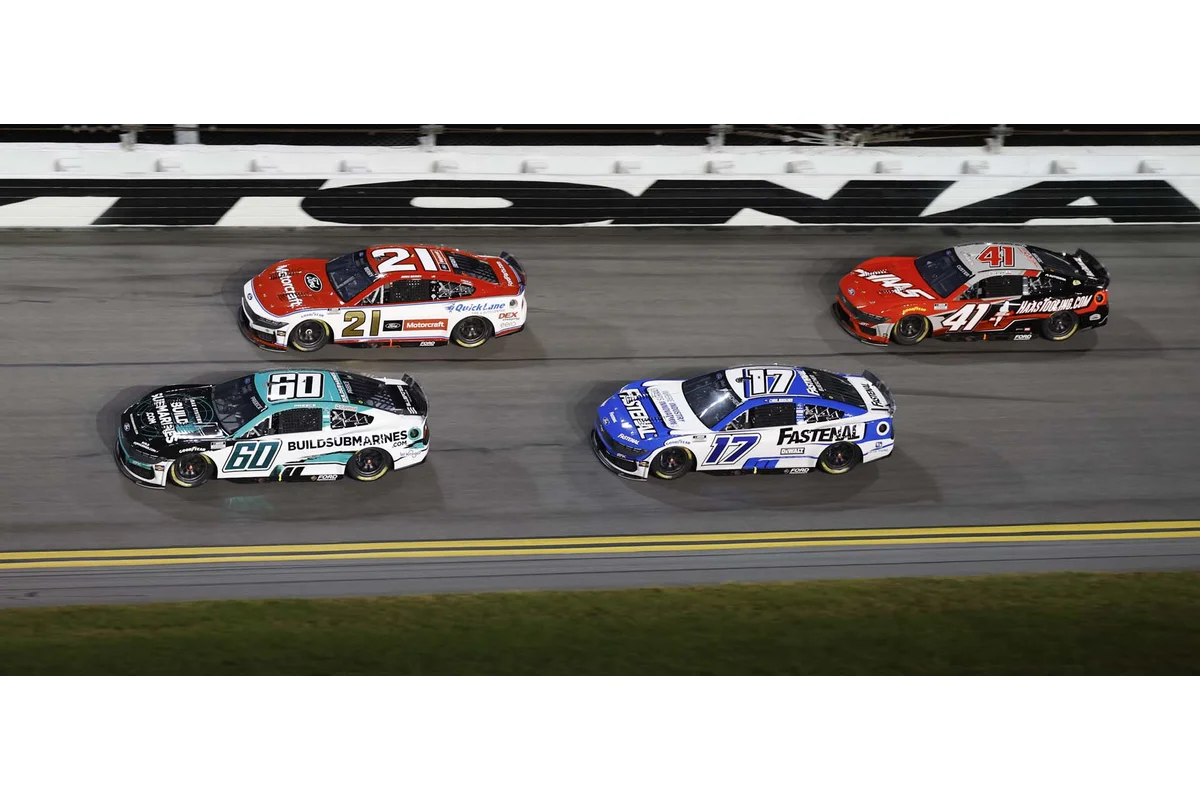
As the 2026 NASCAR season approaches, intense discussions have emerged regarding fuel conservation strategies at superspeedways. Many fans express frustration as drivers frequently adopt half-throttle pacing to minimize pit stops, affecting the excitement of full-speed racing. This fuel saving debate reflects ongoing tensions about maintaining competitive integrity and fan engagement.
NASCAR’s vice president of competition, Elton Sawyer, recently intensified the conversation by suggesting that making adjustments might not actually resolve the problems tied to fuel saving. These remarks drew immediate backlash from various corners of the NASCAR community.
Dale Earnhardt Jr. Voices Disapproval of NASCAR’s Approach
Dale Earnhardt Jr. shared his views on the controversy during an appearance on the Dale Jr. Download podcast, focusing particularly on Sawyer’s delivery of his message rather than the underlying issue itself. Earnhardt acknowledged the complexity of the situation but clearly expressed dissatisfaction with how NASCAR communicated its stance.
“There’s been more communication behind the scenes than I’ve seen in a long time with NASCAR,”
Earnhardt remarked.
NASCAR eagerly wants this to work. They badly want this to work. And they’re not bullsh*tting us. That was the only thing that I was like man, c’mon, what the f*ck? We’re all smarter than that.”
Earnhardt emphasized that just because casual fans may not perceive the fuel saving as a problem, it does not mean the issue should be ignored.
“Is it maybe not such a big problem that we don’t have to try to make a change just for the sake of making a change?”
he pondered.
“Because I don’t know that they know what to change. They’ve talked about could they change the stage lengths? Would that make the teams run harder?”
Potential Adjustments Under Consideration for Superspeedways
Among the proposed solutions are modifications such as enlarging fuel cells or adjusting stage breaks, both intended to reduce fuel saving tactics and encourage more aggressive driving. However, Earnhardt worries that some past solutions, like smaller fuel cells, proved unpopular among drivers and fans alike.
“We went to smaller cells before, that was a pain in the ass,”
he recalled.
“You just pitted more. It was just annoying to have to pit more. Drivers want to race. Drivers want to be on the track, not f*cking coming down pit road because your fuel cell is 13 f*cking gallons. We did that. We didn’t like it. I wouldn’t want to go back to that. That wouldn’t get me. I’m trying to make a change that’s going to make me want to tune in. Making the fuel cells smaller on a car ain’t exciting. All right? It’s not sexy.”
Strategic Evolution Among Teams Could Drive Organic Resolution
Earnhardt also highlighted that the current situation has evolved naturally as teams optimize their approaches to winning, with fuel saving becoming a standard strategy across the field rather than a unique advantage. This trend could eventually shift as teams experiment with different tactics to differentiate themselves.
“I do believe that if they don’t touch anything and don’t change anything, teams will continue to shift their model and their plan, right?”
Earnhardt explained.
“If you start the race, right, if we go back a few years and you start the Daytona 500 and a couple guys are saving, they’re creating an advantage for themselves. It’s no longer an advantage when the entire field does it.”
“So that’s kind of where we’ve ebbed toward. We kind of flowed toward this, all right, now everybody’s doing it. Now you’ve got to be the guy that sets yourself apart. You’ve got to be the guy that maybe doesn’t save anymore. … Some of those teams will now start to, it might happen this year, even, some of those teams will say, ‘I don’t care. I’m going to the front, I’m going to run hard. I’m going to hope the cautions fall in my favor.’”
Late-Race Chaos Reflects Fuel Saving’s Impact on Race Dynamics
Races at superspeedways lately have devolved into unpredictability as competitors jockey for position under fuel-saving conditions, often resulting in chaotic finishes where race winners emerge from unusual track positions. Earnhardt illustrated this point by recalling recent race scenarios.
“We’ve seen these races just go to total chaos at the end,”
he said.
I mean William Byron was running, what, eighth or ninth down the back straightaway when he won? The track position is important. You’re kind of out front. Being out front’s nice, but it’s not kind of the … I just feel like that if they don’t change anything, engineer minds and strategy and crew chiefs, they’ll continue to shift and flow into and strategies will change and they’ll go back the other way. They will.”
The Challenge of Balancing Competition and Entertainment
The complexity of the fuel saving issue leaves no easy solution. While Earnhardt is uncertain about what precise changes will work, he is clear that watching cars run well below maximum throttle is not entertaining, underscoring the urgency of finding a resolution.
“I don’t have an answer, but I do believe, I do know one thing: I do not like that they go out there, run half throttle and two seconds off the pace,”
Earnhardt stated.
“I don’t like it. So, Elton, we don’t like it.”
The debate around NASCAR fuel saving continues to challenge the sport’s officials, teams, and fans alike, as all seek ways to restore full-speed competition and engaging race finishes. Whether the solution emerges through technical rule changes or evolving team strategies, the outcome will significantly shape the future racing experience on NASCAR’s superspeedways.
