
DAYTONA BEACH, Fla. — William Byron is set to compete in the Daytona 500 this Sunday, aiming to become the first driver in the race‘s 67-year history to claim three consecutive wins. Coming off back-to-back victories in 2023 and 2024, Byron approaches this landmark opportunity with cautious optimism amid intense competition and unpredictable race dynamics. His teammate Ryan Blaney recently acknowledged Byron’s strong chances while also playfully attempting to jinx him after their second- and third-place finishes in the Clash exhibition event last Wednesday.
Byron’s Unique Journey and Evolving Strategy at Daytona
Despite winning the past two Daytona 500s, Byron does not consider himself an expert in mastering this marquee race. Early in his career, he struggled in the event, finishing outside the top 20 in his first six starts before surprisingly emerging victorious in 2024. That breakthrough involved capitalizing on last-lap chaos when the leading pack crashed, allowing him to maneuver from ninth place on the final lap to claim a stunning win.
Reflecting on his preparation, Byron admitted,
I don’t know that I’ve watched the 500s back because it just plays out the way it does,
highlighting the unpredictability that defines Daytona’s superspeedway racing. Instead of rehearsing scenarios, he focuses on gaining experience during Speedweek and adapting to the nuances of drafting, a critical skill given the tightly packed nature of the race.
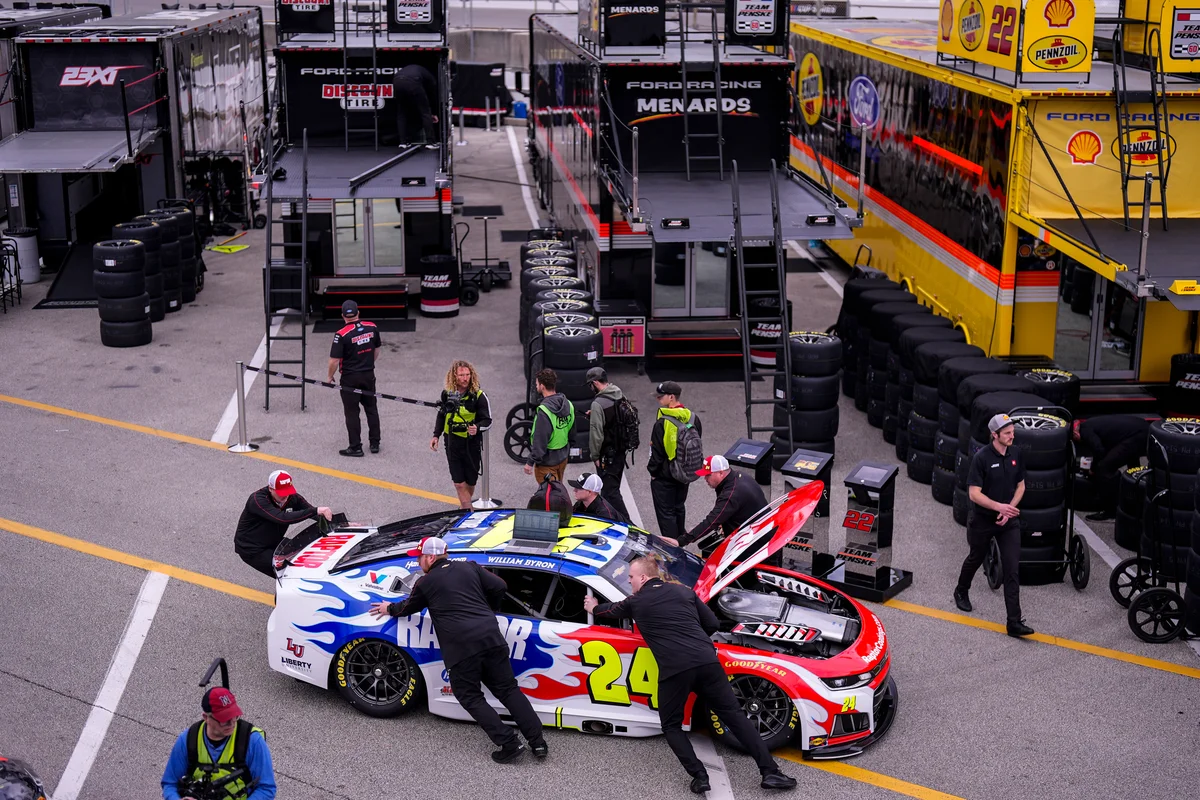
Byron explained,
Part of it’s unpredictable, but just go down there and have a good speedweek,
and learn what he needs to during the week-long event, including making sound decisions about drafting and positioning based on past learnings from tracks like Talladega.
Challenges of Superspeedway Racing and Drafting Dynamics
Daytona, like Talladega and Atlanta, features unique racing conditions due to restricted horsepower, reduced from the usual 670-750 down to roughly 550. This limits top speeds to prevent cars from becoming airborne, resulting in tightly packed groups racing at high speeds with very little reaction time for sudden incidents. The aerodynamic forces in these packs mean cars behind are pulled toward those ahead, which can push the leaders forward, making timing and cooperation between drivers vital.
Having a well-timed push—using the airflow and momentum from a trailing car—can make the difference between winning and losing. Byron’s awareness of this dynamic shapes his race tactics, balancing self-positioning with aiding teammates when advantageous.
He stated,
I’m going to do whatever is the smartest decision on the track. If they’re in front of me, and I don’t have really a better move to kind of get myself in a position, then you’re going to push them forward and try to win the race for them.
He also added,
It just kind of depends. I feel like in drafting, you have to just kind of position yourself and sometimes the best move is just to push.
Handling Pressure and Valuing Victories
Though many drivers spend entire careers chasing their first Daytona 500 win, Byron has already collected two victories and 16 wins overall in NASCAR. Yet, he says the pressure does not weigh on him heavily, focusing instead on performing well each time he races.
Regarding the significance of his previous wins, Byron remarked,
I never feel like I put too much pressure on it anyways, but I always want to go down there and have a good showing and everything like that. [Having two wins] doesn’t change anything.
His trophies are not prominently displayed as a constant reminder but are kept in the same room without forming a dedicated showcase. He noted,
A lot of my trophies … I just kind of put away where I don’t see them a lot, but those are cool ones for sure. They’re in the same room, but they’re not next to each other. They’re not like a shrine that I look at every day, that’s for sure.
Impact of New Chevrolet Body and Playoff Format
This season, Chevrolet introduced a new body style aiming to improve drafting capabilities, which Byron hopes will enhance performance on superspeedways. He expressed optimism:
I hope it’s better for us pushing. We’ve needed that for a while. We’ve been more of the weak link on superspeedways for a little bit now. So hopefully that helps us get a little bit better, and hopefully we can just push better.
The revised NASCAR playoff format removes automatic qualification for race winners from securing a spot in the postseason. Byron is aware that winning the Daytona 500 provides a valuable advantage but does not guarantee playoff eligibility. Drivers must place in the top 16 in regular-season points to continue competing for the championship.
He reflected on last year’s experience, saying,
The first time around, we were kind of struggling for a month and trying to find our footing and never felt like we’re going to and then we were able to win a race. It’s just one of those things. It doesn’t change anything. Especially this year with the new format, it’s not going to mean that you’re in the playoffs or anything like that, so you’ve just got to keep pushing.
Expectations and the Road Ahead After a Daytona 500 Victory
A Daytona 500 win launches a flurry of media obligations and adrenaline that can impact performance in the following weeks. Byron shared,
It’s kind of a whirlwind, which is fun because you just won a huge race. So that adrenaline, those emotions, kind of carry you through, but you’re behind. So you have to get caught up and make sure your team’s ready for the next race and ready for the next month.
Last year, Byron managed this balance effectively, parlaying his victory into a strong regular-season showing that led to a title.
As Sunday’s race approaches, all eyes will be on Byron as he attempts what no one has before: three straight Daytona 500 wins. Achieving this historic milestone would not only cement his legacy but also reshape conversations around racing success at superspeedways. Whether through smart drafting, seizing opportunities in tight packs, or strategic teamwork, Byron’s approach blends experience, adaptability, and hope amid the chaotic nature of one of NASCAR’s toughest challenges.
