
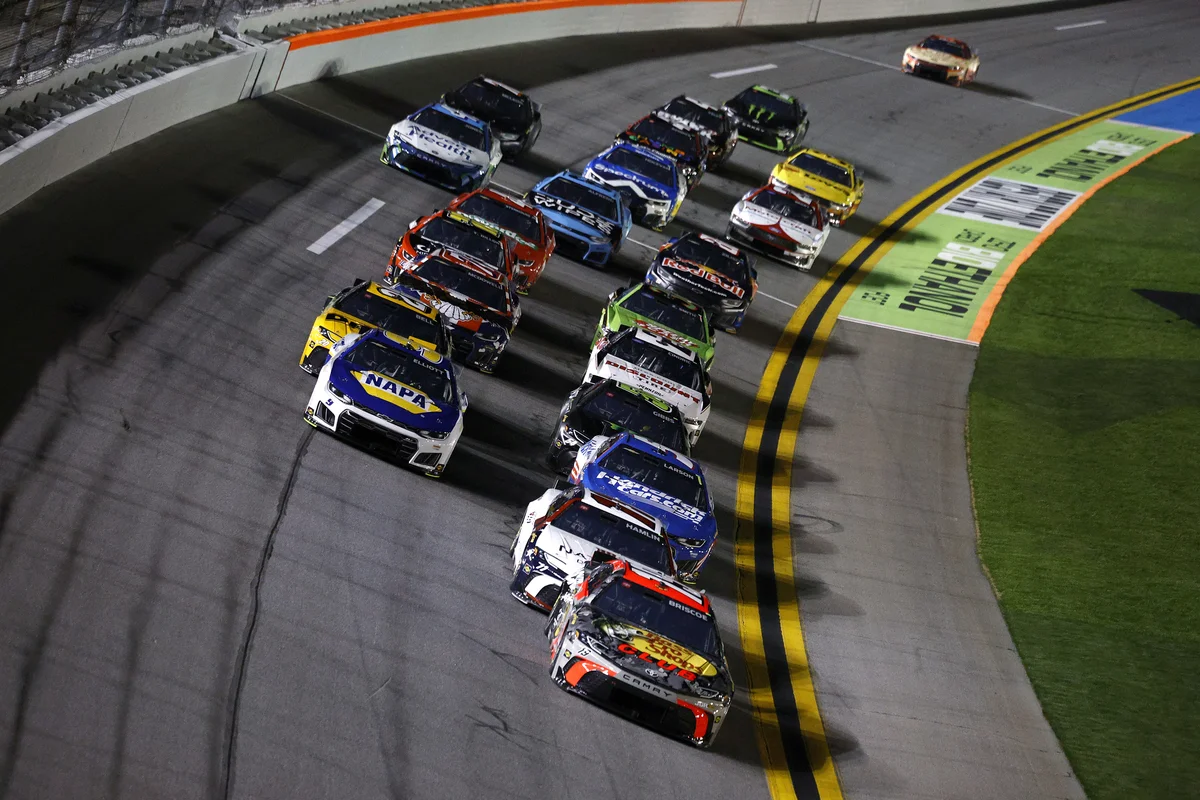
NASCAR has announced a landmark collaboration with POET, making it the first premier motorsport series to adopt zero-carbon bioethanol fuel. This development, launched this week, aims to maintain NASCAR’s hallmark high-speed excitement while significantly lowering the sport’s environmental impact through the use of NASCAR sustainable bioethanol fuel.
With this new fuel blend, cars will retain their power and engine noise but with a much smaller carbon footprint, marking an important step toward sustainability in stock car racing.
Introducing a New Generation of Racing Fuel
As part of the agreement, POET becomes NASCAR’s official bioethanol supplier alongside long-standing partner Sunoco, and its branding will be prominently displayed on fuel cans seen at tracks nationwide. The zero-carbon bioethanol supplied by POET will be combined with the existing race fuel, enabling teams to continue using their high-performance engines while reducing carbon emissions and enhancing fuel combustion efficiency.
Eric Nyquist, NASCAR’s Chief Impact Officer, emphasized how this partnership complements the sport’s strategic vision:
“The partnership with POET reflects our commitment to leverage our platform as a real-world proving ground for innovation. As the world’s largest biofuel producer, POET’s industry-leading technology will bring zero-carbon bioethanol to our Sunoco race fuel blend, helping to drive performance on and off the track for NASCAR.”
POET’s extensive bioethanol production capacity, exceeding 3 billion gallons annually, and its close collaborations with American farmers and manufacturing plants bolster this initiative’s foundation. Moreover, the POET Restart Zone, situated near the start-finish line on NASCAR-owned circuits, will now feature POET branding as a visible symbol of the partnership.
Jeff Broin, POET’s Founder and CEO, highlighted bioethanol’s dual benefit of power and sustainability:
“Bioethanol is redefining what’s possible in racing by bringing high octane and maximum performance to the track under the most demanding driving conditions, now with zero carbon intensity.”
Longstanding Ethanol Usage Builds Confidence for Zero-Carbon Shift
This collaboration builds on NASCAR’s history with ethanol, as the sport switched to an E15 ethanol blend in 2011 and has since accumulated over 25 million miles of racing on that fuel. These miles, run under strenuous heat and intense drafting, proved ethanol’s reliability and performance, instilling confidence to advance toward zero-carbon bioethanol.
For POET, the partnership offers national visibility while reinforcing connections with rural America, as its plants operate in states like Iowa and South Dakota, relying on crops grown by local farmers. The relationship between NASCAR and POET also holds policy implications, with ongoing industry efforts to secure year-round access to E15 fuel, which faces regulatory restrictions during summer in some areas. NASCAR’s backing may help elevate this issue on a wider scale.
Fans can expect little change in the sensory thrill of racing days: engines will continue to roar and on-track rivalries will remain fierce, preserving the sport’s core identity.
NASCAR officials stress that while electrification suits some motorsport formats, stock car racing’s essence lies in internal combustion engines. Using sustainable bioethanol allows the sport to maintain its heritage while embracing environmental responsibility.
Driving NASCAR’s Commitment to Environmental Progress
The POET partnership is a notable part of NASCAR’s IMPACT program, aimed at reducing ecological effects without compromising the excitement that defines the sport. This initiative underlines NASCAR’s earnest pursuit of innovative solutions that blend tradition with sustainability, potentially positioning the series as a leader in environmentally conscious motorsports.
The integration of zero-carbon bioethanol racing fuel not only exemplifies progress in clean energy applications for racing but is also a hopeful signal of the sport’s adaptable future amid increasing environmental concerns.
