
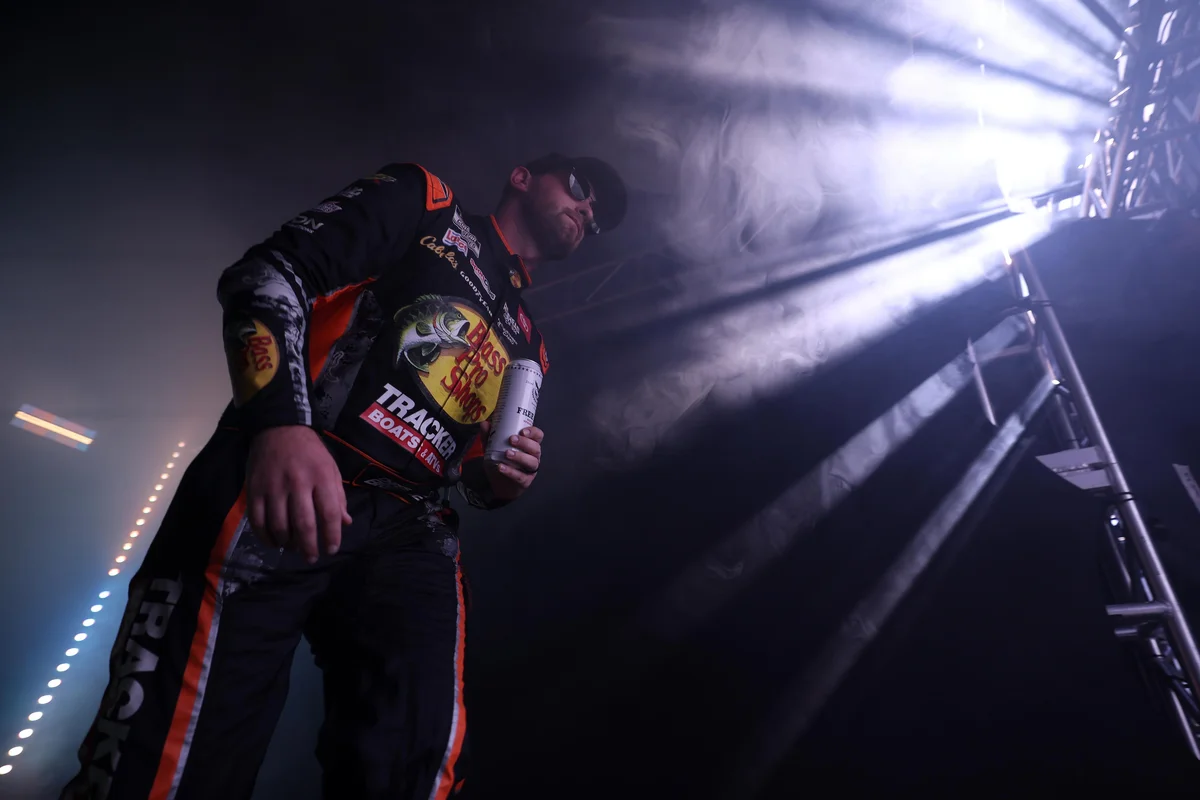
At EchoPark Speedway on Sunday night, Tyler Reddick claimed victory in the Autotrader 400, with Chase Briscoe finishing closely behind in second place. Fans were left wondering why Briscoe didn’t attempt a last-lap move to overtake Reddick during the thrilling conclusion of the Chase Briscoe Atlanta Race.
By Monday, Briscoe addressed the question directly on social media, providing insight into his decision not to push for the win in the final stretch. Known for his openness with fans, the NASCAR driver of the No. 19 car shared the reasoning behind his cautious approach.
Briscoe’s Strategic Choice on the Last Lap
Chase Briscoe explained,
“My run I had I knew wasn’t big enough to clear them both so I woulda been stuck 3 wide on the bottom and the 1 woulda pushed the 77 to the win and I probably run 4th or 5th.”
This statement clarifies that Briscoe foresaw that attempting a three-wide pass could have backfired, allowing a Chevrolet driver to slip past and push Tyler Reddick to victory instead.
The race was intense from start to finish, featuring 57 lead changes and several overtime restarts that kept drivers and teams on edge. Briscoe said the opportunity simply didn’t materialize at the critical moment, requiring calculated decisions at nearly 180 mph to preserve his position.
He further elaborated to reporters,
“I just didn’t have the straightaway speed or the ability to get there. I had to be really, really calculated with what I did. Even then, I just never had that extra little bit to do something with it.”
Staying close behind Reddick, who drives another Toyota, Briscoe opted to push him to the win rather than risk being caught behind in a chaotic battle.
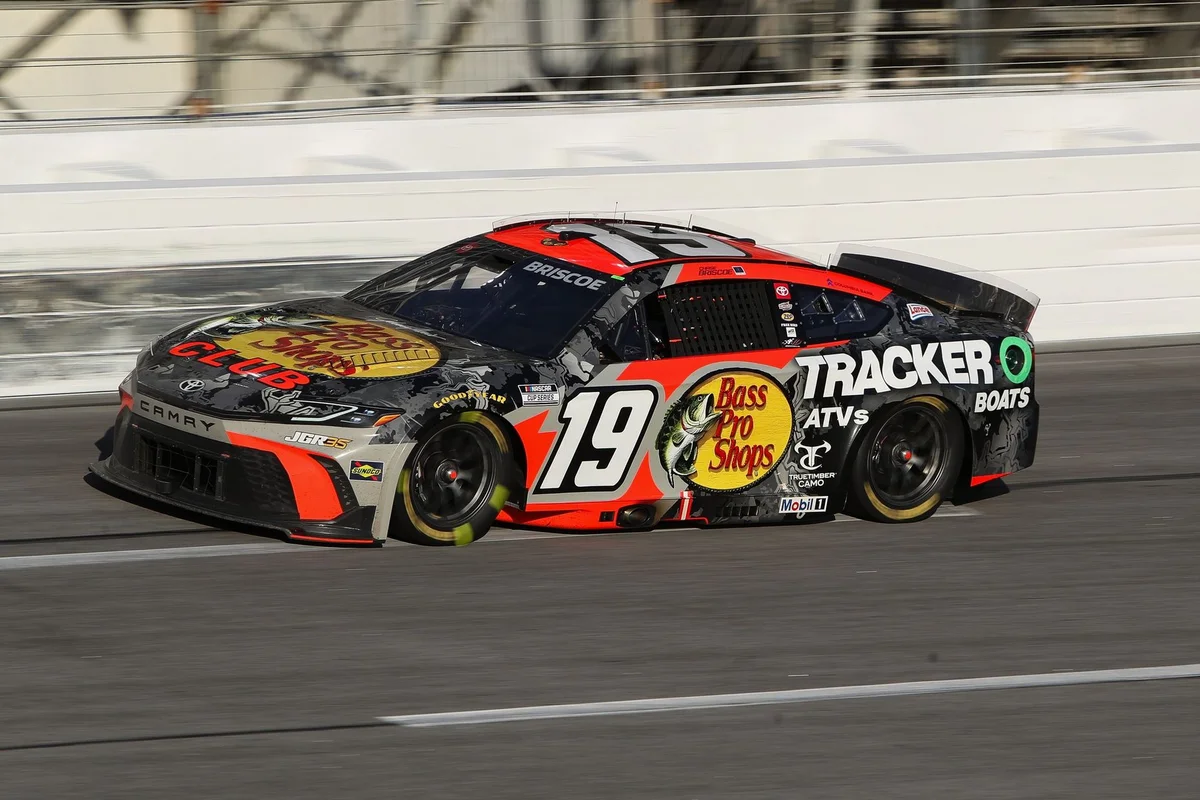
Calculated Risks to Secure a Toyota Win
Briscoe’s caution was a strategic move to ensure that Toyota secured the top spot rather than jeopardize the result with a risky maneuver that could have caused him to lose multiple positions. This choice highlighted his experience and awareness amid high-speed competition.
Earlier in the race, Briscoe had shown aggressive driving, starting from the 34th position and advancing quickly through the pack with daring four-wide passes and skillful drafting. His climb through the field demonstrated both speed and determination, making the measured finish all the more significant.
Team Performance and Season Progress
Reflecting on the runner-up finish, Briscoe said,
“I think it says a lot about our team. We’re fast enough to where we can drive through the field. Even with all the adversity that kind of happened on pit road. When you start that far back, you don’t get good pit stall selection. It just buries you all day long. Thought we did everything right. Happy with the result, we’re back in the Chase.”
This strong performance marked a remarkable turnaround compared to Briscoe’s start at the Daytona 500, where he finished 36th. Advancing from 34th to second place at Atlanta significantly improved his standing and made him the top-ranked driver for Joe Gibbs Racing after the first two races of the NASCAR season.
Implications for the Season and Briscoe’s Momentum
Briscoe’s calculated approach and impressive recovery throughout the race underscore his prominence as a contender moving forward. His ability to read the track, balance aggression with strategy, and maintain steady progress points to a promising trajectory in the competition. As the NASCAR season progresses, fans and analysts alike will watch to see how Briscoe leverages these skills to secure further strong finishes and influence the championship chase.
