
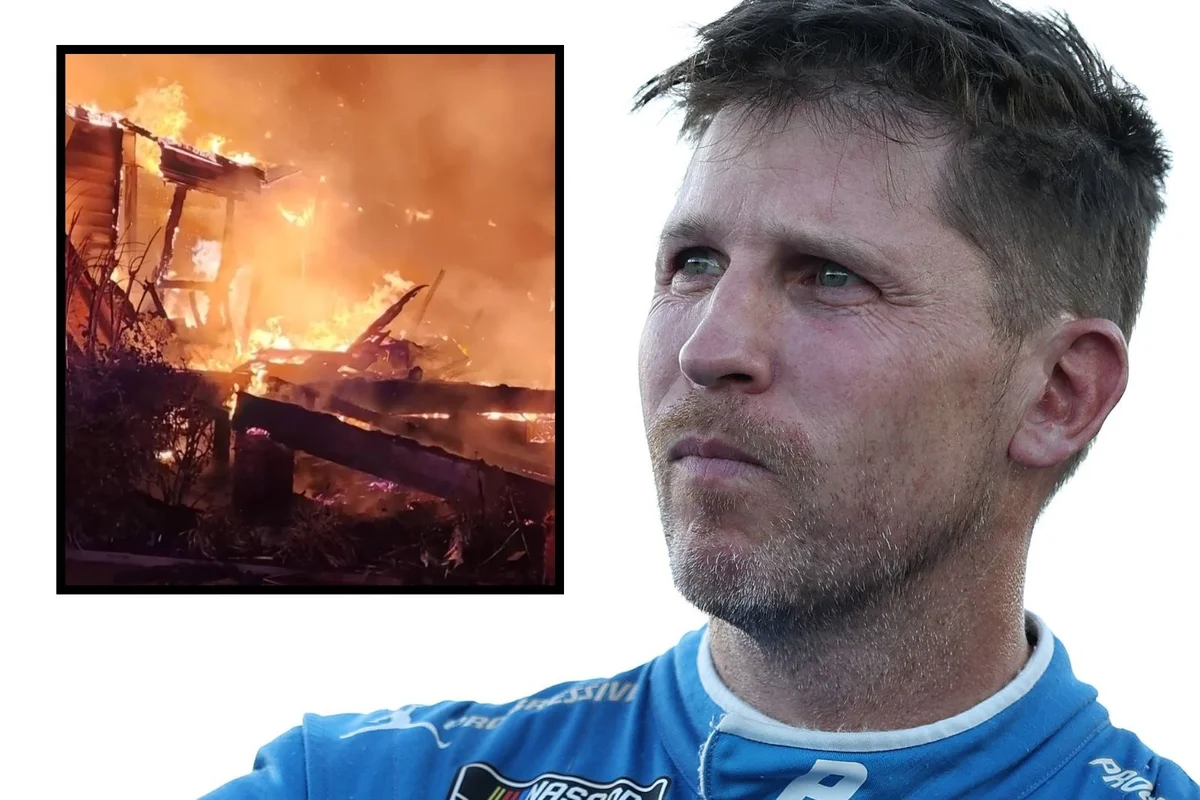
As the NASCAR Cup Series arrives at Circuit of the Americas (COTA), one of the most notorious sections for on-track mayhem is Turn 1, a spot where Denny Hamlin knows the chaos all too well. This corner, infamous for its congestion and aggressive driving, forces over 30 cars to charge uphill toward a tight left hairpin in a way that tests every driver’s nerve and skill. Drivers approach the turn with a singular goal: to gain as many positions as possible before the field stretches out.
The steep uphill run compresses the pack tightly, with limited visibility and little room to maneuver. As cars crest the hill nearly side-by-side, each driver battles for space, pushing aggressively into the braking zone where contact becomes almost inevitable. The combination of speed, elevation, and tight confines creates a pressure cooker that few can navigate without incident.
Denny Hamlin’s Honest Assessment of Turn 1 Racing Behavior
When questioned about any unspoken rules governing this tumultuous part of the race, Hamlin was blunt.
“Yeah, I don’t know. I don’t know if there is any. I wish I could say. I think everyone has the mentality, and I’m guilty of it too, is you go in there and you try to position your car that is whatever best for yourself. Now, there’s collateral damage that goes on way out on the right side of you that you never see. And so it’s kind of out of sight, out of mind,”
Hamlin explained.
He highlighted how drivers often justify their actions if they don’t directly hit the car in front, even when their moves indirectly cause crashes or force other competitors off racing lines. This
“out of sight, out of mind”
approach leads to chain reactions invisible to the instigators but devastating to those caught in the chaos.
Hamlin underscored that the structure of Turn 1 itself encourages such lawlessness.
“So it’s easy to have a little bit of that lawlessness with less repercussions at turn one at Cota than probably any corner that we’ve got on our schedule,”
he said, acknowledging the corner’s unique status on the NASCAR calendar.
The Risks and Rewards of Attacking Turn 1 at COTA
Unlike tighter corners where a single misstep can end a driver’s day, Turn 1 offers relatively less risk of severe car damage. This safety net emboldens drivers to take aggressive lines, prioritizing position gains over caution. The chaotic nature of this corner means that survival instincts often outweigh racing etiquette, with drivers tunneling their focus on self-preservation and advancement.
Even spotters, who guide drivers through complex traffic, face challenges at Turn 1. They must rapidly interpret a bottleneck forming uphill while drivers approach full speed with varying braking points, making clear communication difficult amid the frantic action.
Fans are fully aware of this dynamic, often gathering atop the hill above the braking zone to witness the inevitable pileups and last-second maneuvers. One driver missing a braking point can trigger a domino effect, stacking several rows of cars in just moments.
This controlled disorder rewards determination and punishes hesitation, blending blurred lines of responsibility. Turn 1 at COTA has earned a reputation as an engineered chaos zone where drivers’ survival instincts routinely eclipse any unwritten codes of conduct.
Ross Chastain Reflects on His Experiences Navigating Turn 1
Adding perspective, Ross Chastain openly admitted his struggles with Turn 1 at COTA during a media session before the race. The Trackhouse Racing driver recounted incidents where he spun out and was spun by others, even recalling similar incidents in the NASCAR O’Reilly Series.
Chastain attributed much of the challenge to the uphill nature of the entry. He outlined how the climbing approach distorts drivers’ ability to find braking markers accurately, with restarts making the issue worse by altering speed expectations. Although restart zones were moved closer to Turn 20, shifting rhythms still complicate entries.
Owning up to his mistakes, Chastain stated,
“I’ve made more than my fair share of mistakes. The track was designed to build a lot of speed, have a ton of braking potential with the uphill elevation climb to Turn 1, and then trying to make a turn back the other way is really difficult. But when you get it right, it’s very rewarding.”
Why Turn 1 at COTA Continues to Define the Race’s Start
The uncertainty and disorder at Turn 1 during NASCAR events at Circuit of the Americas symbolize the corner’s critical role in shaping race outcomes. Its physical features combined with race pressure lead to a flashpoint that divides drivers and fans alike between moments of triumph and frustration. Denny Hamlin’s candid admission of “lawlessness” underscores the corner’s unique ability to dissolve typical racing protocols in favor of raw, instinctual competition.
Looking forward, this corner remains a puzzle for drivers and teams who must balance risk and reward at the start of each race. As strategies evolve and driver skill adapts, Turn 1 at COTA will continue to challenge NASCAR participants, ensuring it remains a pivotal and unpredictable section of the circuit.
Is it the most lawless turn in NASCAR? 🤠@dennyhamlin explains the ethics – or lack of – when it comes to racing into Turn 1 at @NASCARatCOTA ⚠️ pic.twitter.com/M5BqgoydDy
— PRN (@PRNlive) February 27, 2026
