
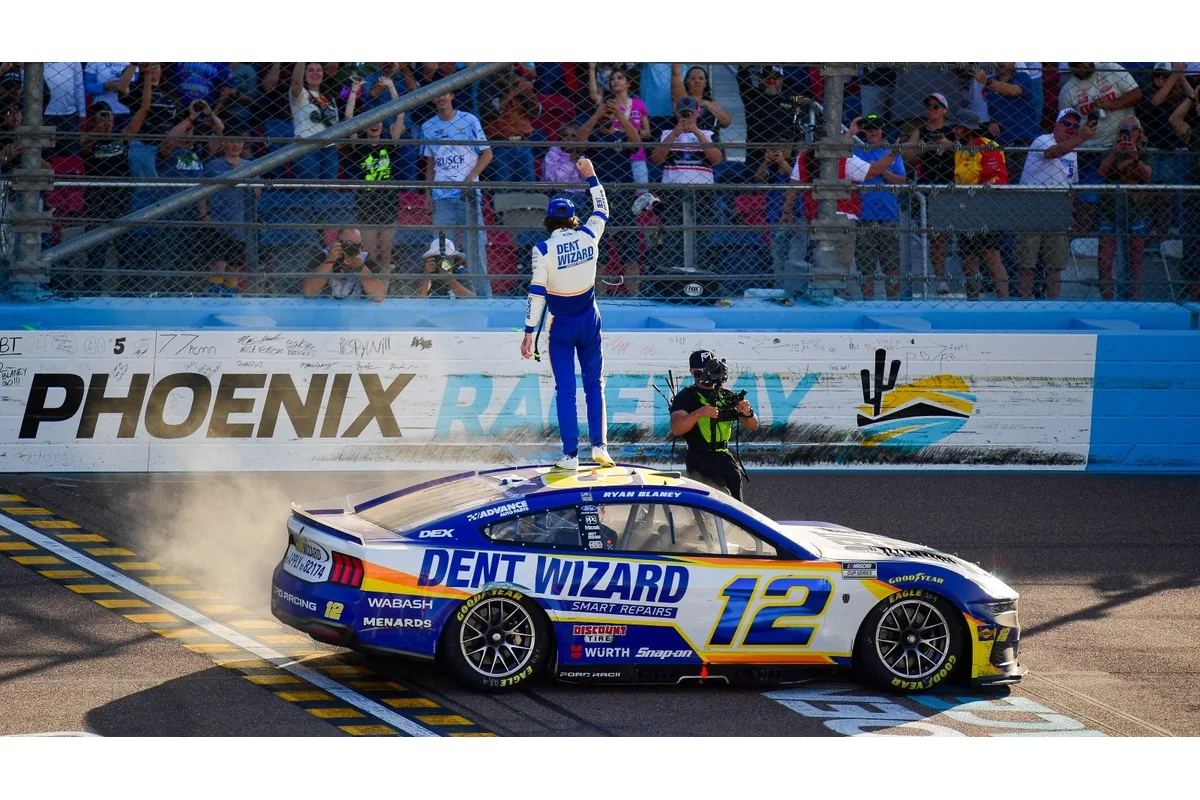
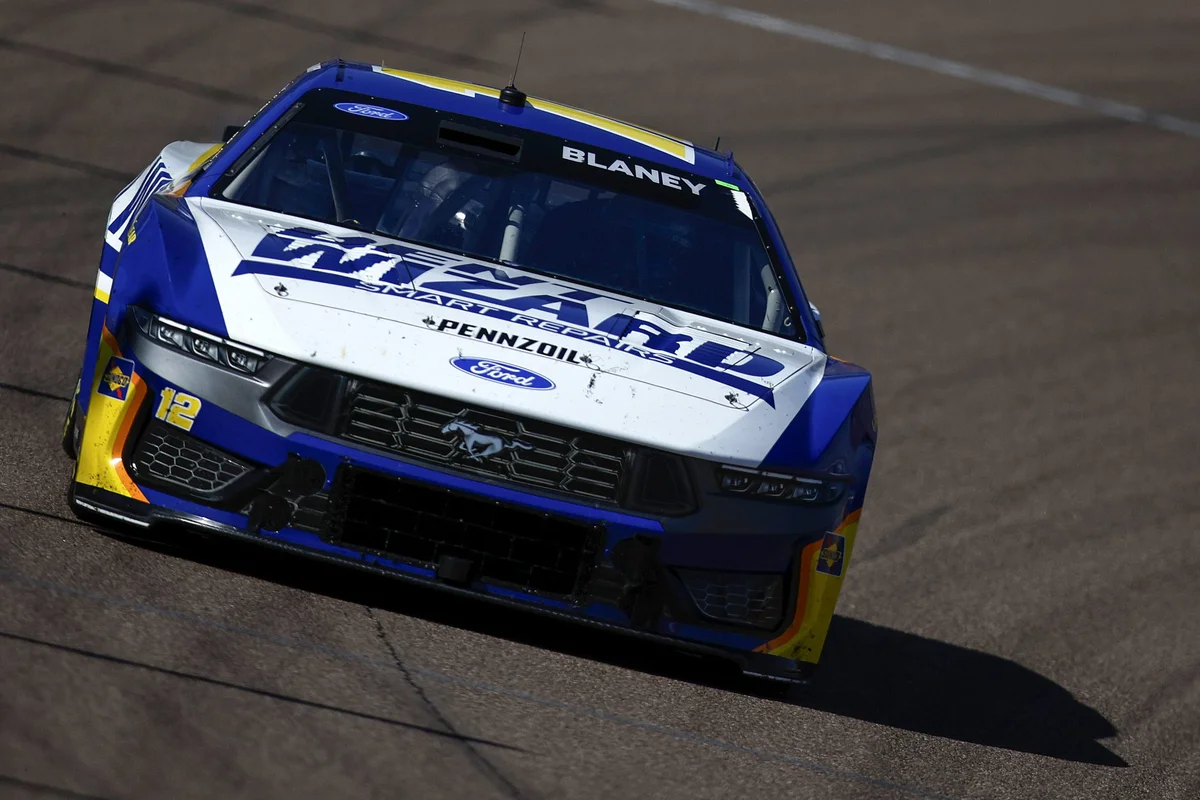
At the Straight Talk Wireless 500 held Sunday at Phoenix Raceway, Ryan Blaney faced a daunting challenge among 37 NASCAR Cup Series competitors. Despite starting fifth and taking the early lead, Blaney was penalized twice after his pit crew left a wheel loose, sending him to the back of the field both times. Undeterred, he fought back to overtake Ty Gibbs late in the race and then held off a strong challenge from Christopher Bell, earning his first win of the 2026 season.
This remarkable comeback highlights a critical flaw in NASCAR’s longstanding points system, which fails to reflect the true difficulty and significance of certain victories, especially one as hard-fought as Blaney’s at Phoenix.
Why Some Wins Defy Quantification by Points
On Sunday, Blaney achieved a staggering Pass Differential of +50, a figure far beyond his competitors. Bubba Wallace, second in this measure, recorded +34, while 23XI Racing’s driver earned 22 of those gains from moving up spots between start and finish. By comparison, the 2023 Cup Series champion only added four spots this way.
This is even more insane than it looks.Bubba had a +34 while gaining 22 spots from start to finish, that’s 12 extra passes.Gilliland had a +28 while gaining 18, that’s 10.Blaney gained four. And had a +50. He made 46 extra passes that he shouldn’t have had to make. https://t.co/qh9Tjrx77b — Ryan McCafferty (@rjmanalytics) March 9, 2026
In essence, Blaney was forced to make 46 more passes than any other driver in the race due to his penalties, underscoring the enormity of his effort. Yet, despite this tremendous feat, he received the standard points for a race win along with 10 bonus points for winning the opening stage, totaling 65 points.
Limitations of NASCAR’s Points System in Measuring True Performance
This outcome reveals how the points system averages out performances that differ drastically in difficulty. While Blaney’s victory was exceptional, especially coming from the back multiple times, the system treats it as roughly equivalent to any other win under normal conditions. This disparity highlights the inability of the points system to capture the human element and context behind each finish.
The issue becomes even clearer when considering Blaney’s 27th-place finish at the Daytona 500, a result influenced by an accident beyond his control. Ideally, his Phoenix comeback should offset the impact of such misfortunes more effectively than the current system allows.
Despite the persistence of citing season-long points standings as definitive proof of a driver’s worth, few recognize that no two victories carry the same weight in terms of difficulty, and the points system misses that nuance entirely.
Why Fans Should Look Beyond Points Standings
When the season concludes, many fans will still rely on points tallies that were last used more than two decades ago, ignoring the stories and circumstances behind each race outcome. Blaney’s triumph, far harder earned than a hypothetical win by Chase Briscoe, whose victory might come from others’ late crashes, won’t be fully appreciated on paper.
Recognizing that some wins demand much more from drivers challenges the fairness of equating all victories. Observing the races with one’s own eyes allows a clearer judgment of who truly performs the best, beyond what numbers alone can communicate.
Rather than simply watching box scores, fans should trust their perception of drivers’ skills and tenacity in each moment of competition.
This is even more insane than it looks.
Bubba had a +34 while gaining 22 spots from start to finish, that's 12 extra passes.
Gilliland had a +28 while gaining 18, that's 10.Blaney gained four. And had a +50. He made 46 extra passes that he shouldn't have had to make. https://t.co/qh9Tjrx77b
— Ryan McCafferty (@rjmanalytics) March 9, 2026
