
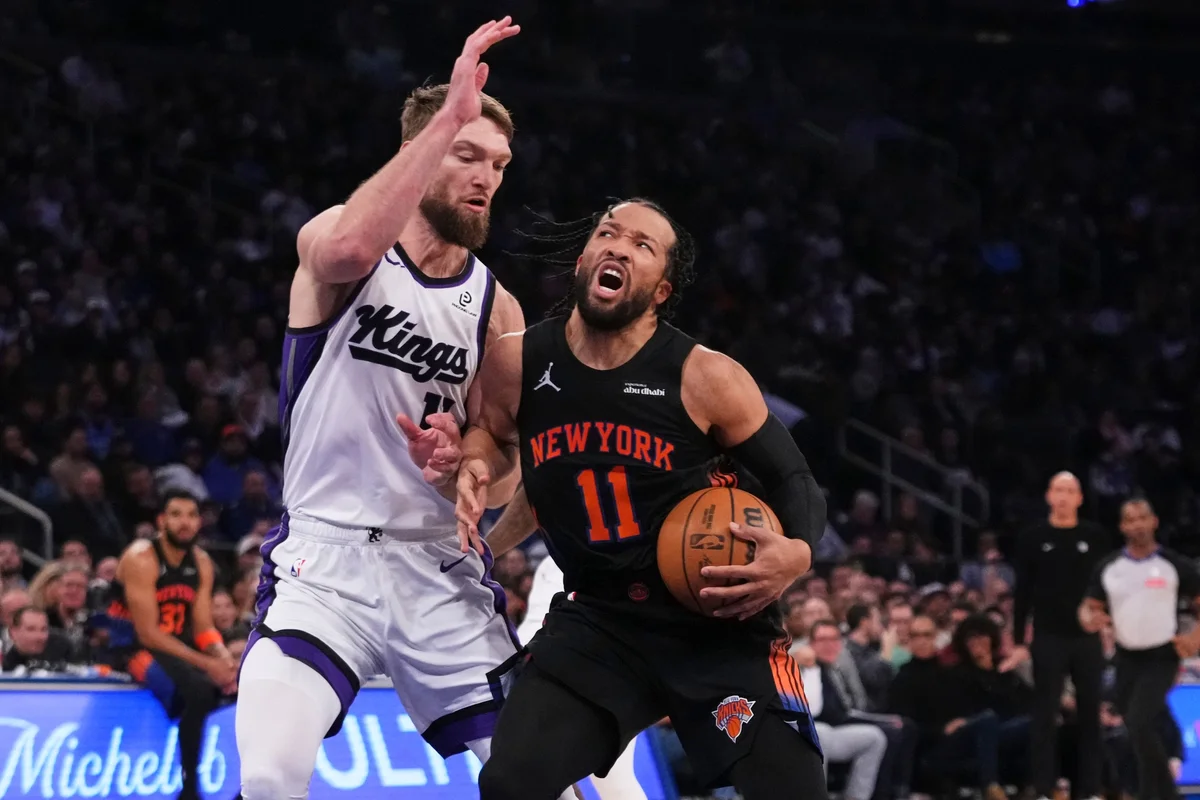
In a crucial matchup on Sunday night, the New York Knicks secured their sixth consecutive win by defeating the Los Angeles Lakers, leaving behind a slow 2-9 start to 2026. With just under three minutes remaining in the third quarter, a misdirected pass from Luka Doncic gave Karl-Anthony Towns possession, setting up a fast break. Towns quickly launched the ball to Knicks captain Jalen Brunson, who had the option to score easily but instead passed to OG Anunoby, whose dunk tied the game at 77. This pivotal play underscored Jalen Brunson ball movement as an essential factor in the team’s momentum.
On the following possession, Anunoby disrupted a pass intended for Doncic and drove coast-to-coast, giving the Knicks a two-point lead. These exchanges highlight how the Knicks’ offensive flow thrives when Brunson facilitates playmaking rather than focusing solely on scoring.
Experts Praise Brunson’s Unselfish Play
During the broadcast, analyst Reggie Miller commended Brunson’s decision-making, stating,
“This is why you make plays like that, to get other guys going.”
Former Knicks guard Jamal Crawford added,
“That was so unselfish. I know another No. 11 that used to play here that would have kept [the shot].”
These remarks emphasize the significance of Brunson’s willingness to prioritize team success over individual stats, a mindset that has crystallized under coach Mike Brown’s evolving offensive system.
Teamwide Buy-In Fuels Offensive Depth
After the game, Landry Shamet highlighted the collective commitment fueling the Knicks’ streak:
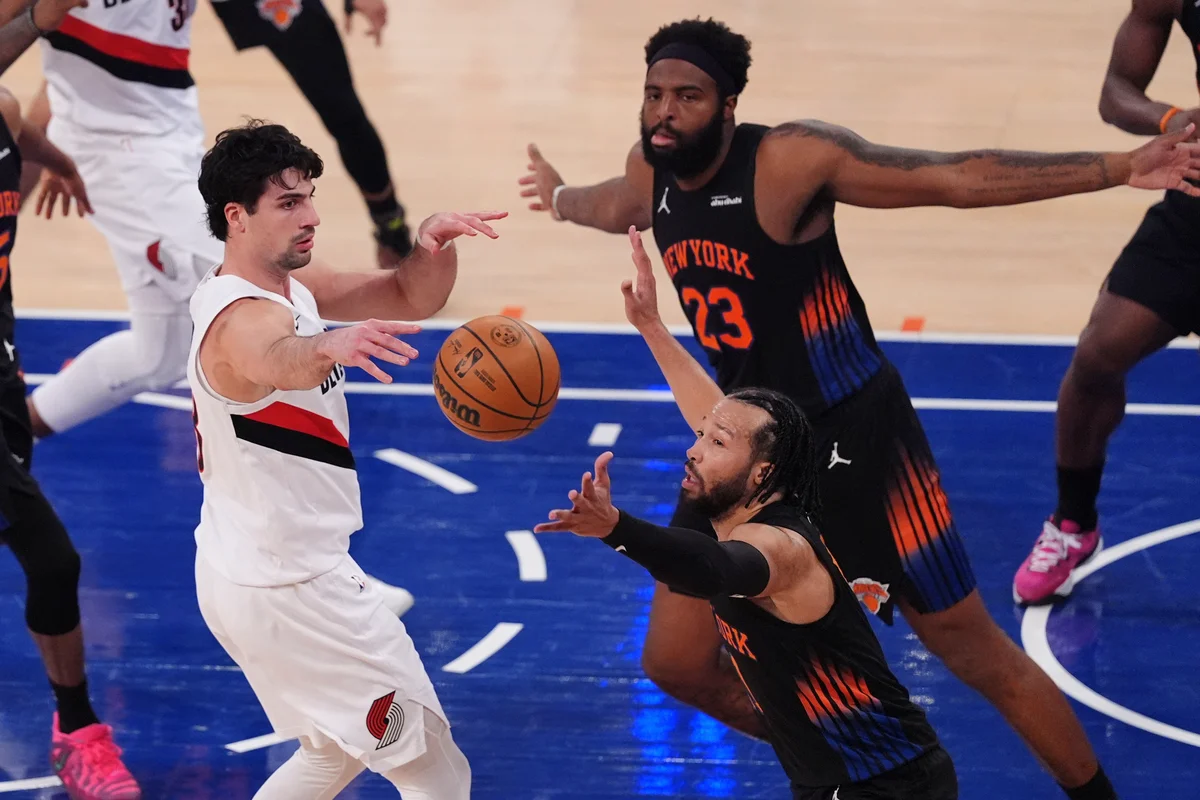
“It’s gonna be somebody different every night. We know that. Our group has bought into that. It’s about all of us buying in, doing what we can on a night-to-night basis. We’ve got a locker room full of guys who want to win and are willing to sacrifice for one another.”
Shamet himself capitalized on Brunson’s alley-oop pass late in the third quarter, showcasing how ball movement leads to scoring opportunities even in transition.
Notably, Shamet was among three Knicks players to score 20 or more points against the Lakers, none of whom are headed to the upcoming All-Star Weekend. This underscores the team’s balanced attack rather than reliance on marquee names.
Six: A Symbol of Growth and Momentum
The number six took on special meaning for the Knicks on Sunday. Karl-Anthony Towns earned his sixth-career All-Star selection, while the Knicks matched a season-best six-game winning streak. Shamet’s six three-pointers tied a recent personal high, and six games remain before the NBA All-Star break on February 12. Additionally, Josh Hart tallied 20 points for the third straight game versus the Lakers, with the Knicks holding a perfect 6-0 record in games where he reaches that mark.
Brunson perfectly complemented these milestones, dishing out 13 assists, highlighted by six assists before the pivotal Anunoby dunk. This marked his sixth game with double-digit assists this season, reinforcing his role as the team’s primary facilitator.
Statistical Insights Revealing Team Strengths and Weaknesses
While the Knicks soar with contributions from players like Brunson, Anunoby, and Hart, numbers also expose key trends. The Knicks hold a 6-0 record when Hart scores 20 or more and a 12-3 record when Anunoby achieves at least 20 points. However, when Brunson attempts 20 or fewer shots in a game, the Knicks’ record is a strong 18-2, contrasting with a balanced 12-12 when he takes 21 or more shots. This pattern suggests the team thrives when Brunson adopts a more distributing role instead of overrelying on his own scoring.
Previously, from the NBA Cup Semifinal victory over Orlando Magic through a heavy loss to the Detroit Pistons, Brunson took a league-high average of 24 field goal attempts per game—correlating with uneven results. Before the slump, the Knicks held a 17-7 record, with over half those wins coming when Brunson shot 20 or fewer times.
Brunson and Team Depth Driving Offensive Efficiency
Josh Hart spoke about the Knicks’ collective offensive depth after Sunday’s win, stating,
“That’s what we’re capable of. We have great depth. We have guys that can knock down shots, guys that can play-make. It’s not always going to be JB or KAT’s night. We rely on those guys obviously to score points, but it shows that we don’t have to force anything.”
His efficiency Sunday—20 points on 8-of-11 shooting—illustrated this balance.
Supporting his remarks, the Knicks have increased their average passing by 14 more passes per game during the current six-game winning streak than during their earlier 2-9 downturn. They now rank first in the NBA, tied with the Indiana Pacers, for secondary assists per game (5.6), a statistic reflecting unselfish, rapid ball movement—a hallmark of their resurgence.
Brunson’s Leadership as the Driving Force Behind Knicks’ Success
The transformation of the Knicks’ offense correlates directly to Jalen Brunson’s evolving role as a playmaker. His ability to identify open teammates and share the ball has reinvigorated the Knicks’ attack. As coach Mike Brown’s democratic offense demands, the team thrives when Brunson moves the ball proficiently, setting off chains of productive plays.
Landry Shamet explained,
“It’s a byproduct of us playing the right way. We talk about trying to get the dominoes to start falling. It’s all about getting the first one to fall and making the reads from right there. It could be anybody. It’s never premeditated. When we’re the best offensively, it’s not premeditated. It’s just reads and guys playing to their strengths, so [OG and Josh] have been the beneficiaries of the ball moving, and they’re taking advantage of their opportunities.”
For his part, Brunson stressed the importance of adaptability:
“If your shot is not falling, you have to impact the game somewhere else. I kept seeing two people, so I was just trying to make the right play at the right time. We were getting good looks. Just going to play the defense how they are playing. [My teammates] were knocking shots down, and the way we were moving the ball is great.”
Developing Chemistry Between Towns and Brunson
Despite recent team success, integrating New York’s two All-Stars—Karl-Anthony Towns and Jalen Brunson—has presented challenges. Late in the second quarter on Sunday, a miscommunication between them led to a turnover following a dynamic play sequence. Brunson passed the ball to Towns on the left elbow and moved toward the rim, but the subsequent play was disrupted by a delayed wrap-around pass.
Coach Brown has attempted to manage these dynamics by staggering their minutes on the floor. Still, the Knicks’ pursuit of a championship requires more than mere coexistence; Towns and Brunson must develop a symbiotic relationship. As of now, they function more like coworkers than a cohesive tandem on court.
Nevertheless, Towns showed humility after reaching his 6th All-Star nomination, downplaying personal achievements to highlight Brunson’s milestone of 10,000 career points. In 18 months with the Knicks, Towns has recorded seven games with 20 or more rebounds, the most for a Knick this century, yet insisted,
“Why talk about rebounds when we can talk about 10,000 points?”
Unseen Plays Powering the Knicks’ Momentum
Points and rebounds are only part of the story. The Knicks’ recent string of wins reflects the impact of less visible contributions: smart passes, timely assists, and selfless movements that disrupt defenses and create momentum. Brunson’s willingness to pass even when presented with scoring chances exemplifies this approach.
This selflessness can ignite critical scoring runs that transform game outcomes, particularly when the team’s stars do not have their best shooting nights. New York’s continued success appears connected to their captain’s unselfish vision and ability to orchestrate the offense efficiently.
