
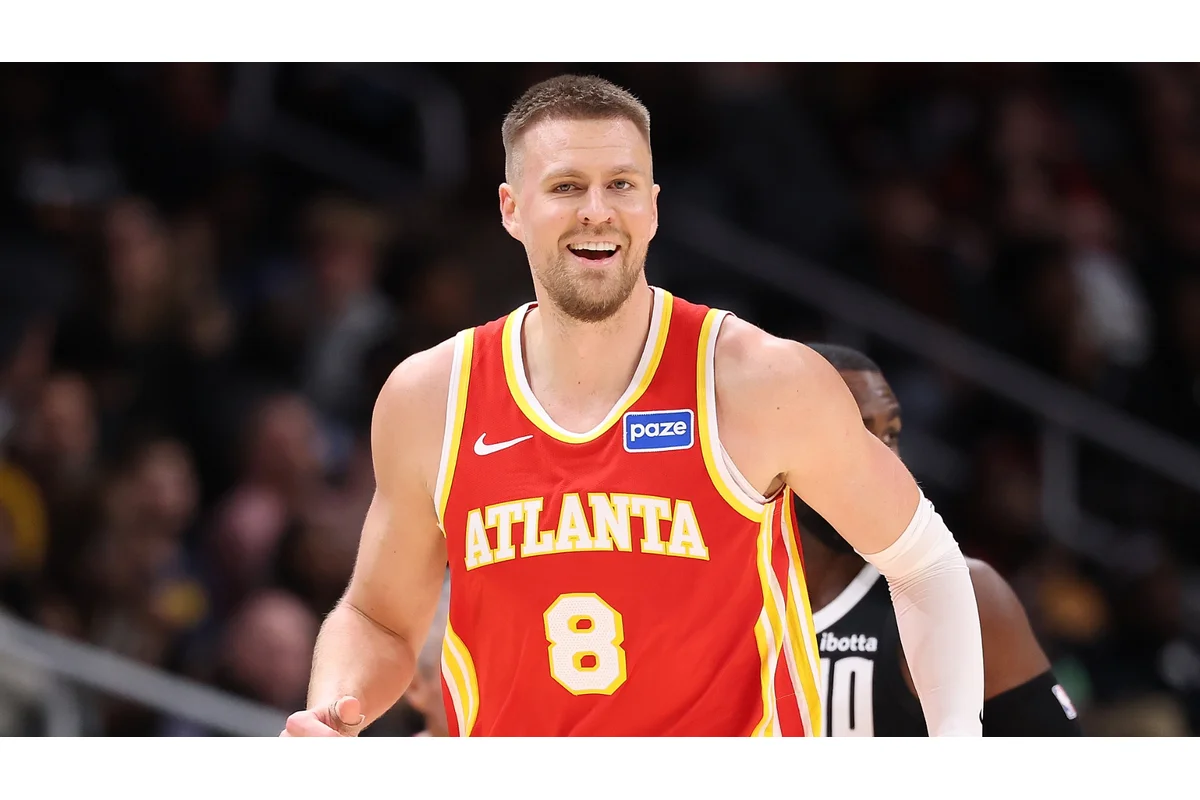
The Golden State Warriors have officially concluded their five-year chapter with Jonathan Kuminga by trading him alongside Buddy Hield to the Atlanta Hawks in exchange for Kristaps Porzingis. This transaction, occurring amid the ongoing NBA season, marks a strategic shift for Golden State as they pivot away from their earlier pursuit of Giannis Antetokounmpo. The Warriors’ front office had reportedly viewed it as unlikely to incorporate Jimmy Butler’s max contract into their trade plans, which led them to explore alternatives involving lesser contracts like Kuminga’s, Hield’s, and Draymond Green’s. After the Milwaukee Bucks declined Golden State’s draft-pick offer, the Warriors refocused on acquiring Porzingis to bolster their roster’s frontcourt and shooting capabilities.
Conversely, the Atlanta Hawks continue their rebuilding process by moving on from their second ex-All-Star of the season, Kristaps Porzingis. With both Trae Young and Porzingis now gone, the Hawks have no fully guaranteed contracts beyond age 27 for next season, underscoring a decisive youth movement strategy aimed at long-term growth. This trade signals a clear divergence in team timelines and priorities between the Warriors and Hawks.
Assessing Golden State’s Acquisition of Porzingis
Jonathan Kuminga, despite his evident athletic ability, struggled to find consistency in Golden State’s system, which did not adequately accommodate his style of play. His trade value had diminished, as highlighted by earlier discussions involving the Sacramento Kings, who lost interest after adding De’Andre Hunter. Essentially, Kuminga’s contract mainly served as matching salary in this trade, indicating the Warriors’ pragmatic approach after abandoning the more complicated Antetokounmpo pursuit.

Had Kristaps Porzingis been fully healthy, the Warriors likely would have secured a top-tier return. For years, Golden State sought a player with Porzingis’ size and shooting range, particularly to complement Draymond Green by adding a true rim protector capable of functioning as a floor spacer. The signing of Al Horford this offseason reflected this need for a big man who can stretch the floor and anchor the defense. Porzingis’ unique combination of height and perimeter skill fills a void that Golden State has historically lacked.
Unfortunately, Porzingis arrives with significant health uncertainties. The player currently faces complications related to Postural Orthostatic Tachycardia Syndrome (POTS), an autoimmune condition that causes symptoms such as rapid heartbeat, dizziness, and fatigue. After an impressive start featuring over 18 points per game and strong on-off court differentials in his first 11 matches, his performance has since declined with only six subsequent appearances marred by ineffectiveness. Beyond the autoimmune disorder, Porzingis has managed other career-long injuries, amplifying doubts about his durability going forward.
Despite these concerns, Golden State’s risk in acquiring Porzingis is limited. He is on an expiring contract, and the Warriors did not sacrifice any draft picks for the trade. If Porzingis’s health does not improve, Golden State can part ways without long-lasting consequences. Additionally, moving on from Hield alleviates a $3 million salary obligation for the upcoming season, providing minor financial relief. There is also potential upside in negotiating a team-friendly extension, as a contract in the $10-15 million range would greatly enhance the value proposition compared to his current $30 million salary.
The Warriors’ gamble aligns with their imperative to maximize Stephen Curry’s remaining prime years. Curry, approaching 38, deserves a competitive roster to keep Golden State in playoff contention, if not title contention. This trade reflects a carefully calibrated risk with potentially high returns but limited downside, balancing immediate hope against future rebuilding needs. By maintaining draft assets and avoiding long-term notable expenses, Golden State signals dedication to sustaining contention while preserving flexibility for the post-Curry era.
This move, while less spectacular than landing Giannis Antetokounmpo would have been, demonstrates commitment to giving Curry a chance to compete and send a positive message to fans. Porzingis is a recognizable talent, and his addition signifies that the Warriors remain proactive rather than surrendering to an inevitable decline. Moreover, parting ways with Kuminga resolves internal tensions related to the young forward’s fit in the locker room, further stabilizing team dynamics.
Atlanta Hawks’ Thoughtful Youth-Oriented Rebuild
The Hawks and Warriors are clearly on different rebuilding timelines, and Atlanta approached this trade with a patient mindset focused on future flexibility. Atlanta had hoped Porzingis and Onyeka Okongwu could serve as a nucleus at the center position, but Porzingis’ health and contract uncertainty made a long-term commitment unfeasible. The team chose to prioritize financial freedom over obtaining additional draft picks, which aligns with their capacity to access valuable first-round selections from deals with the New Orleans Pelicans and Milwaukee Bucks.
The Hawks value monetary flexibility as they seek to identify a reliable center and shore up the backcourt after Trae Young’s departure. In acquiring Kuminga and Hield, Atlanta gains contracts that are either short-term or easily movable. Hield’s guaranteed salary of $3 million for next season comes with two remaining years that can be stretched over five years if waived, limiting financial risk. Kuminga’s $24.3 million team option for next season offers the possibility of using him as trade salary or releasing him depending on future needs.
Assuming the Hawks did not intend to retain Porzingis, converting his expiring contract into two players under team control for the near term makes strategic sense. Kuminga, given a fresh start in Atlanta, could flourish in a system that remains similar but not identical to Golden State’s ball-movement focused offense. Atlanta ranks tenth in passes per game and eleventh in three-point attempts, operating under coach Quin Snyder’s philosophy of fast-paced ball circulation and perimeter shooting, although it diverges from the Warriors’ style in key ways.
The Hawks’ environment offers Kuminga an opportunity to develop within a more conventional NBA framework, contrary to Golden State’s unique pace and spacing. Kuminga’s athletic prowess remains notable; he produced strong numbers in last season’s playoffs against Minnesota, averaging 24 points per game on impressive shooting splits (55% FG, 49% 3PT, 72% FT) in games with significant minutes. This potential makes Durban a valuable developmental asset for Snyder’s offense, which already features rotational wing players like Jalen Johnson and Dyson Daniels who each bring different abilities to the floor.
Quin Snyder’s offensive creativity and preference for versatile wings enhance Kuminga’s chances of carving out a role, especially given the Hawks’ minimal investment in this trade. They exchanged a player unlikely to be retained for an audition period where Kuminga can prove his worth. Since Atlanta only reached the Play-In Tournament stage last season, dedicating part of the roster for a trial run on a young prospect is a low-risk proposition that could pay dividends in the coming year.
Trade’s Broader Implications for Both Franchises
This trade underscores the contrasting objectives faced by the Warriors and Hawks. Golden State’s urgency to field a viable contender while Stephen Curry’s career winds down requires bold moves with manageable risks. Porzingis’ acquisition epitomizes this tension—he is a high-reward asset burdened with health doubts, but the potential upside justifies the gamble as the Warriors chase one last championship window.
For the Hawks, the deal aligns with a patient rebuilding strategy focused on financial flexibility, talent evaluation, and youth development. Moving on from two former All-Stars in Porzingis and Young reflects a commitment to restructuring around younger players poised for growth. The chance to evaluate Kuminga and retain manageable contracts like Hield’s creates optionality without compromising future draft capital or salary cap health.
Going forward, the Warriors must monitor Porzingis’ health closely, determining whether he can return to a productive level or if the team needs to pivot again quickly. Meanwhile, the Hawks will observe Kuminga’s fit within their system, balancing on-court performance with off-court strategic considerations. Both organizations have accepted calculated risks designed to steer their franchises through pivotal transition periods in the NBA landscape.
“The Warriors’ pursuit of Giannis [Antetokounmpo] after a week is over. They have moved on. The Warriors made a pick heavy offer last week continued to have conversations going into this week with the Bucks.”
– @ShamsCharania
pic.twitter.com/8E4zeaD6r3— ClutchPoints (@ClutchPoints) February 5, 2026
