
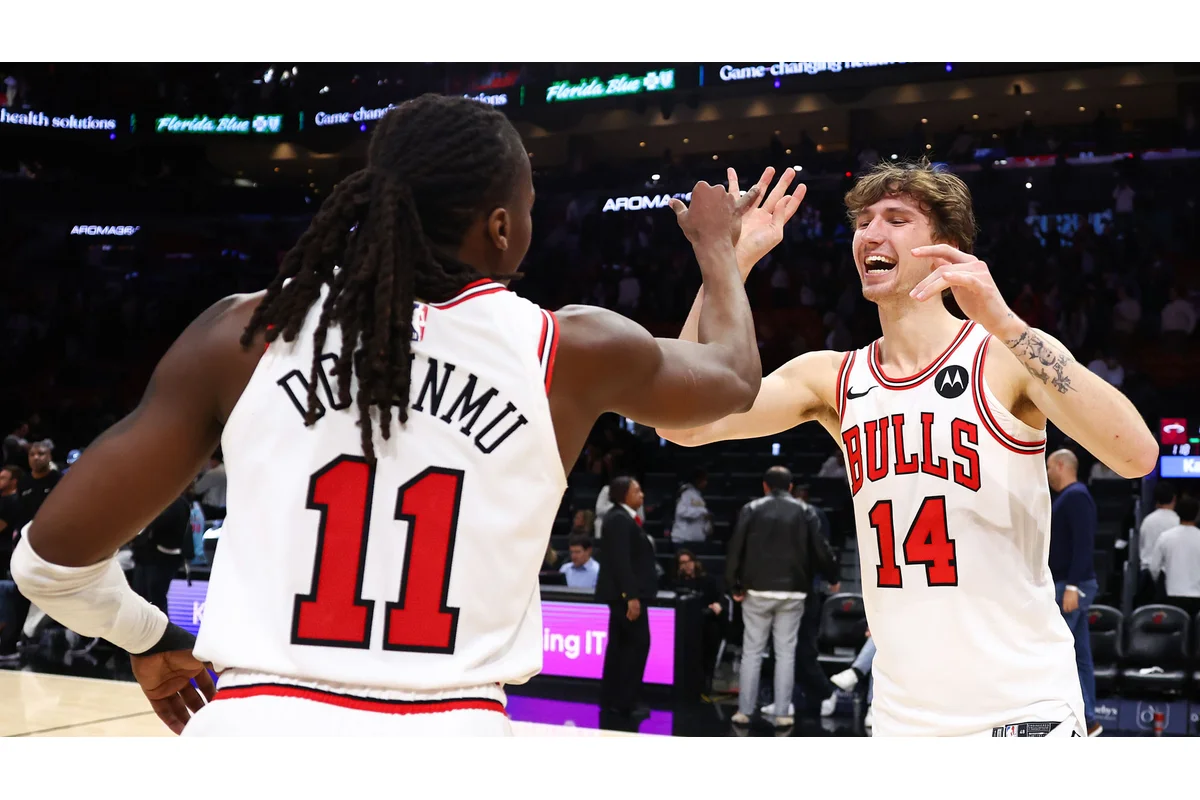
MILWAUKEE — The Chicago Bulls made significant moves at the NBA trade deadline this week, executing five trades between Saturday and Wednesday that drastically altered their roster. Led by executive vice president of basketball operations Artūras Karnišovas, the Bulls acquired five second-round draft picks and added three guards along with two forwards, while parting ways with players including Coby White, Nikola Vučević, Kevin Huerter, and Dalen Terry. These decisions signal a shift in approach toward improving future draft positioning.
New Direction as Front Office Embraces a Different Strategy
This flurry of activity contrasts sharply with previous seasons, where the Bulls remained relatively inactive at the deadline. Fans watching the trades might wonder about the sudden upheaval, but the front office has clear reasoning behind these moves. Heading into the trade period, Chicago had eight players on expiring contracts. Of these, only Ayo Dosunmu and White were regarded as potential candidates for re-signing or extensions. This setup provided the Bulls with considerable salary cap flexibility, allowing them to absorb salary from other teams while maximizing value from players who were likely departing.
Teams often choose one of two approaches at the deadline when handling such roster situations. The simpler tactic is to exchange expiring contracts for second-round draft picks or players who could become restricted free agents, exemplified by Chicago’s pickup of guards Jaden Ivey from Detroit and Collin Sexton from Charlotte. Alternatively, executives may opt to reduce the team’s competitiveness intentionally—without instructing players or coaches to lose—to lower the team’s standing and improve draft lottery odds.
A Calculated Step Back to Aim for a Stronger Future
Tanking rarely involves attempts to lose games outright by players or coaches, as commitment and competitiveness remain strong on the court. Instead, management engineers a team’s decline by trading key contributors at strategic times to create a talent gap. This was evident when Karnišovas moved two foundational Bulls players recently, seeking to lower the team’s chances of reaching the postseason.
The Bulls’ recent willingness to make “losing moves” marks a departure from prior midseason management strategies. Previously, the goal was to maintain competitiveness, but now the focus is pragmatic: accept short-term setbacks to enhance long-term prospects. This approach cannot be implemented partially; without completing the intended roster changes, Chicago risks falling into the frustrating middle ground of mediocrity—neither good enough to contend nor poor enough to secure premium draft positioning.
Current Standings Reveal Challenges and Opportunities
Despite a disappointing season so far, the Bulls remain trapped in the league’s “pretty bad” tier, which is far from ideal for either fans or team building. Following a loss to the Milwaukee Bucks on Tuesday, Chicago slipped to 10th place in the Eastern Conference with a 24-27 record. The Charlotte Hornets trail closely behind, energized in their push for a play-in spot, heightened by acquiring White, the Bulls’ leading scorer averaging 18.6 points per game, who will immediately bolster Charlotte’s lineup.
The significance of trading White to a direct competitor in the play-in race underlines Chicago’s apparent commitment to a strategic tank. The Bulls stand third-to-last in the NBA rankings, but their current draft lottery odds remain low, with only a 4.8% chance of landing a top-four pick and a 1% chance of securing the first overall selection. Yet, they are just 3½ games ahead of the Milwaukee Bucks and Memphis Grizzlies, teams positioned eighth-worst in the league, indicating a narrow margin that could shift the Bulls’ draft fortunes significantly.
Why Losing Now Could Lead to Future Gains
Increasing the deficit against these competing teams would enhance Chicago’s prospects of better draft outcomes, even if the Bulls do not catch the league’s worst teams such as the Brooklyn Nets and Washington Wizards. The logic behind tanking is difficult for fans who want to see their team win, as rooting for losses is painful and tests loyalty. This strategy, however, is ultimately a gamble, dependent on luck—as illustrated by the frustrations experienced by teams like the Utah Jazz after years of unsuccessful late-season declines.
For the Bulls, the plan is designed to be temporary. The focus on acquiring players with expiring contracts means no lingering salary commitments will restrict future roster moves. Once this season concludes, Chicago will be free to pursue trades and sign free agents aligned with a youth-focused rebuilding timeline, avoiding endless cycles of insignificant roster adjustments that have hindered progress in the past.
Momentum Aligns with the Bulls’ Long-Term Vision
Most importantly, these recent trades represent a serious attempt to align the team’s on-court results with front office objectives for the first time in years. The shift toward tanking signals a strategic acceptance of short-term pain in hopes of better positioning the franchise for sustained success.
Now, all eyes are on Karnišovas as he aims to complete this rebuilding phase before the trade deadline closes at 2 p.m. Thursday, which could determine the final shape of the Bulls’ roster and their trajectory going forward.
