
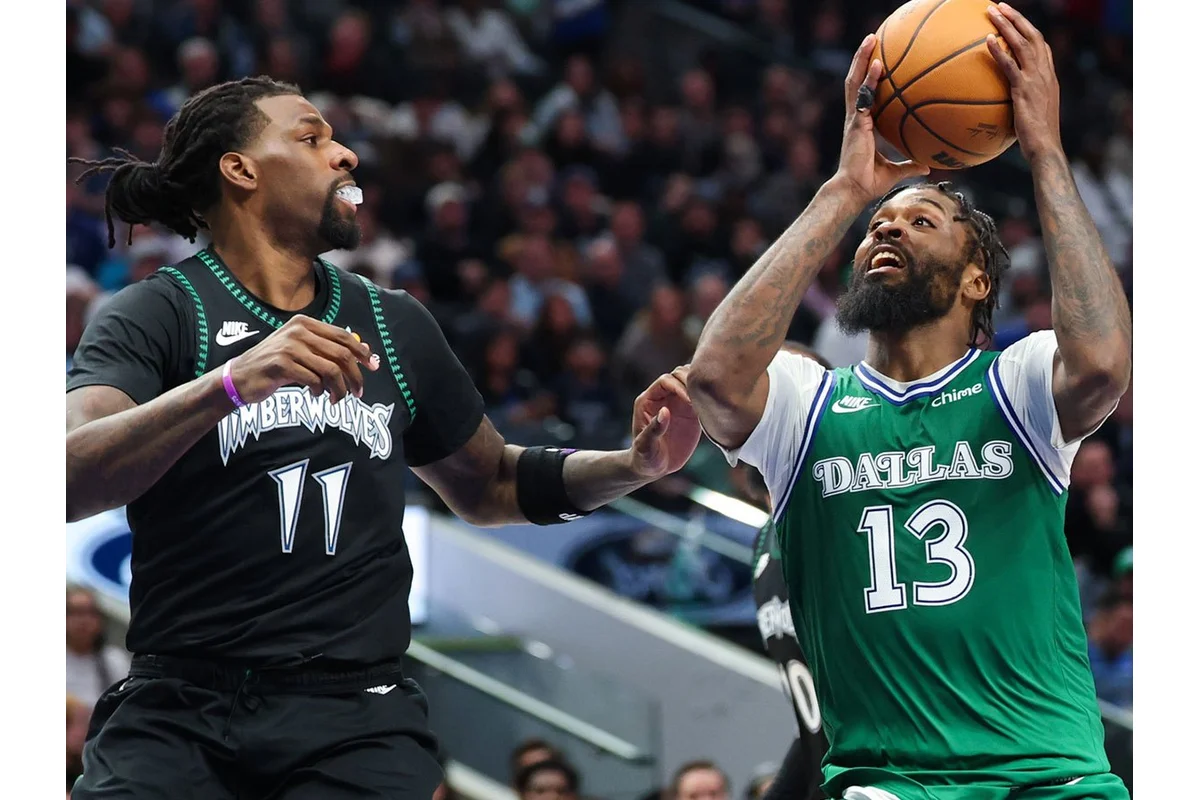
The Dallas Mavericks made a strategic roster move ahead of Wednesday’s NBA trade deadline by trading Malaki Branham to the Charlotte Hornets in exchange for veteran point guard Tyus Jones. This transaction stems from the large-scale trade that sent Anthony Davis away from Dallas, signaling the Mavericks’ ongoing effort to reshape their squad while focusing on the Dallas Mavericks trade Tyus Jones objective.
Adding Experience and Stability at the Point Guard Position
This trade reflects Dallas’ flexible strategy following the Anthony Davis trade. Rather than retaining Branham, a young player they had just acquired, the Mavericks converted him into a more seasoned player with an established NBA history. Branham appeared in 28 games this season for the Washington Wizards, averaging 4.6 points, 1.6 rebounds, and 0.8 assists per game in limited minutes. Despite showing some shooting efficiency, his inconsistent role led Dallas to view him as a trade asset rather than a long-term fit.
Tyus Jones, contrastingly, is known for his steady performance and reliability. Drafted 24th overall in 2015 out of Duke, Jones has completed ten NBA seasons and appeared in over 730 games. Throughout his career, he has averaged 7.4 points and 4.3 assists per game, earning a reputation as a careful, low-error distributor. With the Orlando Magic this season, Jones played mostly off the bench, contributing 3.0 points, 2.4 assists, and 1.1 rebounds across 48 games. His role has varied; previous seasons saw him start for teams like Washington and Phoenix, where he took on significant scoring and playmaking duties.
Renewed Interest in a Previously Targeted Player
According to league insiders, Dallas had considered Tyus Jones before signing D’Angelo Russell earlier in the season but lost the opportunity when Jones accepted a contract with Orlando that exceeded Dallas’ offer. This trade marks the Mavericks revisiting a player they viewed as a strong addition, seizing the chance when the circumstances aligned through subsequent transactions.
Jones’ current statistics may be modest, but his style fits well with Dallas’ desired point guard traits—sound decision-making, ball control, and effective pace management. Over a decade, he consistently ranked among the NBA’s top guards for assist-to-turnover ratio despite alternating between starting and bench roles. By acquiring Jones, Dallas addresses both immediate roster needs and long-term team philosophy, which values steady ball handling and efficient play.
The quick succession of acquiring Branham, trading him, and securing Jones within 24 hours highlights how Dallas is actively adapting its deadline tactics based on prior scouting and their evolving roster priorities.
Contextual Updates on Dallas Mavericks and NBA Developments
Alongside this trade, the Mavericks continue to evaluate young talent and roster potential. Discussions surrounding the fit between rookie Cooper Flagg and star Kyrie Irving remain active, as the team resets its lineup after moving Anthony Davis to Washington. Meanwhile, injuries sidelining players such as D’Angelo Russell and Brandon Williams impact upcoming game plans. Cooper Flagg has been making headlines with his strong rookie performance, earning multiple Rookie of the Month honors and setting franchise records for consecutive 30-point double-doubles.
Coach Jason Kidd recently faced a $35,000 fine following public criticism of officiating and profane remarks, reflecting the intense pressure surrounding the Mavericks’ competitiveness in close contests. The team’s recent string of losses, including a narrow defeat to the Charlotte Hornets, has sparked frustration, underscoring the challenges Dallas faces as it navigates the season’s second half.
Implications of the Trade for Dallas’ Future Direction
Bringing Tyus Jones into the fold signifies the Mavericks’ intention to blend veteran experience with their developing talent core. Jones’ proven ability to control the game and minimize mistakes should provide stability at the guard position, complementing dynamic players like Kyrie Irving and Cooper Flagg. This trade, connected to the broader Anthony Davis deal, illustrates Dallas’ commitment to refining its roster thoughtfully rather than seeking quick fixes.
Going forward, observers will watch how Jones integrates within Jason Kidd’s system and how this influences Dallas’ playoff prospects. By prioritizing ball security and steady decision-making, the Mavericks aim to build a balanced team capable of consistent performance, setting the stage for potential success in the coming years.
