
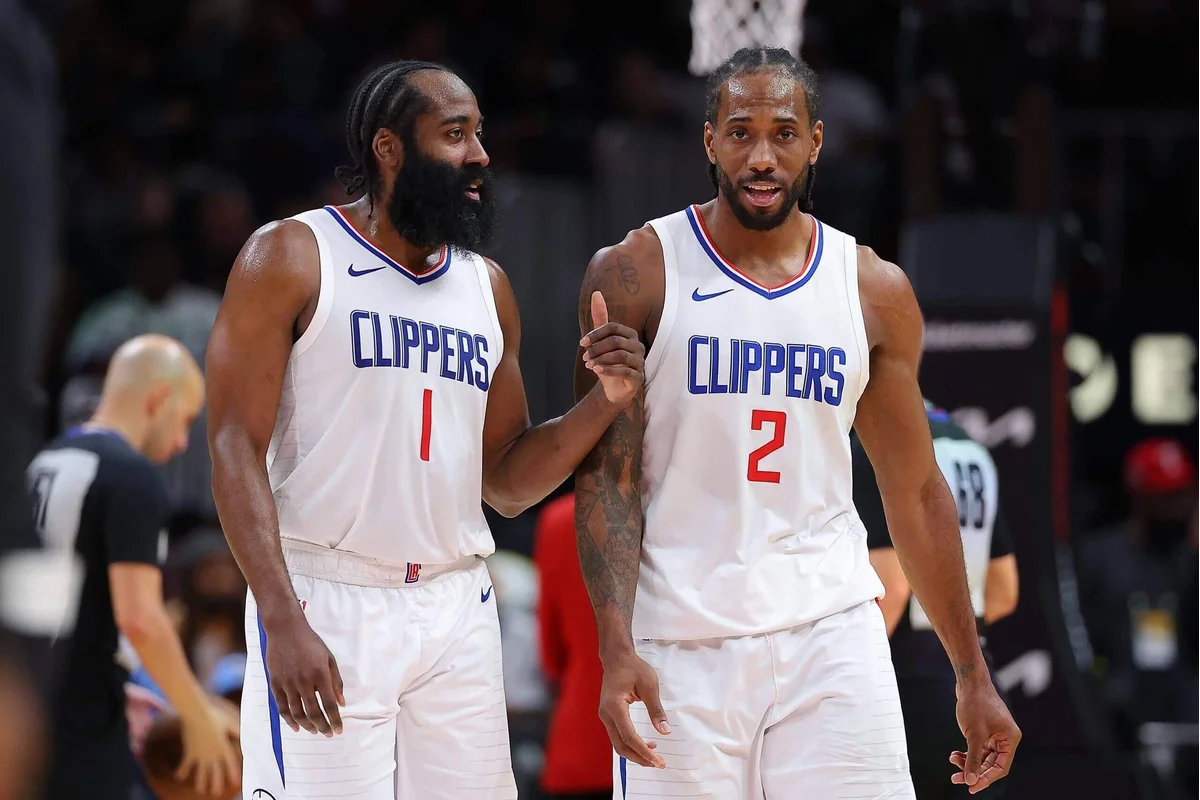
On Tuesday afternoon at the Los Angeles Clippers training facility, James Harden was seen preparing with his teammates just hours before the team agreed to trade the 36-year-old, 11-time All-Star to the Cleveland Cavaliers. In return, the Clippers received Darius Garland and a second-round draft pick. This marked a significant shift as Harden’s time in LA came to an abrupt yet mutually respectful end.
Despite the impending trade, Harden remained engaged in practice and treatment sessions at the facility, demonstrating a surprising level of calm and camaraderie before the deal was finalized. The Clippers and Harden appeared united in the decision, signaling a departure from his historically fraught exits from previous teams.
Positive Departure Contrasts Past Difficult Transitions
Clippers head coach Tyronn Lue noted the unusual nature of Harden’s departure, highlighting the warm atmosphere despite the trade news.
“When people are getting traded, it’s not usually like that,”
Lue said.
“But we all love James. … So, I walked over to the training table and started f—— with him. I was like, ‘You weird.’ That’s his favorite word. Weird. And he just started laughing.”
The amicability extended beyond Harden’s on-court contributions.
“We’re all going to miss him. Of course, his play. But just his personality,”
Lue added. Differing from Harden’s past tenures with Houston, Brooklyn, and Philadelphia, where trade demands or prolonged uncertainties marked his exits, this transition was smooth and cooperative.
Clippers’ Run and Harden’s Role in a Changing Team Landscape
The Clippers recognized that their recent streak of success was unlikely to hold, prompting a reassessment of the team’s direction. Since Kawhi Leonard’s free-agent signing in 2019 and Paul George‘s acquisition, this current Clippers era has been defined by high expectations and challenges stemming from injuries and inconsistency.
Harden was brought in to complement Leonard and George, hoping to offset their recurring injury issues. Over two-plus seasons, Harden played the majority of games but often struggled with availability, similar to his time with Kevin Durant and Kyrie Irving in Brooklyn. Now, Leonard remains the sole member of that core still in Los Angeles.
Leonard reflected on the situation, stating,
“Obviously, you need luck in this league, with shots, with injuries, with everything, so it’s just how it played out. I wanted to give it another run, but it didn’t happen that way, so now we’re here.”
When asked if the era felt unfinished, Leonard simply said,
“From what was expected? … It’s over. Guys are gone.”
Contract Negotiations Foreshadowed Harden’s Departure
The roots of Harden’s exit trace back to the summer when the Clippers expressed reluctance to guarantee more than $39.2 million in salary for Harden beyond the current season, citing his age and the team’s goal to preserve financial flexibility. Harden, having posted averages of 22.8 points, 8.7 assists, and 5.8 rebounds, and earning a third-team All-NBA nod, felt deserving of a contract extension comparable to the two-year, $111 million contract awarded to Jimmy Butler, who is the same age.
While Harden aimed to remain in Los Angeles and believed the roster was title-contending caliber, he accepted a contract where only $13.8 million of the second year’s $42.3 million was fully guaranteed. The agreement featured a player option and a no-trade clause to protect his interests, with the assumption that strong team performance would secure the full contract.
Team Struggles and Internal Challenges Shake the Clippers
The Clippers faced a rocky start, marred by on-court struggles and off-court turmoil. The franchise grappled with allegations related to circumvention of the NBA salary cap involving Leonard’s endorsement deal with former team sponsor Aspiration. Adding to the challenges was a public dispute with franchise icon Chris Paul. By December 20, the Clippers’ 6-21 record placed them near the bottom of the standings, ahead of only a few struggling teams.
During this difficult period, multiple teams started inquiring about the availability of the Clippers’ key players, including Harden, Leonard, and center Ivica Zubac, who was later traded to the Indiana Pacers. Simultaneously, Harden’s representatives proactively explored trade possibilities, anticipating a potential move.
Interest from Other Teams and Harden’s Trade Preferences
Harden expressed interest in rejoining the Houston Rockets, motivated partly by their depleted backcourt following point guard Fred Van Vleet’s ACL injury. However, the Rockets showed little enthusiasm for bringing back their former MVP. In contrast, the Cleveland Cavaliers demonstrated substantial interest, viewing Harden as a catalyst to enhance their promising big men, Evan Mobley and Jarrett Allen, while easing the offensive burden on dynamic shooting guard Donovan Mitchell.
Initially, trade discussions slowed as both the Clippers and Cavaliers evaluated their playoff prospects, with Harden and the team attempting to recover their season’s momentum. Ultimately, it became clear that a trade would serve the best interests of all parties involved.
Trade Talks Intensify as Deadline Approaches
In the days leading up to the trade deadline, negotiations between Cleveland and Los Angeles accelerated. Harden missed games against the Phoenix Suns and Philadelphia 76ers during this period, listed officially as absent for personal reasons—a common practice for players nearing trades. Harden’s presence at his alma mater, Arizona State University, during a local matchup further fueled speculation of his imminent departure.
The NBA trade market buzzed with speculation about Harden’s availability, leading to unusual scenes during the Clippers’ game against the 76ers. Players from both teams engaged in open chatter regarding the possible trade, illustrating the volatility permeating the league at the time.
Amid this upheaval, the NBA’s ongoing investigation into the Clippers’ salary cap practices remained an undercurrent. While sources close to Harden denied the inquiry influenced his decision, the league-wide focus on this probe added to the atmosphere of uncertainty.
Harden Embraces the Trade and Looks Toward Cleveland’s Future
By Tuesday, Harden accepted the inevitability of the trade, choosing not to exercise his veto option.
“It made sense for both sides,”
Harden told ESPN.
“I didn’t want to feel like I was holding the Clippers up in their future. I wanted them to actually have a chance to rebuild and get some draft capital.”
Harden expressed optimism about joining the Cavaliers, noting,
“And in Cleveland, I see an opportunity to win in the East. They’ve got a very good team, coaching staff, all of the above. So, as much as I wanted to stay in LA and give it a go—I’ve never won one before. And as a basketball mind, I think we have a bit better chance.”
Reflecting on his time in Los Angeles, Harden admitted he’ll always wonder what might have been if Leonard and George had stayed healthy during crucial playoff moments. He added,
“In life, not even just basketball, when things don’t work out, there are ways to end things in relationships without having to crack each other. Maybe we just don’t see a future together. Maybe we just outgrew each other.”
What the Trade Means for the Clippers and Cavaliers Moving Forward
For Harden, the trade represents a new chapter with the Cavaliers, a team eager to contend in the Eastern Conference by maximizing the talents of Mobley, Allen, and Mitchell. For the Clippers, acquiring Garland signals a strategic pivot toward youth and financial flexibility as they seek to rebuild after a turbulent period. The Cleveland Cavaliers gain a proven All-Star capable of elevating their roster, while the Clippers gain draft capital and a chance to reconfigure their future roster construction.
