
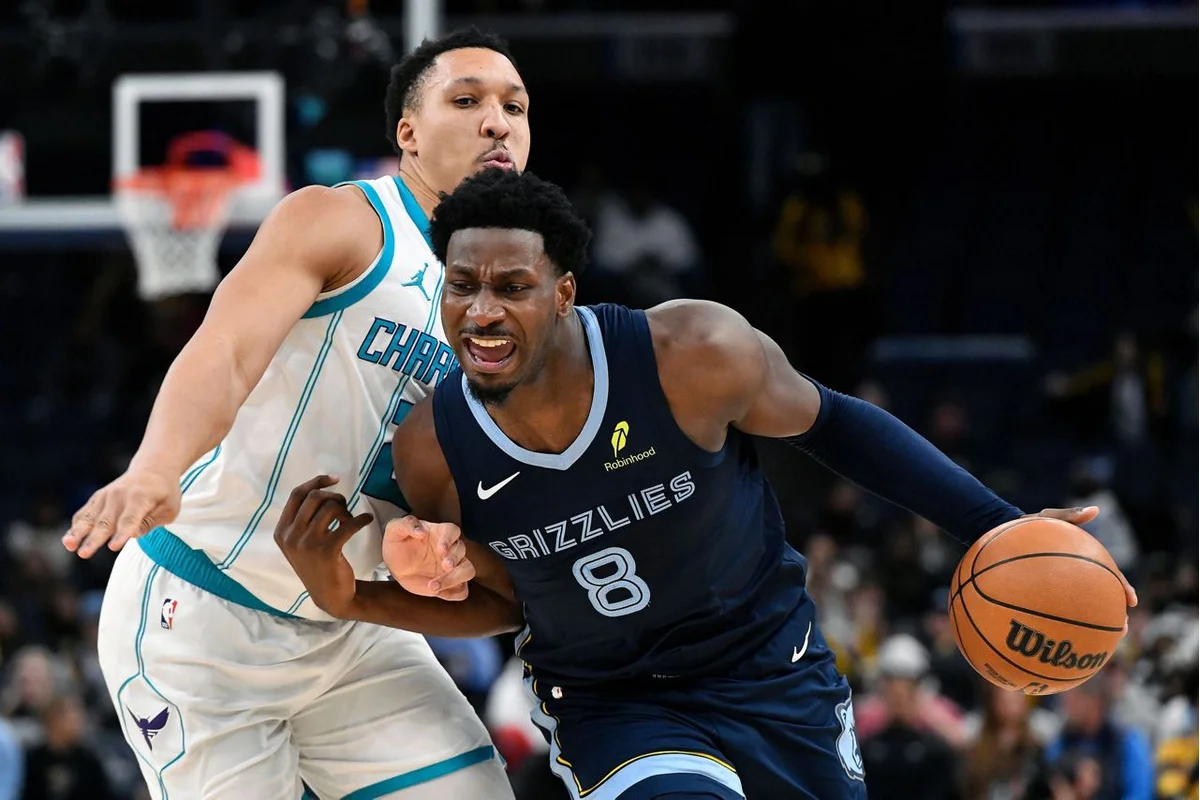
The Utah Jazz‘s recent acquisition of Jaren Jackson Jr., combined with players Lauri Markkanen and Walker Kessler, provides an intriguing new look for their roster but also introduces significant complexities ahead of the NBA draft. While this trio presents potential upside, the Jazz’s intention to maintain a rebuilding approach creates a conflict: the top prospects expected in the draft are predominantly frontcourt players, a position the Jazz are already deep in.
Beyond Jackson Jr., Markkanen, and Kessler, the Jazz’s rotation at big man includes Kyle Filipowski, and there are indications they aim to re-sign center Jusuf Nurkic, further crowding their frontcourt options and constraining their draft strategy.
Potential Controversy in Draft Selection Strategy
Christopher Kline of FanSided points out a difficult scenario for the Jazz should they keep their high draft pick. With the fourth overall selection likely theirs, they face a tough choice: whether to pick the highest-rated prospect or opt to fill roster needs despite potentially passing on a better talent. Kline suggests that Utah might target Kingston Flemings—a dynamic guard—over Caleb Wilson, who is considered the consensus best prospect but plays in a position they have plenty of players for.
Utah’s stunning trade for Jaren Jackson Jr. pushes its timeline forward a good bit and leaves the front office with a bit of a conundrum here. Caleb Wilson is the consensus ‘best prospect,’ but the Jazz frontcourt is quite full, especially if Walker Kessler is baked into their long-term plans. Kingston Flemings has closed the gap enough to make this a conversation, especially given the Ainges’ affinity for dynamic guard play,
Kline wrote.
Kline also highlights Flemings’ strengths, emphasizing his ability to fit into the team’s style, despite his smaller frame compared to typical frontcourt players.
Flemings operates with incredible poise and maturity for a freshman, really embodying the ethos of Kelvin Sampson’s Houston program. He’s also an absolute blur with the rock, able to play low to the floor and explode down the lane with a devastating first step. Flemings’ passing gets more impressive with each game, and he’s enough of a disruptor to defense to compensate for a smaller frame. He’s hitting 3s efficiently, with his at-rim numbers bordering on preposterous. Flemings could be the engine that drives this jumbo Jazz lineup back to the postseason.
Implications for the Jazz Starting Lineup and Rotation
When fully healthy, Utah’s projected starting five could feature Markkanen, Jackson, Kessler, Keyonte George, and Ace Bailey. Adding Flemings to this mix presents a challenge for coach Will Hardy in managing playing time. Deciding which player to move to the bench for Flemings could become a positive problem reflective of a deeper, more versatile roster.
Options for Trading Down to Maximize Value
Should the Jazz decide they do not need to add another frontcourt player, drafting Caleb Wilson only to trade him for valuable assets emerges as a likely option. Given Wilson’s high profile, multiple teams are expected to show strong interest, positioning the Jazz well to leverage his value.
This draft class is notably deep, which gives Utah a rare chance to acquire an elite talent and simultaneously turn another asset into additional resources. While the Jazz do not necessarily require a surplus of assets, acquiring more could enhance their flexibility for future roster building.
Because this season is perceived as the last one in which the Jazz will intentionally rebuild for some time, making the most of their draft positioning is crucial. However, this opportunity relies on Utah retaining their pick instead of it going to the Oklahoma City Thunder, a scenario that is still unresolved but essential for Utah to maximize their returns.
Looking Ahead: The Draft and Utah’s Strategic Decisions
The Jazz’s recent trade signifies a shift toward accelerating their timeline, even amid a season focused on development and tanking. Managing an already crowded frontcourt alongside decisions about drafting and potentially trading players like Caleb Wilson creates uncertainty but also opportunity.
If the Jazz navigate these dilemmas carefully, they could emerge from the draft with a stronger, more balanced roster capable of competing sooner than expected. Their choices in the upcoming draft will influence not only the immediate season but also Utah’s trajectory in the years to come.
