
On December 10, 2025, tensions reached a boiling point between Jonathan Kuminga and Golden State Warriors head coach Steve Kerr in what sources described as the most intense clash in their strained relationship. This confrontation unfolded after the Warriors had experienced a break in their schedule following an early NBA Cup exit two weeks prior. Kuminga entered the discussion expecting to be reprimanded over missing a team event and minor grievances related to his conduct, revealing how the discord between Kuminga and the team had escalated into petty conflicts despite a shared history lasting five seasons.
Throughout Kuminga’s tenure, Kerr struggled to connect deeply with him despite attempting various methods including handwritten notes and lengthy texts. Kuminga’s responses remained detached and infrequent, signaling a fractured bond between the player and coach. Kuminga increasingly viewed Kerr as the primary obstacle to his progress, blaming the coach for his uneven playing time and inconsistent role within the team’s framework.
Key Moments of Frustration Within the Warriors’ Organization
The December 10 meeting inside Kerr’s office unveiled layers of frustration on both sides. Kerr expressed disappointment over Kuminga’s perceived lack of commitment to team goals, while Kuminga aired grievances about Kerr’s chronic skepticism of his potential. The meeting ended dramatically with Kerr slamming a whiteboard, yet shortly afterward Kuminga responded with two highly energetic practices that Kerr later praised as some of his most passionate.
He did the things I asked him to do,
Kerr said.
I do feel for him that he has been sort of at the whim of my decision-making.
Despite brief periods of alignment, the underlying disagreement about Kuminga’s career trajectory and role within the team persisted. At a higher level, Warriors owner Joe Lacob had maintained an optimistic view of Kuminga since their initial meeting during the 2021 predraft process in Miami, envisioning him as a potential franchise cornerstone. However, Lacob’s vision clashed with the coaching staff’s more pragmatic perspective, which resisted adapting the team’s system to accommodate Kuminga’s preferred style of play.
Let your basketball people make basketball decisions,
a team source emphasized.
Trade to Atlanta Marks End of a Fraught Chapter
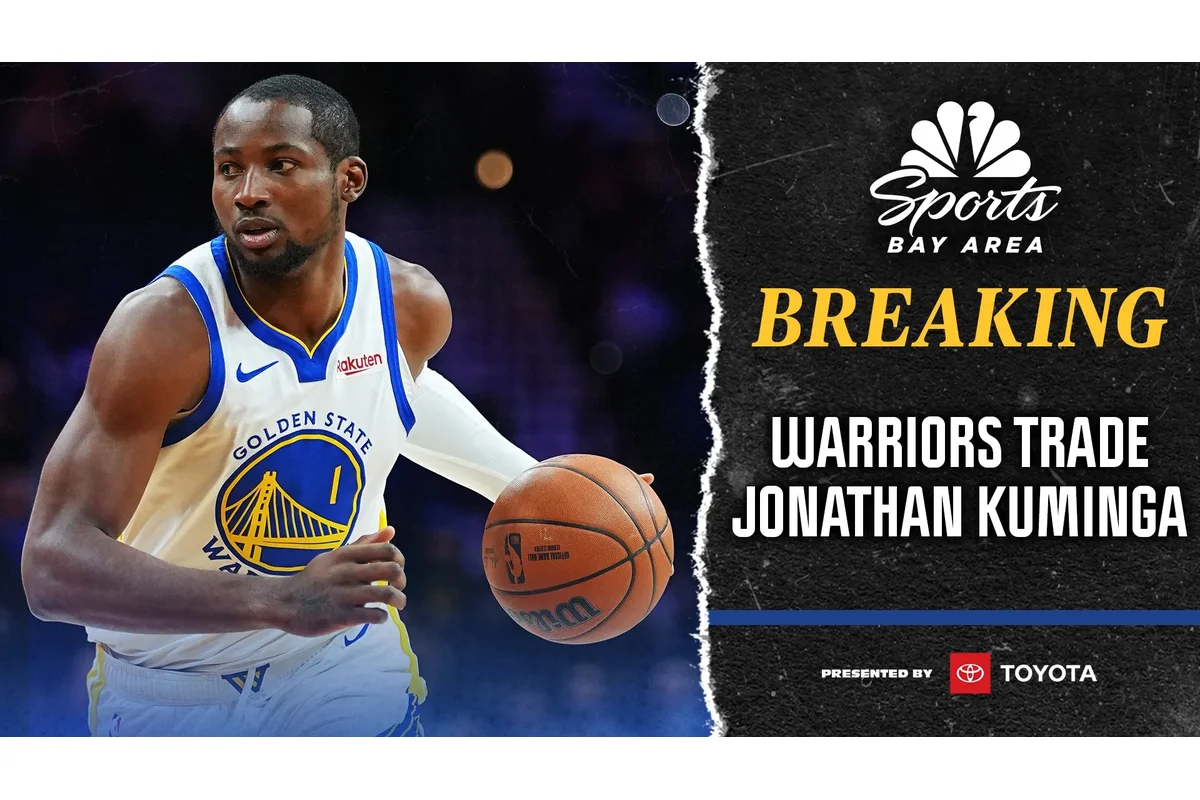
In late January 2026, the Warriors finally fulfilled Kuminga’s long-voiced desire to move on, trading him to the Atlanta Hawks in exchange for Kristaps Porzingis’ expiring contract. This trade closed the book on one of the NBA’s most complex and enigmatic five-year player-team relationships. Sources described the situation with a sense of unanimity mixed with blame.
Everybody was right. Everybody was wrong. Everyone’s to blame,
one source admitted. Nobody won.
Prior to the trade, Kuminga began packing his belongings in anticipation, signaling a readiness for departure. Although he fulfilled his on-court responsibilities and supported teammates, he increasingly distanced himself from Warriors practices, often working privately with his skills trainer Ant Wells outside the team facility, a move that drew suspicion and disapproval from Warriors personnel.
He hates working out in this place,
an insider revealed.
Philosophical Divide Over Kuminga’s Playing Style and Role
Kerr often compared Kuminga to versatile wings such as Shawn Marion and Aaron Gordon, advocating a role for Kuminga focused on energy, defense, rebounding, and spot-up offense rather than as a primary ball handler. He believed that such role players were valuable and well-compensated within the league’s system. On the other hand, Kuminga believed his growth and effort warranted greater trust and opportunities handling the ball and creating offense. This fundamental disagreement deepened the rift between player and coaching staff.
Management rationalized their cautious approach by pointing to Kuminga’s inefficient performance in isolation and midrange shots, often attributing missteps to his camp. They criticized Kuminga’s agent Aaron Turner and others close to him for directing his development along less productive paths away from the facility, damaging his progress in the Warriors’ eyes.
The organization frequently questioned Kuminga’s priorities, posing a recurring internal dilemma:
Does he want to win, or does he want to look pretty?
Longstanding subtle critiques and comments weighed heavily on Kuminga, intensifying his resentment and alienation from the coaching staff and front office. His closest supporters, including Turner, Wells, assistant coach Anthony Vereen, and mentor Jimmy Butler, often worked to recalibrate Kuminga’s focus back toward winning.
Kuminga’s Talent and Moments of Promise With the Warriors
Despite the ongoing tension, Kuminga contributed meaningfully during key stretches of his Golden State career. As a rookie, he started three playoff games and accumulated 138 postseason minutes during Golden State’s 2022 championship run. His second season brought a significant breakthrough when he averaged 13.2 points on 57% shooting after Andrew Wiggins’ departure due to personal reasons, playing an instrumental role in helping the Warriors secure a playoff spot.
During Kuminga’s third season, when Draymond Green was sidelined for an extended period, Kuminga elevated his game further, averaging 16.1 points over 74 games and setting a franchise record with 138 dunks. During this period, Kuminga felt fully supported by owner Joe Lacob and front office members. General manager Mike Dunleavy had openly labeled Kuminga as virtually untouchable and referred to him as a cornerstone of the franchise’s future.
Nevertheless, efforts to negotiate a contract extension failed to gain momentum. The Warriors viewed the demands as excessive, drawing comparisons to Jalen Johnson’s five-year, $150 million contract with the Hawks. Turner, Kuminga’s agent, stated he felt the organization’s talks lacked genuine effort and were aimed at flexibility rather than commitment.
Intra-team Dynamics and Coaching Directives
During a preseason practice session in October 2025, tension became evident when assistant coach Terry Stotts outlined offensive roles that effectively marginalized Kuminga. The first unit centered plays through Steph Curry and Jimmy Butler, while the second unit had limited creative options, relying mostly on Pat Spencer to initiate pick-and-roll actions. Kuminga was excluded from this plan, fueling his frustration.
Those are all triggers, Turner commented. Pokes.
Although Kuminga experienced flashes of success, including strong performances in the 2025 Minnesota playoff series after Curry’s injury where he averaged over 23 points on 55% shooting, his inconsistent role remained a source of frustration and confusion. His absence from contract talks and lack of organizational support during crucial free agency training in Cleveland compounded his distrust in the Warriors’ leadership.
The Draft Decision and Ownership’s Influence on Kuminga’s Path
The Warriors selected Kuminga seventh overall in the 2021 NBA Draft, a pick acquired from Minnesota through a trade involving Andrew Wiggins and D’Angelo Russell. Notably, Steve Kerr was minimally involved in the draft process, focusing on Team USA’s preparations for the Tokyo Olympics. The coaching staff leaned heavily toward selecting Franz Wagner, who was available at the eighth pick and fit their system well.
However, owner Joe Lacob personally championed Kuminga, favoring his athleticism and physicality over more traditional skill sets. Lacob, along with then-GM Bob Myers, visited Kuminga for a workout in Miami before the draft and ultimately influenced the Warriors’ choice. This decision fueled internal friction, as some viewed Lacob’s intervention as style-driven personnel meddling inconsistent with the organizational blueprint that had fueled previous championships.
Bob and I have felt for several years that we’ve needed physicality,
Lacob explained.
Athleticism and physicality. That’s what really excites me about him.
Subsequently, Lacob’s vocal support of Kuminga was seen as an attempt to validate his original judgment and reluctance to trade the player, even when trade opportunities presented themselves.
Missed Trade Opportunities and Internal Complexity
The Warriors missed notable chances to trade Kuminga, including a 2024 deadline deal for Alex Caruso and a potential 2023 draft swap with the Indiana Pacers involving Jarace Walker. Various sources cited indecisiveness among key decision-makers as a contributing factor to deals falling through. The ongoing cold war between player, coach, and management persisted beneath a surface of organizational indecision.
External trade discussions continued into the 2025 offseason, with interest from the Sacramento Kings and Phoenix Suns. Kuminga engaged with Kings management, who offered the promising role and substantial playing time he sought. However, the Warriors were unwilling to accept the trade returns involving players like Malik Monk, Royce O’Neale, or Grayson Allen, combined with minor draft picks, reflecting Lacob’s resistance.
Within the franchise, the perception grew that Kuminga needed to confront the harsh realities of professional basketball business dynamics. In contrast, Kuminga felt trapped, frozen by conflicting agendas where the coach limited his minutes and management refused to trade him.
Contract Resolution and Frayed Team Relations
Kuminga and Turner waited until the last moment of the free agency period to sign a two-year contract, a move that delayed other important roster signings and aggravated Kerr, who viewed it as prioritizing individual over team interests. Despite these struggles, teammates publicly supported Kuminga, with Jimmy Butler acting as a mentor and highlighting perceived organizational double standards in his treatment.
Everybody liked him,
Kerr said.
I liked him. He’s a really good guy. Very personable. Well-liked in the locker room. Just a tough fit.
Breakdown of the Final Months in Golden State
Kuminga started the 2025–26 season as a key defensive and offensive contributor, earning a spot as a starter for the opening 12 games, and finished the team’s strong 4-1 start. Kerr recognized him publicly as a foundational player poised to become a “bona fide No. 2 option.”
JK’s taken off,
Draymond Green commented.
That has kind of set the stage for this team.
However, after the Warriors fell into a six-and-six stretch marked by lineup spacing problems, Kerr removed Kuminga from the starting five. Kuminga’s knee issues limited his availability, and a following series of benchings and DNPs deepened his alienation. He declined several late-game opportunities to enter, citing soreness and frustration with the team’s handling of his role.
Coaching and management interpreted this as a sign of quitting, while Kuminga believed they had already abandoned him. Public comments by Kerr following games, such as emphasizing the team had “rediscovered” its identity without Kuminga, furthered the sentiment that Kuminga was seen as expendable.
Kerr’s Honest Reflections and the Aftermath
Kerr acknowledged his blunt communication style, noting the difficulty young players face finding their way. He expressed regret over any hurt feelings but denied ever being inflammatory. Over the two months following, Kuminga played only 117 total minutes, with a record 16 consecutive games where he did not play.
I don’t sugarcoat [my messaging],
Kerr told ESPN.
I’m honest with the media. I’m honest with players and sometimes you have to tell players something they don’t want to hear. I think in general it’s a healthy way to coach.
The culmination of mutual frustration led the Warriors to seek a big-scoring wing player who could inject energy and finishing ability reminiscent of Kuminga’s earlier form. However, even his strongest internal supporters conceded the relationship had no sustainable future due to irreparable misalignment and bungled player development.
Fresh Start in Atlanta and Future Uncertainty
The trade sending Kuminga to the Atlanta Hawks offers him a clean slate after a chaotic and challenging stint with the Warriors. While the precise role awaiting him in Atlanta remains undefined, it provides an environment where previous narratives and built-in excuses can dissipate, allowing his genuine talent and career potential to unfold unencumbered.
Kerr has admitted responsibility for the breakdown, lamenting the failure of the Warriors’ two-timeline strategy that blurred focused planning for immediate and long-term success. Mike Dunleavy echoed these sentiments, while Joe Lacob chose not to comment. Kuminga himself has yet to publicly address his departure.
The Warriors shorted Jonathan Kuminga and we’re long on Jonathan Kuminga,
Turner remarked.
Clearly the bet was made. Game on. Let’s find out who is right.
