
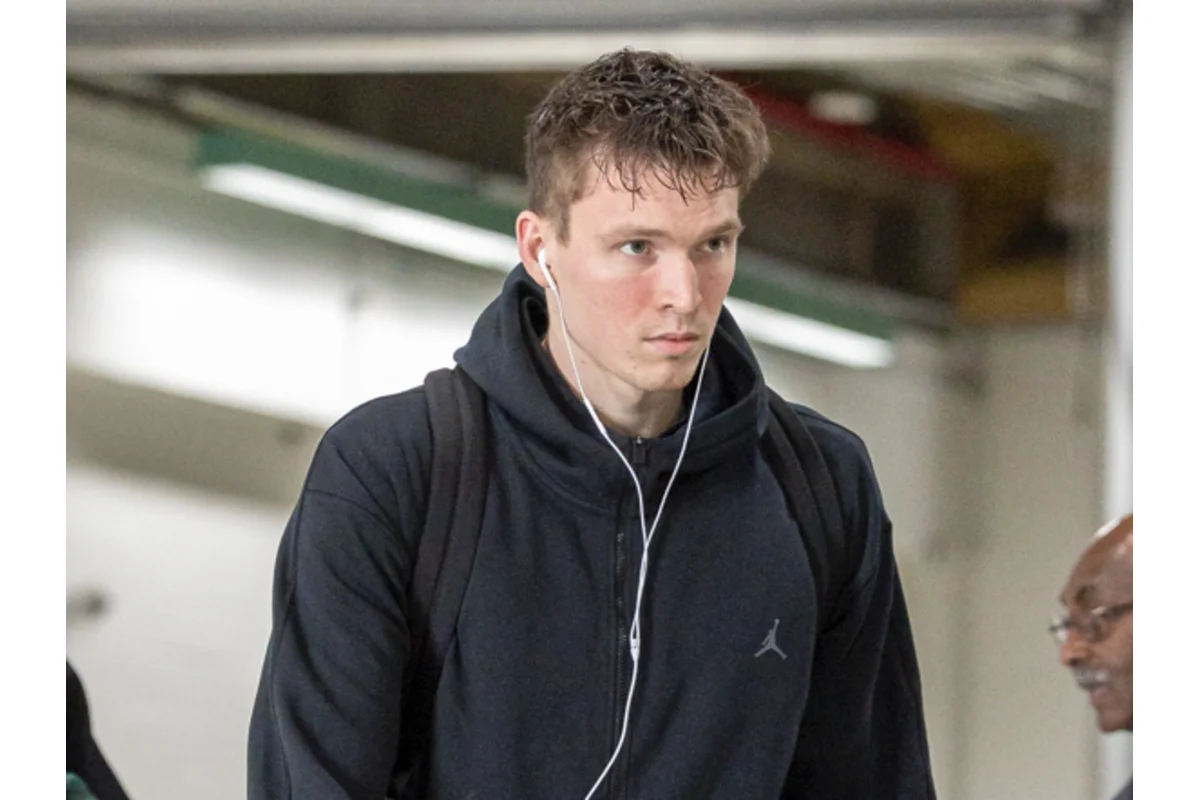
The Los Angeles Lakers chose not to trade Dalton Knecht at the recent deadline for a second consecutive year. Despite this, Knecht received very limited playing time during Tuesday night’s game against the San Antonio Spurs, even as key players like Luka Doncic, LeBron James, and Austin Reaves were sidelined. The decision by head coach JJ Redick to keep Knecht on the bench highlights a clear lack of confidence in the young guard’s ability to contribute.
With the Lakers’ top players resting, Knecht was not part of the starting lineup. Instead, Redick deployed a starting five comprised of Kobe Bufkin, Luke Kennard, Jake LaRavia, Rui Hachimura, and Jaxson Hayes. Knecht came off the bench and logged just 16 minutes and 17 seconds, falling short of a meaningful impact opportunity during a thin roster night.
The Lakers’ Hesitation to Rely on Dalton Knecht
Knecht was in a position to play extended minutes and potentially lead the team’s offense on a night when the Lakers only managed to score 108 points. However, in his limited time on the floor, he scored only nine points, collected five rebounds, and handed out one assist, shooting 4-of-8 from the field but missing both three-point attempts.
Among wing and guard players on the roster, only the undrafted two-way rookie Chris Mañon saw fewer minutes than Knecht, playing just 7 minutes and 44 seconds. Several other players in similar positions, including Kennard, Bufkin, Nick Smith Jr., and Bronny James, were given more time on the floor, despite Knecht being a first-round pick from last season.
The Lakers’ refusal to trade Knecht has puzzled some observers, as many teams across the NBA like the Brooklyn Nets, Milwaukee Bucks, and Washington Wizards are often on the lookout for young talent. Yet, Knecht remains with the Lakers while seeing scant minutes under Redick’s rotation strategy.
Limited Opportunities Raise Questions About Knecht’s Future
Tuesday night’s depleted lineup presented an ideal scenario for Knecht to showcase his potential and take a leading role on offense. Instead, Redick’s coaching decisions indicate skepticism about Knecht’s readiness or fit within the team’s plans, as evidenced by his minimal playing time even in favorable conditions.
It has become increasingly apparent that the Lakers lack strong faith in Knecht’s ability to contribute consistently, and their actions reflect this stance. Whether this situation will change before next season remains uncertain, but Knecht’s development appears stalled as the Lakers prioritize other options on the roster.
