
The Chicago Bulls made several significant trades at this year’s NBA deadline, including acquiring Rob Dillingham from the Minnesota Timberwolves. Dillingham now has the chance to develop his game with the Bulls, an opportunity he lacked in Minnesota, where he struggled to find consistent playing time.
Minnesota obtained Dillingham, the No. 8 pick in the 2024 NBA Draft, by trading an unprotected 2031 first-round pick and a top-1 protected 2030 pick swap to the San Antonio Spurs. The Timberwolves expected the Kentucky standout to eventually succeed Mike Conley as their starting point guard. However, that transition did not materialize as hoped because Dillingham’s readiness did not match the Wolves’ championship timeline.
Rob Dillingham’s Transition from Minnesota to Chicago
Despite being a lottery selection, Dillingham’s time with the Timberwolves was limited. He appeared in 84 games, averaging just over 10 minutes each, mostly from the bench. His potential was clearly tantalizing, but Minnesota, focused on contending, could not afford the time needed for his gradual growth.
Originating from North Carolina, Dillingham demonstrated his scoring ability at Kentucky as a versatile offensive player. In 23.3 minutes per game, he averaged 15.2 points with efficient shooting percentages of 47.5% from the field, 44.4% from three-point range, and 79.6% from the free-throw line. His quick first step, ball-handling skills, and reliable three-point shot make him a dangerous scorer capable of attacking defenses from multiple angles.
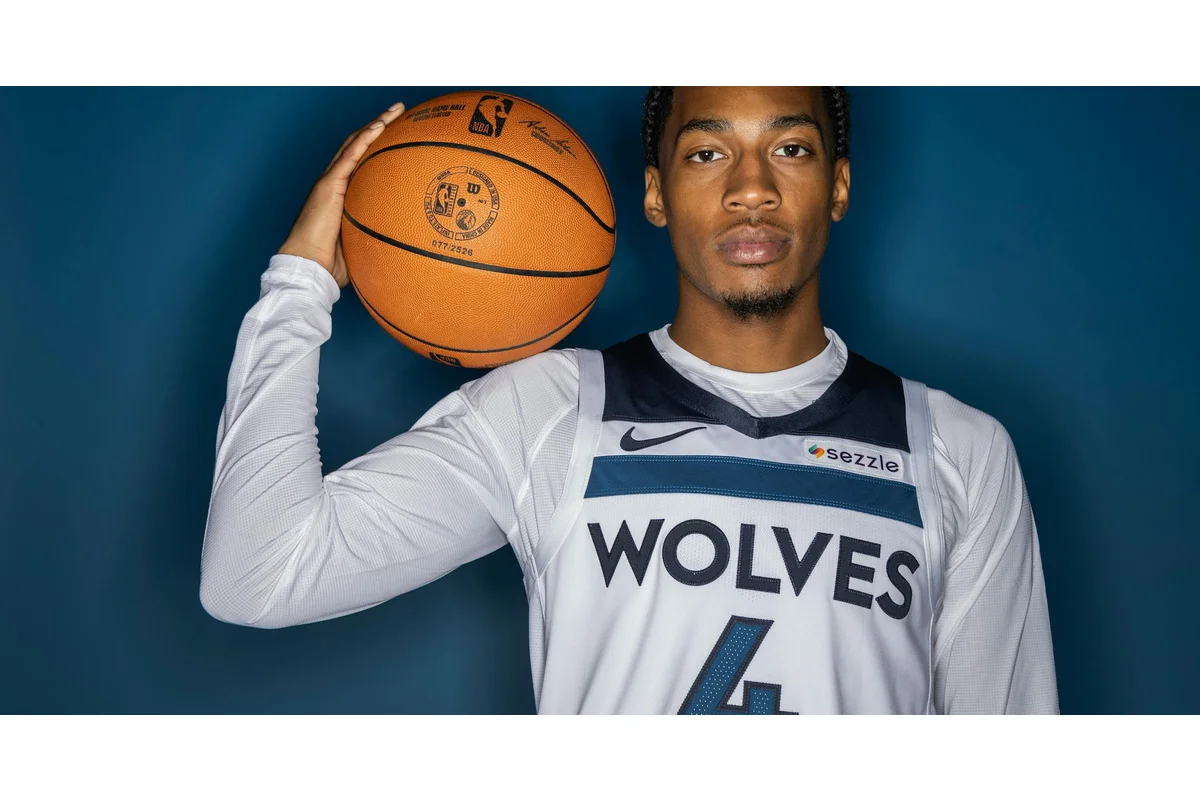
His skill set theoretically complements the Bulls’ existing talent, particularly alongside dynamic scorer Anthony Edwards. Yet, with minimal playing time in Minnesota, his potential remained largely untapped.
Increased Role and Support for Development in Chicago
Since joining Chicago, Dillingham’s role has expanded substantially. Over three games with the Bulls, he has averaged 24.7 minutes, contributing 11 points, 3.7 rebounds, 4 assists, and two steals per contest. This uptick suggests the Bulls are granting him the responsibility to grow in a more prominent capacity.
Bulls head coach Billy Donovan has acknowledged Dillingham’s physical gifts, especially his ability to penetrate defenses off the dribble, but he also emphasized areas needing improvement. Donovan told Joel Lorenzi of The Athletic,
“He’s the one guy that off the dribble can really go by people and get into the teeth of the defense. So that’s like a real great positive. But the decision-making, the shots that he’s taking, are not sustainable. And I told him that. … But what I don’t want to do is have him not be aggressive where he’s like, ‘I’m afraid to attack.’ He has to attack, but he’s gotta make better decisions. I think that will come in time.”
This outlook highlights the balance Donovan wants Dillingham to maintain as he gains experience — encouraging assertiveness while fostering smarter choices on the court. Unlike in Minnesota, where opportunities were scarce, the Bulls provide an environment conducive to learning through trial and error. Donovan’s belief that
“I think that will come in time”
underscores the patient approach the organization intends to adopt with their young guard.
What Increased Opportunity Means for Dillingham’s Future
Rob Dillingham’s move to Chicago signals a pivotal moment in his career. The Bulls are clearly committed to offering him meaningful minutes and the freedom to develop his decision-making without the intense pressure of immediate championship contention. This change could prove crucial for Dillingham to refine his game and fulfill his potential.
As he acclimates to a larger role, Dillingham’s progression will be closely watched by both fans and analysts. If he can harness his skill set while improving his judgment under pressure, he may well become a key contributor for Chicago in the coming seasons. In contrast to his time with the Timberwolves, the Bulls’ environment appears better suited to his long-term growth, creating optimism about his trajectory in the NBA.
Billy Donovan on Rob Dillingham’s early decision making
“He’s the one guy that, off the dribble, can really go by people and get into the teeth of the D. … but the decision making, the shots that he’s taking are not sustainable.
“He has to attack, but he's gotta make better… pic.twitter.com/uxwgMAKTRy
— Joel Lorenzi (@JoelXLorenzi) February 12, 2026
