
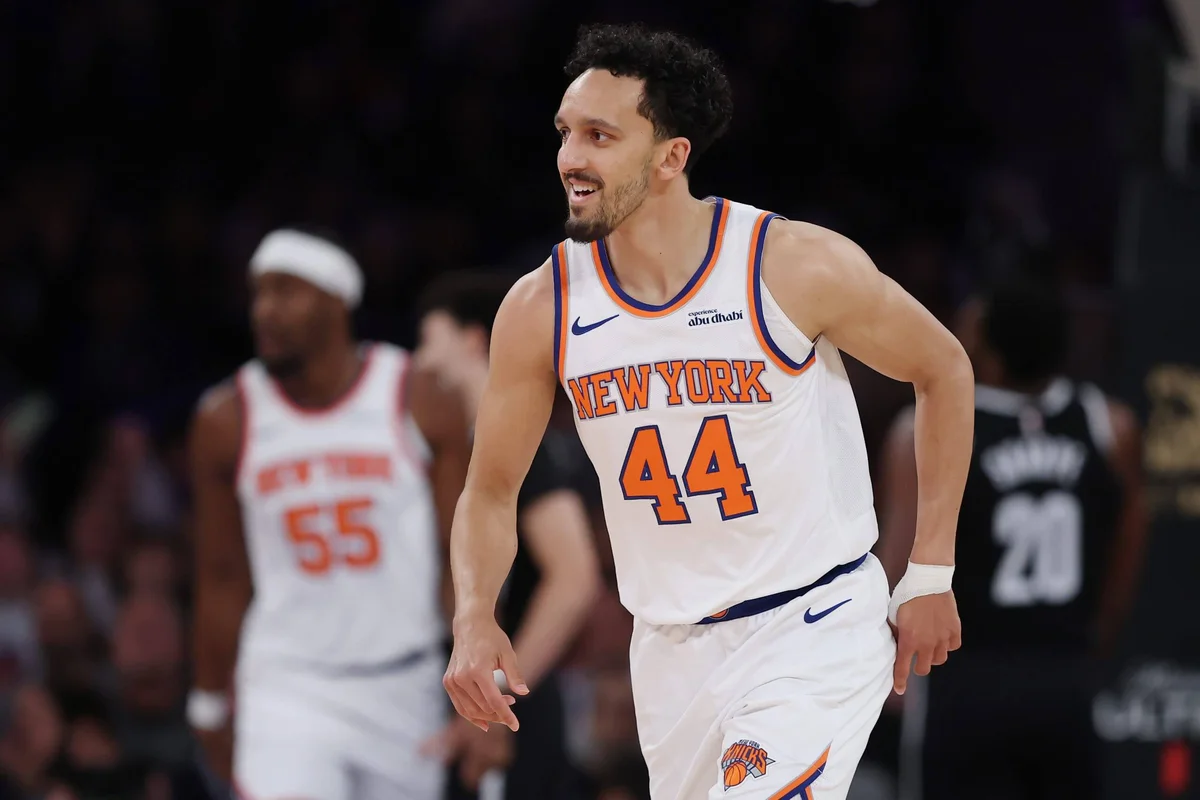
Landry Shamet, the New York Knicks’ sharpshooter, has developed over eight seasons into a consistent weapon from beyond the arc, currently on track to shoot over 40 percent on three-pointers for the third time in his career. At 28 years old, Shamet is also posting his highest scoring average since the 2018-19 season, with 9.6 points in just under 22 minutes per game. Beyond his numbers, Shamet’s influence off the court has emerged as a critical factor in the Knicks’ culture and accountability throughout the 2025-26 season. His leadership embodies the quiet yet firm presence that helps maintain discipline and focus among his teammates.
Teammates Highlight Shamet’s Role in Maintaining Team Accountability
Leadership in the NBA is often difficult to pin down, especially in an era where player impact is scrutinized through statistics and media narratives. Yet, the intangibles that Shamet provides have drawn significant praise from fellow Knicks players. Jalen Brunson, the team’s All-Star, emphasized that true professionalism goes well beyond merely showing up. “It should be,” Brunson said.
“It’s not as common (as you would think). It’s more than showing up every day. If you’re doing the bare minimum, you’re not a true professional.”
Josh Hart, another key member of the Knicks, echoed these sentiments by underscoring the rarity of genuine veteran leadership in today’s NBA rosters. Hart noted,
“People come in and they have to learn to be professionals. Depending on where you get drafted to, it can take two, three or four years, especially if you don’t have a good vet. With how things are shaking out now, there’s a lot less vets on teams to hold guys accountable. It’s (rarer) now, and (Shamet) is a great example of that.”
These testimonials underline Shamet’s role not simply as a scorer or defender, but as a steady voice demanding higher standards from those around him. This form of leadership has elevated the overall team dynamic by fostering a culture where accountability is expected rather than optional.

How Shamet’s Accountability Translates into Team Success
For a Knicks squad that has made significant progress by reaching the Eastern Conference Finals, the presence of a player who reinforces consistency and accountability is invaluable. In New York City, where basketball tradition demands blue-collar effort and defensive toughness, Shamet’s mindset fits perfectly with the franchise’s identity. The Knicks have built a reputation for relentless defensive pressure and a gritty approach, and Shamet’s contributions help reinforce that approach by setting a high standard internally.
On the court, Shamet’s performance supports his leadership claims—shooting 42.2 percent from three-point range and ranking in the 57th percentile or higher in key defensive categories such as perimeter isolation defense, off-ball chasing, and navigating ball screens, according to Basketball Index. His ability to seamlessly combine offensive efficiency with defensive effort showcases the well-rounded player he is. However, the most profound effect Shamet has on the Knicks may lie in how his professionalism influences the team’s mentality and day-to-day preparation.
The Broader Significance of Shamet’s Leadership for the Knicks
In an era where professional accountability is sometimes scarce within NBA locker rooms, Shamet stands out as a model whose conduct shapes the team’s culture. This type of leadership, less flashy but critically important, ensures that all players maintain a consistent work ethic and commitment, which can be the difference between playoff contention and disappointment. For the Knicks, a franchise hungry for sustained success and championships, having such a figure in Shamet bolsters the organizational foundation beyond stats and highlights.
As the Knicks continue to chase deeper postseason runs, Shamet’s steady presence offers assurance that the team’s internal standards will remain high, regardless of external pressures or on-court slumps. His example could inspire younger players to adopt a professional mindset earlier, potentially influencing the franchise’s future success and identity in the NBA.
