
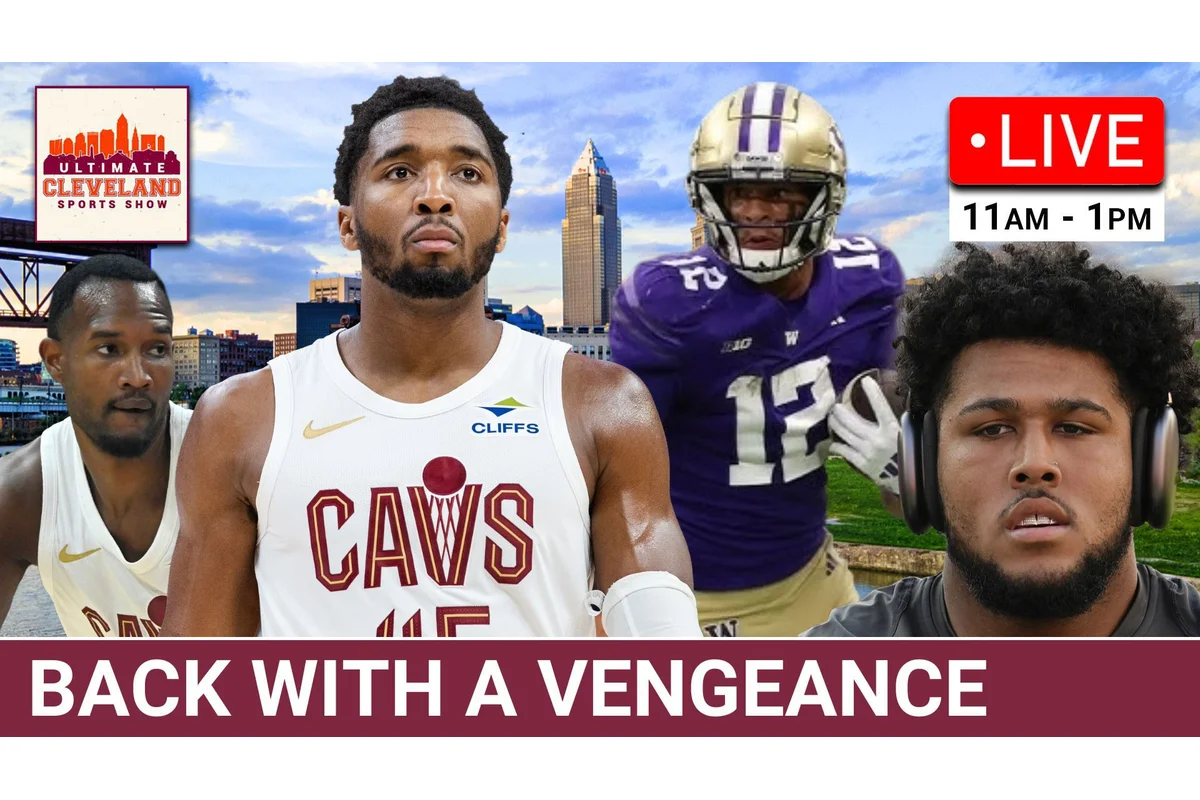
The Cleveland Cavaliers find themselves at a crossroads following their recent defeat to the Oklahoma City Thunder, sparking debate over whether the trade deadline acquisitions have alleviated or heightened the pressure on Evan Mobley. With the NBA season intensifying, the spotlight is on Mobley’s trade deadline performance and how the revamped roster influences both his role and the team’s overall defensive reliability.
Defensive Rebounding Woes Remain a Critical Challenge for Cleveland
One of the Cavaliers’ most persistent weaknesses this season has been their struggle to consistently secure defensive rebounds. This shortfall was glaringly exposed during the loss to Oklahoma City, where the team failed to control the boards effectively. The problem largely stems from frontcourt personnel limitations, as Jarrett Allen and Evan Mobley have encountered difficulties in handling physical matchups inside the paint. This vulnerability poses a major concern because prominent Eastern Conference teams—such as the New York Knicks, Boston Celtics, and Detroit Pistons—possess elite offensive rebounding capabilities designed to exploit exactly this flaw, reminiscent of the issues that led to Cleveland’s playoff elimination against the Knicks last year.
Increased Scrutiny on Evan Mobley’s Defensive Contributions
Following a game in which Mobley managed just two rebounds, his performance has come under intense examination. Expectations for the All-Star forward, especially in defense and rebounding, have intensified with the arrival of James Harden, which has eased Mobley’s offensive duties. The simplified role and increased spacing should, in theory, allow Mobley to focus on defensive impact, yet his inconsistency on the glass, especially against physically aggressive opponents, remains worrisome. This inconsistency is seen as a significant barrier to the Cavaliers reaching their full potential as a playoff contender.
Upcoming Crucial Six-Game Stretch Will Define Playoff Positioning and Development
The next six games present the Cavaliers with their toughest challenge of the season, featuring confrontations against high-caliber Eastern Conference rivals including the Knicks, Bucks, Pistons, and Celtics. Performance during this rigorous schedule will be pivotal in determining Cleveland’s final standings, with a strong showing potentially earning the number two seed, while poor results could cement placements fourth or fifth. Beyond playoff positioning, this series of contests will serve as vital live-action development opportunities for the newly restructured team, which has had minimal practice time together since the trade deadline. These games will test chemistry, strategic executions, and new lineup configurations against playoff-ready opposition.
Trade Deadline Moves Bolstered Team Toughness, Though Frontcourt Concerns Persist
The Cavaliers addressed their team’s mental and physical toughness with deadline additions, bringing in players who enhance grit and experience. Nonetheless, questions about the frontcourt’s capacity to compete with the Eastern Conference’s most physically imposing squads remain unresolved. The test against the Thunder—a uniquely aggressive and unrelenting team—highlighted these lingering frontcourt challenges. While OKC’s style may be an outlier, Cleveland must prove it can consistently impose its will defensively against the league’s toughest physical teams moving forward.
Perimeter Defense Struggles and Foul Management Continue to Complicate Strategy
Cleveland’s defensive struggles extend beyond rebounding, particularly in guarding the three-point line. The Thunder shot an impressive 51.2% from beyond the arc, underscoring ongoing issues that have yet to be resolved despite recent roster moves aimed at improving perimeter defense. Balancing lineups to protect the paint and defend against outside shooting creates a complex strategic challenge for Coach Kenny Atkinson. Furthermore, the team’s frustration with foul calls, especially in physical matchups, remains a key concern. While stars like James Harden and Donovan Mitchell excel at drawing fouls, Cleveland senses inconsistency in whistle fairness, an issue heightened as they face foul-heavy contenders in the upcoming schedule.
Unique Media Access Provides Insight Into Cavs-Thunder Dynamics
Covering the game against Oklahoma City granted a rare perspective on the Cavaliers’ interactions and challenges, with media seating courtside allowing direct observation of intense exchanges, including heated confrontations between head coach Kenny Atkinson and game officials. As Cleveland’s beat reporter Chris Fedor noted, being close to the action reveals the intricacies of game management and officiating, offering a distinctive lens to understand the team’s experience. The environment highlighted the distinct nature of Oklahoma City’s aggressive play style and the challenges it presents—one not typically encountered across the NBA.
Evaluating the Game: Physicality, Fouls, and Defensive Breakdown
Analysis of the loss to the Thunder identified three key areas requiring urgent attention: fouls and physicality, perimeter defense against three-point shooting, and securing defensive rebounds. Oklahoma City’s relentless physicality repeatedly tested the Cavaliers’ ability to manage contact and maintain composure, with Atkinson vocally critical of officiating leniency. The Thunder’s proficiency beyond the arc further exacerbated Cleveland’s defensive struggles, exposing gaps despite defensive reinforcement attempts through recent trades. Above all, the defensive rebounding shortfall repeatedly gave opponents extra possessions and scoring opportunities.
Defensive Rebounding: The Most Pressing Issue Facing the Cavaliers
Defensive rebounding stands as the Cavaliers’ most concerning weakness, as Jarrett Allen and Evan Mobley frequently face mismatch challenges without suitable internal replacements. Attempts to tweak the roster or implement different lineups have so far failed to produce a sustainable solution. Notably, when Isaiah Hartenstein was active for Oklahoma City, his physical presence greatly overwhelmed Cleveland’s defense, further illustrating unstable frontcourt dynamics. Mobley’s subpar rebounding performance in such matchups has drawn significant critique, emphasizing the need for him to elevate his consistency in this area to prevent a repeat of previous playoff vulnerabilities.
Trade Deadline Strategy Reflects Uncertainty in Offensive Leadership and Defensive Roles
The decision to acquire James Harden signaled Cleveland’s acknowledgment that Mobley was not ready to shoulder primary offensive responsibilities alongside Donovan Mitchell. Harden’s presence is intended to relieve Mobley offensively while allowing him to concentrate on defensive assignments such as rebounding and interior defense. However, this adjustment intensifies the expectation for Mobley to perform at a higher level defensively, especially with increased spacing granting him more opportunity. This dynamic tracker reflects the uneven balance Cleveland is navigating between offensive facilitation and defensive fortitude.
Upcoming Opponents’ Rebounding Strength Heightens the Stakes for Mobley and the Frontcourt
The forthcoming stretch includes encounters with teams known for their rebounding capabilities, like the Boston Celtics, Detroit Pistons, and New York Knicks. Notably, these clubs have acquired or maintained strong frontcourt talent specifically designed to dominate the glass, putting added pressure on Evans Mobley and Jarrett Allen to elevate their performance. Detroit’s Isaiah Stewart, for instance, upon returning from suspension, is expected to provide a physical matchup that could further challenge the Cavaliers’ interior defense. These proximate tests will illuminate whether Cleveland’s frontcourt can withstand sustained physicality throughout the playoffs.
Coach Atkinson’s Lineup Dilemma: Balancing Size and Perimeter Defense
Kenny Atkinson faces a strategic quandary regarding lineup configurations: fielding two traditional big men to bolster rebounding versus opting for smaller, faster lineups that aim to disrupt opponents’ perimeter shooting. The defensive rebounding issue complicates roster decisions, as shedding size risks conceding critical second-chance opportunities. Atkinson’s choices reflect ongoing efforts to find a sustainable compromise capable of countering various offensive threats without sacrificing key strengths on either end.
Physicality and Mental Toughness Enhanced by Recent Personnel Changes
Recent roster moves have enhanced the team’s mental fortitude and added players with playoff experience and physical toughness. However, the need for Mobley to demonstrate similar attributes remains, as his relative inexperience and physical style are tested against high-caliber, physical Eastern Conference opponents. While veterans like Harden and Mitchell maintain poise under contact and intensity, Mobley’s development in this regard is critical for Cleveland’s postseason aspirations.
Persistent Challenges in Foul Calls and Their Strategic Implications
Cleveland continues to face inconsistent officiating, particularly around foul calls in high-contact games. Teams such as Detroit, Philadelphia, and New York lead the league in personal fouls per game, and their handsy defense aims to disrupt Cleveland’s rhythm. While stars like Harden and Mitchell are adept at drawing fouls, the overall team senses the whistle does not always favor them, which could influence game dynamics and player aggressiveness in tightly contested matchups.
“They’re the kind of team where you have to see them over and over and over again to really appreciate and respect how they guard on a possession to possession basis and the energy and the activity and the relentlessness that they bring on a possession to possession basis.” ?James Harden, Cleveland Cavaliers Player
Distinctive Playing Environment in Oklahoma City Highlights Unique Challenges
The game’s setting in Oklahoma City is renowned for its distinctive style—physical, relentless, and tenacious defense unmatched by most NBA teams. This environment provides a rare test that exposes teams’ limitations and resilience. Experiencing such physicality firsthand can be overwhelming but offers valuable lessons for Cleveland as they prepare for the playoffs. The challenges faced in this milieu provide a benchmark for the type of intensity required in postseason competition.
Implications of the Upcoming Schedule for Cleveland’s Playoff Positioning
Cleveland’s upcoming six-game schedule comprises some of its season’s toughest outings, featuring key Eastern Conference rivals like the Knicks, Bucks, Pistons, Nets, and Celtics. Success during this sequence could catapult the Cavaliers to the second or even first seed, providing home-court advantage and avoiding difficult early-round matchups. Conversely, poor performances may anchor them in the middle seed range with less favorable playoff prospects. This stretch not only impacts standings but serves as a proving ground to assess how well the team’s new roster and strategies are functioning under pressure.
Live Game Situations Will Accelerate Team Chemistry and Strategy Refinement
Given the Cavaliers have had minimal practice time as a complete unit since the trade deadline, these games effectively function as live rehearsals to build cohesion. They offer opportunities to test various lineups, develop offensive and defensive schemes, and identify which player combinations yield the best results. Adjusting to the trade deadline additions while facing playoff-caliber opponents will accelerate understanding across the roster and clarify tactical approaches heading into the postseason.
“They have to learn lineups, they have to learn combinations, they have to learn end of game situations where they want to go to…So a lot of this is still a learning process for this group of Cavs and these kinds of games you would think are going to be more pressure packed, more competitive, more intense, and you learn a lot more in the, even if they happen in losses, you learn a lot more against these kinds of opponents.” ?Chris Fedor, Cleveland Cavaliers Beat Reporter
Season Standings Context and Travel Demands Add to Team Challenges
Currently, the Cavaliers hold the fourth seed in the Eastern Conference, trailing the first-seeded Detroit Pistons by seven games but only trailing the second-seeded Boston Celtics by two games and the third-seeded New York Knicks by a single game. This proximity makes the upcoming stretch vital for improving their seed. Extensive travel logistics and back-to-back games will add further strain, testing the team’s endurance and depth. How the Cavaliers manage these factors will influence their performance and readiness for the playoffs.
Outlook: Pressure on Evan Mobley Heightened by Team’s Trade Moves and Upcoming Tests
The trade deadline acquisitions, while strengthening Cleveland’s roster in some respects, have also shifted expectations and pressures, particularly on Evan Mobley. With offense more distributed thanks to Harden’s arrival, Mobley faces intensified scrutiny on his defensive and rebounding output. The demanding upcoming schedule against Eastern Conference powerhouses is set to reveal whether he can meet these challenges consistently. Long-term success hinges on Mobley and the frontcourt adapting to physical playoff-level competition and the team’s ability to address persistent rebounding and perimeter defense issues. How the Cavalier staff addresses these factors and manages rotations will critically shape their playoff trajectory.
