
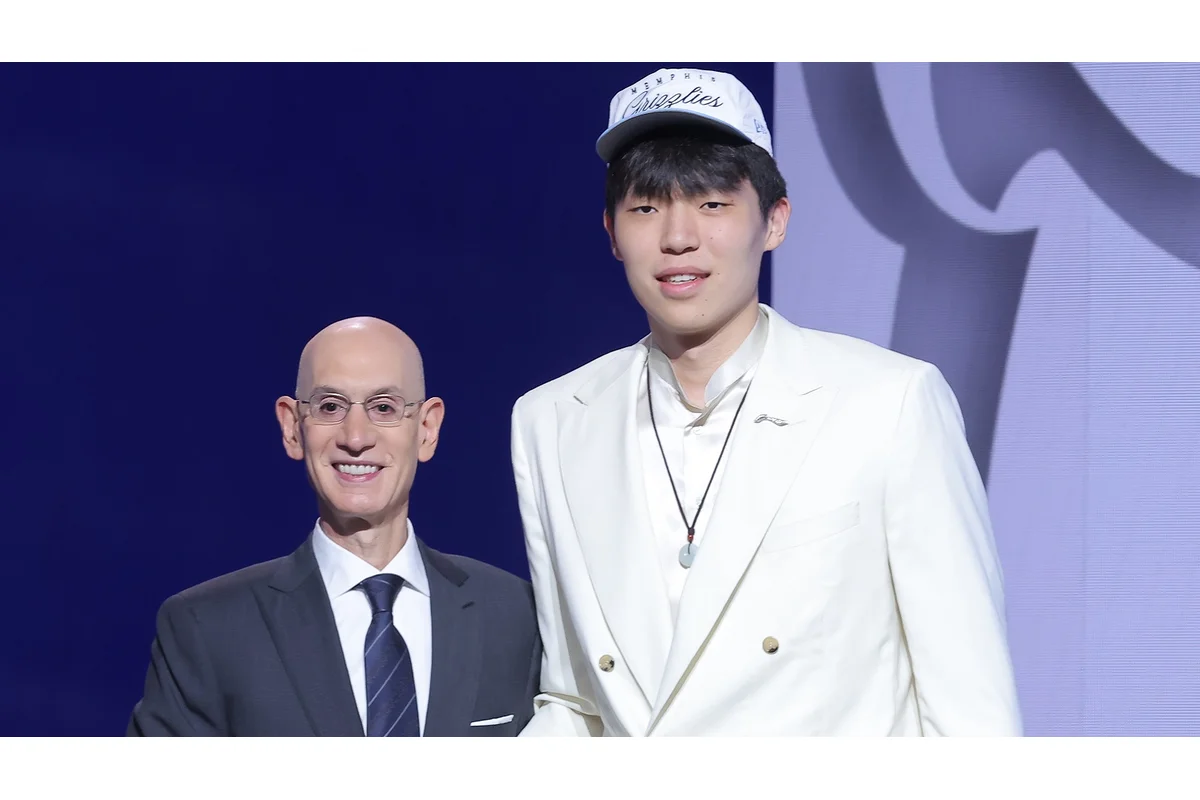
Hansen Yang attracted considerable attention during the NBA draft, with the Portland Trail Blazers selecting him at 16th overall, signaling the franchise’s belief in his long-term promise. Although many found his draft position surprisingly high, the team’s commitment reflected their hope in Yang’s potential as a unique playmaking center.
Since joining the NBA and spending time in the G League, Yang’s limited court time and production have raised questions about his readiness and fit at the top level. Despite substantial effort to enhance his physicality, including a reported weight gain of 7-8 kilograms, his impact in NBA games remains modest.
Analyzing Yang’s On-Court Performance and Playing Time
Through 35 NBA appearances, Yang averages only 7.5 minutes, contributing 2.2 points, 1.6 rebounds, and 0.6 assists per game. These numbers highlight the minimal role he holds, but they only scratch the surface of the challenges he faces. His development is constrained by issues beyond raw statistics, involving adaptation to NBA pace, positional expectations, and offensive limitations.
Yang’s minutes mostly come as a backup to Donovan Clingan, yet despite the opportunity, his offensive game has not progressed sufficiently to earn more consistent playing time.
Offensive Struggles: Shooting Consistency and Defensive Impact
Portland’s interest in Yang was largely driven by the aspiration to replicate the “Nikola Jokic effect,” aiming to develop a center capable of both playmaking and floor spacing. Comparisons to Jokic, fueled by stylistic similarities visible in clips from China, boosted Yang’s draft appeal. However, in the NBA, his shooting has not lived up to expectations.
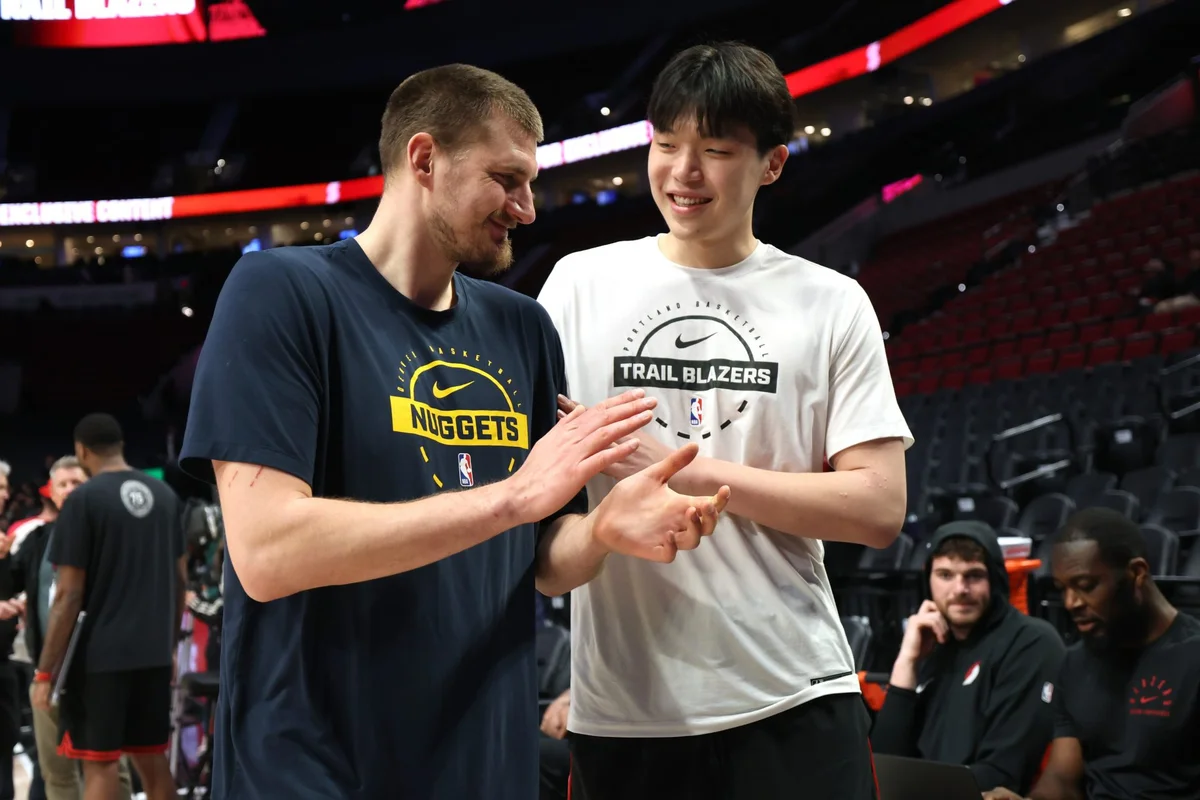
Yang has converted only 13% of his three-point attempts, making 5 shots out of 38 attempts. This lack of reliable outside shooting reduces his offensive threat, allowing defenses to disregard him on the perimeter and focus on contesting other plays. The absence of shooting gravity severely limits his ability to manipulate defensive schemes and unlock his playmaking skills.
Defensive and Physical Roadblocks Affecting Playing Time
Aside from his offensive woes, Yang faces significant defensive limitations. His lateral quickness and overall athleticism do not match the pace of modern NBA offenses, making it difficult for him to cover ground and adapt to fast breaks or switch-heavy defensive schemes.
While he shows promise as a rim protector, sustained stretches at a fast tempo expose his physical shortcomings. Compensating for this requires exceptional offensive creativity and decision-making, a combination currently observed only in elite centers like Nikola Jokic and Alperen Sengun.
Yang’s current profile places him in a high-risk, high-reward category: if he can improve his offensive decision-making and touch, he may secure a steady spot, but the margin for failure is thin.
G League Performances Reveal Mixed Potential and Risks
In the G League, where Yang received more minutes, his talent surfaced more clearly. Over eight games, he averaged 17 points, 9.3 rebounds, and 3.1 assists, reflecting his ability to assume a larger offensive role effectively.
However, his assist-to-turnover ratio underscores challenges with consistency and decision-making. Averaging 3.6 turnovers per game in a league with lower defensive intensity suggests that scaling up these advanced playmaking skills to the NBA level is a considerable hurdle.
Yang’s current game suggests that his processing speed and judgment are not yet refined enough to handle sophisticated reads, increasing the likelihood of errant plays when given more responsibility.
The Importance of Consistent Playing Time for Development
For a complex talent like Yang, regular minutes are critical to developing confidence and skill. Without enough time on the court, his offensive creativity and overall adjustment to NBA speed remain untested under true game pressure.
Nikola Jokic experienced a somewhat smoother progression partly due to his immediate generational talent, while Yang’s journey has not yet reached that threshold. Moments during the Summer League and sporadic NBA appearances show glimpses of potential, but without a sustained role, Yang has not truly started his development process.
“From that perspective, harsh criticism is premature, as he has not yet had a genuine opportunity to prove himself outside of brief cameos.” ?Amanda Loman, AP Photo
Portland’s Competitive Context and Future Prospects for Yang
The Trail Blazers currently find themselves in a tight playoff race, which limits patience for developing a player who has yet to contribute meaningfully. Immediate production takes precedence over long-term growth when competing for a postseason berth.
Despite this, Portland’s significant investment in Yang means they eventually must allot him more playing time to properly evaluate his potential. The road ahead is challenging, and the likelihood of Yang failing to secure a long-term NBA role is high, but the possibility remains that he can evolve into a valuable player with the right development and opportunity.
