
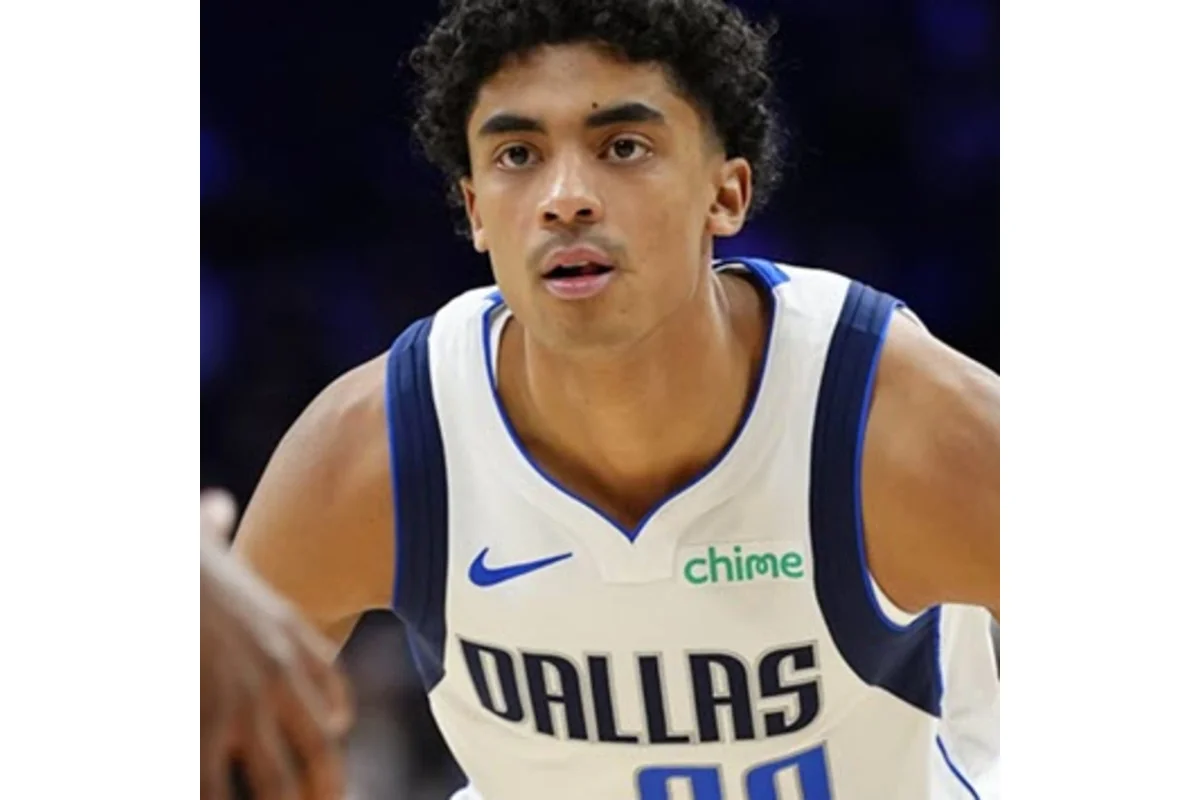
Brandon Williams, the guard for the Dallas Mavericks, has demonstrated exceptional speed and agility throughout his career, but this season marks a turning point as he combines that quickness with greater strategic awareness. In the NBA‘s demanding environment, Williams has refined his timing and decision-making to leverage his natural burst more effectively against seasoned defenders. This development has resulted in his elevated role during a season marked by injuries for Dallas.
His recent performance against the Brooklyn Nets at Barclays Center exemplifies this growth. Williams put up a strong evening with 19 points on 9-of-11 shooting and led the team with 10 assists, recording his first double-double as a Maverick. This achievement aligns with a broader trend of improved output, as he has averaged 16 points and 7 assists over the last four games, signaling a steady climb rather than a one-off success.
How Patience and Court Vision Are Refining Williams’ Impact
While Williams’ scouting profile has long highlighted his explosive speed and ability to navigate in transition, the elements once missing were his controlled decision-making and adjustment to NBA-caliber defenses. Young point guards often face a subtle realization that speed alone cannot guarantee success at this level. Instead, mastering the nuances—such as recognizing defensive rotations, waiting for the appropriate moment to attack, and identifying openings before defenders converge—becomes vital.
Jason Kidd praised these advancements, stating,
“His speed is hard to guard, but now he’s showing patience — using that speed to get to the rim while keeping others involved. His study habits have definitely improved. He’s spending time learning how defenses cover him.”
This patience allows Williams to manipulate defenses more effectively rather than forcing plays prematurely.
Williams himself described his approach:
“I’m just doing whatever it takes — offensively and defensively. Being scrappy on that end. Offensively, I’m taking what the defense gives. Whether that’s me scoring or passing it to a teammate — I’m going to do whatever they give.”
His role as a playmaker has evolved into one focused on collapsing defenses and capitalizing on the resulting chaos to create scoring opportunities for teammates.
Guidance from Mavericks Leaders Fuels Williams’ Growth
Williams’ progression has been shaped by close mentorship from key figures within the Mavericks organization. Head coach Jason Kidd, a Hall of Fame point guard renowned for his command of the game, plays a significant role in Williams’ developmental journey. Williams has embraced this mentorship fully, noting,
“It’s good. I try to be a sponge every day when I come in and ask him small questions. He always says there’s no wrong or dumb questions around here. And like you said, he’s a Hall of Famer, so it wouldn’t be too smart of me not to take something from him.”
Beyond tactical guidance, Williams seeks to absorb the mindset and preparation methods that distinguish elite players.
“Every day I come in, I ask him how he approaches his work, how he approaches film, and so on. That’s the stuff I try to take from him every day,”
Williams explained. This focus on the process highlights Williams’ understanding that mental preparation and film study are as crucial as on-court skills.
Additionally, Kyrie Irving, despite missing considerable time this season, continues to influence Williams as a mentor. Kidd commented on this interaction:
“Them talking and walking through different coverages. You get on-job training, visual learning, and Kai’s voice. It’s a masterclass of what Kai has done so far with B-Will.”
Irving‘s sophisticated offensive knowledge provides Williams with an invaluable, informal education during practice sessions and team interactions.
Williams also credits veteran guards Ryan Nembhard and Tyus Jones for their support.
“Obviously everybody knows about Kyrie, but I lean on the floor-setters for our team — Ryan Nembhard and Tyus Jones. I’m always asking those guys what they’re seeing out there and putting that into my game. Ultimately, that leads to wins,”
he said. This collective guidance fosters an environment where Williams can grow rapidly, leveraging the insights of experienced teammates to enhance his own play.
Williams’ Performance Boosts Confidence in Mavericks’ Roster Depth
The Mavericks recently faced a tense moment when the Brooklyn Nets narrowed a significant lead to just two points in the final quarter. Williams remained composed under pressure, contributing to Dallas maintaining control to win 123–114. Reflecting on this, Williams said,
“We’ve probably been in at least 35 clutch games this year. It’s not a lot we haven’t seen. It’s about going out there and executing.”
Kidd praised the team’s composure, adding,
“There was no panic on our side. There’s a lot of trust with that group.”
This trust is a testament to Williams’ growing reliability and his increasing role in the Mavericks’ rotation. Statistically, his improvement is clear: from averaging 8.3 points and 2.3 assists in just under 15 minutes last season to 12.8 points and 3.9 assists in over 22 minutes this year, with career-best shooting percentages across 49 games.
After the recent game, Kidd remarked on Williams’ evolution:
“You can see he’s turned the corner in being able to playmake for others. He used his speed to get into the paint and wasn’t always looking to score — he was making plays for teammates. He made some big shots. I thought he played bigger defensively too — got a couple steals and deflections as the low man. He’s starting to get comfortable running the team.”
Kidd has also openly acknowledged the urgency surrounding Williams’ position in the league.
“He’s fighting to get a job. He’s got a great opportunity to get an NBA contract. That’s our job — to hopefully put him in a position to do that here or somewhere else,”
Kidd said earlier this year. This frank statement underscores the motivation behind Williams’ relentless work ethic and steady improvement.
The coach emphasized his confidence in Williams’ readiness, stating,
“His confidence is at a high. We’re leaning on him on both ends of the ball and he’s up for that challenge.”
Williams Demonstrates Composure Through Adverse Circumstances
Before the game at Barclays Center, the Mavericks experienced travel disruptions caused by a blizzard in New York City that delayed their arrival and truncated their usual preparations. Despite this disruption, Williams maintained focus and delivered a near-flawless shooting night, reinforcing his steadiness in unpredictable situations.
Williams described the experience as reminiscent of earlier days in organized basketball:
“It kind of brings you back to AAU-type vibes. Nothing we haven’t seen before.”
His ability to perform under atypical conditions reflects his professional growth and mental resilience. Reflecting on his journey, Williams said,
“It took a lot to get here. I credit that to the people around me. My teammates, my coaches — everybody played a part.”
The significance of this double-double extends beyond a single box score entry. It exemplifies the patient, often unseen effort involved in transforming raw talent into consistent, high-level performance—through intensive film study, strategic conversations, and adapting to the professional pace and demands of the NBA.
Brandon Williams has long been recognized for his speed, but what the league is increasingly recognizing is the depth and maturity behind his play.
