
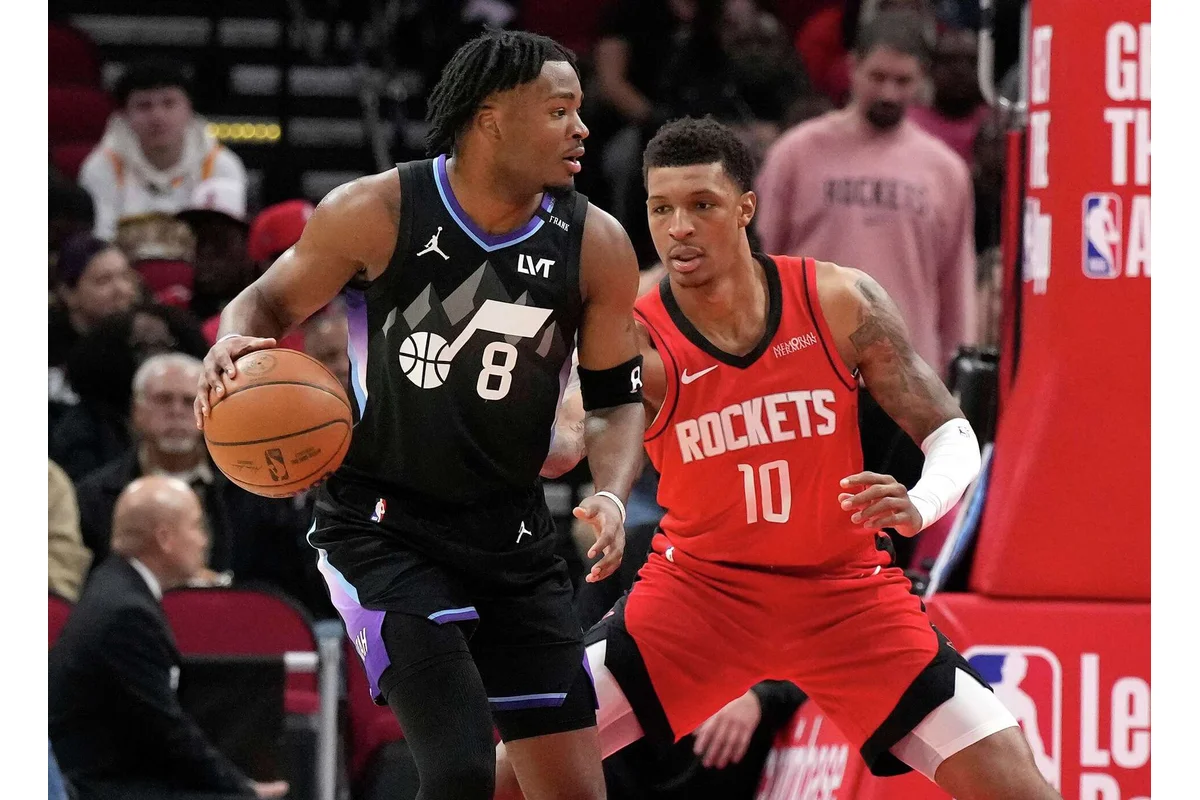
The Houston Rockets were defeated by the Miami Heat 115-105 on Saturday during their Florida road trip, notably missing starting power forward Jabari Smith Jr. due to an ankle sprain. Smith’s injury is expected to sideline him for at least one more game, raising concerns about how deeply his absence affects the Rockets’ performance and championship ambitions.
Impact of Smith’s Injury on Rockets’ Team Dynamics
This season, the Houston Rockets have had limited opportunities to assess their gameplay without Jabari Smith Jr., who had missed only one prior game—also because of an ankle injury—in November. That game resulted in a 110-102 win against the struggling Dallas Mavericks, adding complexity to understanding how much Smith’s presence shifts the team’s fortunes.
Standing six-foot-eleven, Smith is viewed as an ideal partner to Alperen Sengun, the franchise center known for his low-post playmaking but with limitations in range and shot blocking. Smith’s role as a floor-spacing rim protector complements Sengun’s style, theoretically strengthening Houston’s front court.
Despite this promising pairing, the actual effect on the court varies. Smith is shooting 36.8% on an average of 6.1 three-point attempts per game this season, but many of those attempts come from open or wide-open looks granted by defenses that largely disregard him. Unlike Rockets guard Reed Sheppard, who often benefits from offensive schemes creating open shots, Houston’s approach doesn’t prioritize generating free looks for Smith. Opponents tend to focus their defense on Sengun or star player Kevin Durant, leaving Smith less contested but also less central to the offense.
Jabari Smith Jr.’s Performance Before the Injury
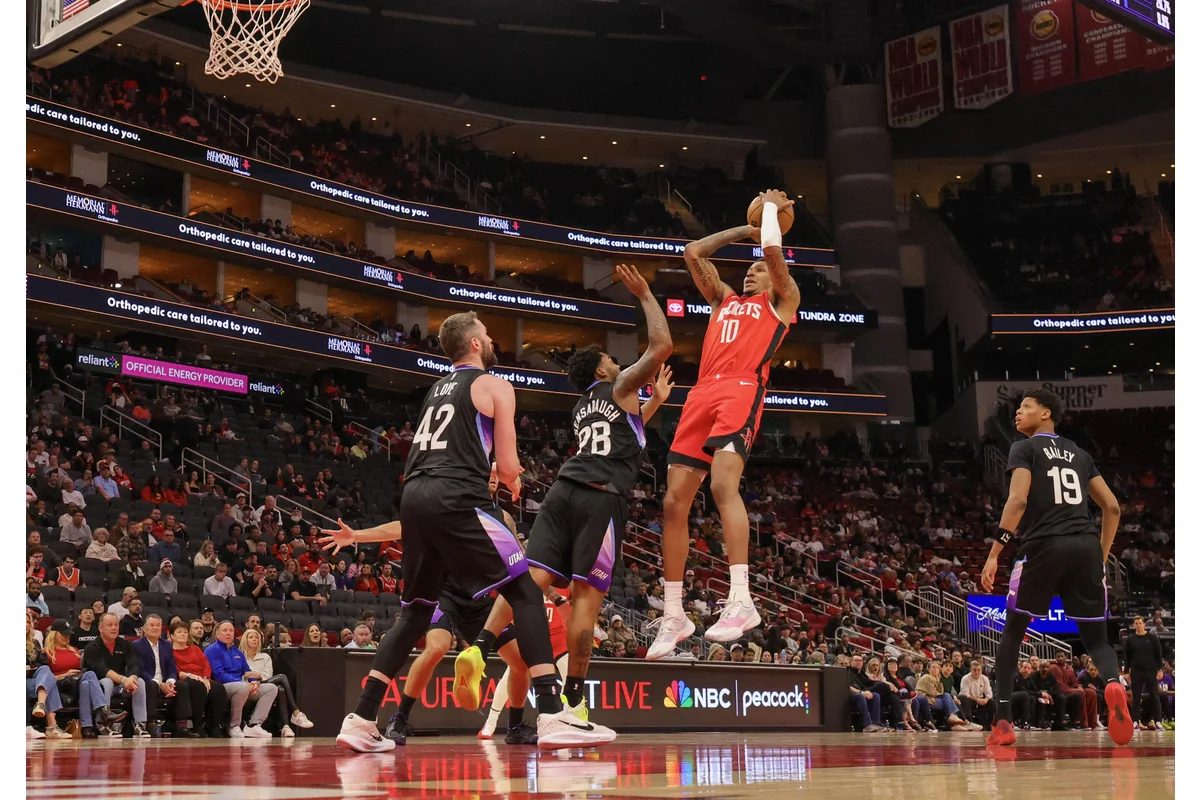
Before his recent injury, Smith had been delivering one of the most efficient stretches of his career. In the last ten games before his absence, he averaged 17.3 points with a 57.0% field goal rate, including 44.4% from beyond the arc on 5.4 attempts per game, and 79.2% from the free throw line. In his last five outings, these numbers improved further to 18.4 points on 66.7% shooting overall and 48.1% on three-pointers.
During this period, the Rockets achieved a 4-1 record, although Smith’s individual plus/minus was positive in only two of those games. His highest plus/minus came during a dominant win against the Utah Jazz, but even with strong shooting percentages, Smith’s impact as a game-changer remained sometimes subtle.
Smith’s Role Defensively and on the Boards
Jabari Smith Jr. contributes far beyond scoring; he is a crucial element in Houston’s interior defense. He ranks second in blocks per game on the team with 1.0, just behind Sengun’s 1.1, while committing fewer fouls overall, which allows the Rockets to maintain defensive pressure without excessive penalties. His absence on Saturday was felt as the Rockets were outscored 66-50 in points allowed in the paint.
Smith is also integral to Houston’s rebounding efforts, ranking fourth on the team in overall rebounds and sixth in offensive boards. Tasked with boxing out opposing rebounders, particularly heavier and more aggressive players, his role grows even more critical in the absence of three-man-box-out expert Steven Adams, who is out for the season. Miami managed to keep pace on the boards during the game, grabbing 47 rebounds to match Houston’s total. The Rockets’ offensive rebounds stayed close to Miami’s 14, with Houston securing 15, reflecting the challenge of compensating for Smith’s absence.
What Smith’s Injury Means for the Rockets’ Future
Without Smith or Adams, the Rockets lose significant size and physicality, especially with the team starting smaller players like six-foot-two Reed Sheppard against physically imposing opponents such as the Heat. As Houston looks to possibly rebuild or adjust its core this offseason, Smith’s status becomes a focal point. His relatively consistent availability contrasts with other impactful but frequently injured players like Tari Eason, making Smith a potentially valuable trade asset.
Nevertheless, trading Smith would only benefit the Rockets if his absence continues to diminish the team’s competitiveness. Despite occasional questions about how much of an influence he exerts on games, Smith remains Houston’s “superpower,” providing unique defensive and floor-spacing capabilities essential to the team’s identity and hopes of future contention.

