
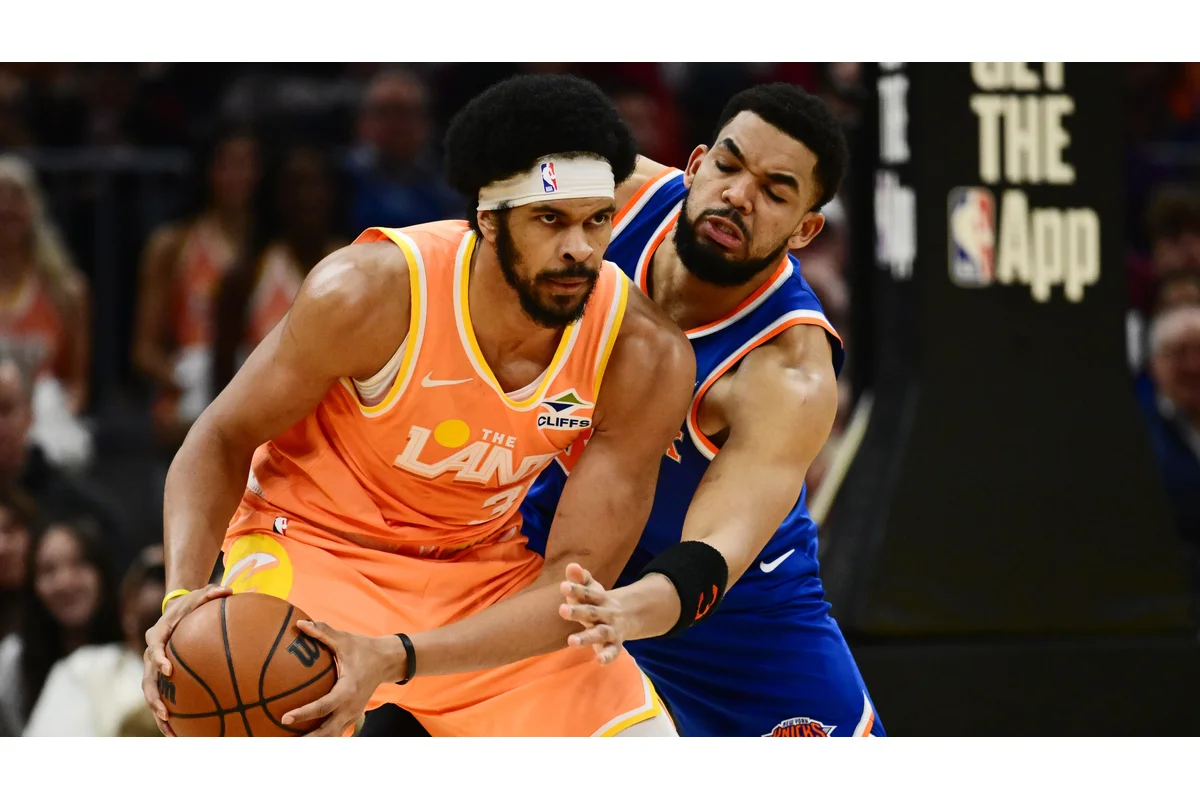
When the Milwaukee Bucks acquired 26-year-old center Jericho Sims last February in the trade involving Khris Middleton and Kyle Kuzma, expectations were modest, envisioning Sims as a situational energy big to fill in when Giannis Antetokounmpo rested. However, with Giannis sidelined by injuries throughout much of the season, Sims has emerged as a critical contributor, especially in February as the Bucks won eight of their last twelve games. Now, with Milwaukee just two games shy of the Eastern Conference Play-In zone, Sims’ rising role next to their superstar could shape the team’s long-term frontcourt dynamics.
Sims’ journey on the Bucks began quietly, evident in his soft-spoken nature when Damian Lillard asked about his nicknames. Sims offered “J-Rock” and “Jumpman,” the latter reflecting a 44.5-inch vertical leap recorded at the 2021 NBA Combine, tying for the third-highest in history. Lillard immediately shot down “Jumpman,” referencing Michael Jordan as the rightful bearer of that moniker. Despite an unremarkable start in New York due to frontcourt depth, Sims’ blend of size and athleticism has caught attention in Milwaukee, overtaking Bobby Portis and fellow Texas alum Myles Turner in the rotation during the Bucks’ recent streak.
Sims’ Impact on Milwaukee’s Rebounding Crisis
Sims’ biggest contributions have been on the boards, particularly offensively, where the Bucks have struggled all season. The team has suffered from poor rebounding numbers due to Giannis’ injury absences, a guard-heavy lineup, and Turner’s limitations on the glass. Despite ranking second in effective field goal percentage league-wide, Milwaukee has consistently lost second-chance opportunities and defensive rebounds, placing 27th in rebounding rate and last in offensive rebounding through most of the season.
In February, with Sims gaining more minutes, the Bucks improved significantly, ranking 11th in rebounding and 20th in offensive rebounds, while upping their shot attempts to eighth-most per 100 possessions. This improvement coincided with a climb to seventh in offensive rating during the span. Sims’ numbers are impressive—averaging 6.8 points, 7.5 rebounds, and two assists while shooting over 82 percent from the field—but his true influence lies in the intangible physicality and aggressive rebounding. The Bucks grab 54 percent of available rebounds when Sims is on the court, including 34 percent of their own missed shots, a marked difference compared to 50 and 22 percent with Turner playing.
Offensive Development and Improved Court Vision
Beyond rebounding, Sims has exhibited noticeable offensive progress and better chemistry with his teammates. Early on, turnovers and poor decision-making were significant issues, with frequent illegal screens and mismanaged passes undermining his contributions. However, as he’s earned more playing time, particularly in February, Sims has become more decisive, especially when running the short roll. He has become a reliable screener and passer, showing the ability to find open shooters quickly or attack the rim decisively without delay.
This improved court vision is reflected in his nearly 2-to-1 assist-to-turnover ratio during February. Despite a limited sample size, Sims has scored 1.7 points per possession as a roll man this year, ranking in the 98th percentile league-wide in efficiency. His ability to finish at the rim and serve as a vertical scoring threat has helped ignite the Bucks’ offense during Giannis’ absence, a role sorely needed in the halfcourt.
His growing rapport with guard Kevin Porter Jr. has been particularly notable. Porter has utilized Sims both as a pick-and-roll partner and as a baseline lob option cutting from the weak side. Sims’ skill at boxing out defenders to open driving lanes has allowed Porter to excel inside recently. These incremental adjustments have elevated Sims’ offensive impact, as demonstrated by his team-leading offensive rating in February, underscoring his value in Milwaukee’s halfcourt attack.
Rethinking Sims’ Future Role Alongside Giannis
Traditional views would suggest pairing Giannis Antetokounmpo with a floor-spacing big like Myles Turner to complement Milwaukee’s offense. Yet, past successes show that Giannis has thrived alongside different center types. Before the championship lineup with Brook Lopez as a stretch five, Giannis found synergy with interior scoring centers such as Greg Monroe, John Henson, and Miles Plumlee. Plumlee, who shared similarities with Sims as an energetic rim runner, earned a significant contract in part due to effective pick-and-roll chemistry with a young Giannis under Jason Kidd’s guidance.
The NBA’s landscape has evolved, but some fundamental principles endure. If Sims can sustain his current level against higher-caliber opponents, there is room for a more substantial, permanent role next to Giannis. To maximize this fit, Sims must continue his aggressive screening, cutting, and passing while maintaining his rebounding hustle. Defensively, Sims has surprised by holding his own in perimeter switches, offering Milwaukee an adaptable look with Giannis capable of guarding all five positions.
Although Sims lacks the perimeter shooting that usually aids spacing, his activity off the ball and rim-running will challenge defenses guarding Giannis by forcing more attention in the paint. While Turner is likely to retain the starting spot alongside Giannis due to his superior rim protection and positive on-court data, Sims’ recent performances solidify his claim to consistent minutes in the rotation even after Giannis returns.
Whatever doubts existed about Sims’ fit next to Milwaukee’s franchise cornerstone have been significantly reduced by his recent progress and impact. The Bucks now face a critical road test against the struggling Chicago Bulls, and Sims has a prime opportunity to assert dominance against a thin frontcourt, helping the Bucks widen separation in the Eastern Conference Play-In race.
