
The 2023 collective bargaining agreement (CBA) introduced strict financial regulations, including harsher luxury tax penalties and more limiting trade rules, which have made managing NBA salary caps a complex challenge for every team. Amidst these constraints, Deni Avdija’s contract stands out as the best in the NBA for 2024, offering remarkable value by balancing salary, length, and aging potential in a way few contracts can match.
Modern NBA playstyles demand deep rosters due to faster paces and increased defensive efforts, pushing teams to balance talent and salary carefully. With an average of 99.4 possessions per game this season—the highest pace since the late 1980s except for a brief COVID-related dip—players cover more ground and often play fewer minutes, increasing the need for contracts that maximize roster depth without breaking the bank. Efficient contract negotiation, therefore, plays a crucial role in a team’s sustained success, rewarding those who acquire talented players like Avdija under favorable terms.
Critical Elements Defining Valuable NBA Contracts Today
Understanding why Avdija’s contract is exceptional requires examining seven main criteria that shape the value of NBA deals. These include the average annual salary relative to a player’s worth, contract length particularly when locked in at below-market rates, player age and expected career trajectory, guarantees and team or player options offering flexibility, player durability, contract portability or appeal to other teams, and the contract structure itself, specifically whether salaries ascend, descend, or remain flat over time.
The synergy of these factors determines how beneficial a contract is for a team in the current era, where the financial landscape pressures franchises to optimize every dollar spent while maintaining competitive rosters.
Reviewing the NBA’s Most Cost-Effective Contracts Beyond Avdija
A comprehensive ranking of the 15 best NBA contracts reflects a mix of emerging talents and savvy management, displaying a landscape where teams have achieved tremendous value through strategic deals.
15. Aaron Nesmith
Owed $51.4 million over three years, Nesmith exemplifies how below-market deals compound into even better contracts later. After limited usage in Boston, he was acquired by Indiana and rewarded with a $33 million extension early in his third season, proving his worth as a reliable 3-and-D wing on a team that reached the Eastern Conference and NBA Finals. Nesmith is currently earning about $17 million annually, a steal for a player with playoff pedigree exceeding many making twice as much.
14. Derrick White
With $97.8 million remaining over three years (including a player option), White’s deal breaks several conventional rules, given his age and non-All-Star status. Yet, his versatility and defensive prowess make him highly sought after across the league. White’s contract represents excellent portability, as multiple teams would value his skill set at a higher price. His salary equates to less than what similar players command, while his ability to guard and facilitate makes this deal a bargain.
13. Scotty Pippen Jr.
Away from the limelight, Pippen Jr. has earned a backup point guard role with Memphis on a bargain contract worth just over $5 million across two years. His per-minute production ranks him far above his salary, making him one of the most unexpectedly valuable players on the salary scale, especially considering his defensive strengths.
12. Isaiah Stewart
Earning around $30 million for two years, Stewart anchors Detroit’s second-best defense with exceptional rim protection. Though his offensive consistency and shooting have fluctuated, his defensive impact and physical presence are irreplaceable. Given the scarcity of versatile big men, Stewart’s contract remains a significant asset.
11. Neemias Queta
Queta currently sits on a modest salary of under $2.7 million for one year with a team option. Despite the low cost, performance models suggest he is deserving of a salary in the $30 million range, making him one of the league’s best bargains. His role in Boston’s future plans is fluid, with possibilities for a team-friendly extension, showcasing the Celtics’ skill in maximizing value.
10. Onyeka Okongwu
Okongwu shares a similar pay scale as Stewart but offers different strengths, including better perimeter shooting at over 38%. Okongwu’s contract covers two years at approximately $33 million, and his skill set provides a blend of defensive reliability and offensive versatility, slightly edging out comparably paid players in the same role.
9. Nickeil Alexander-Walker
The Atlanta guard is locked in for two more years at nearly $30 million total, which is considered excellent value due to his defensive acumen and improved offensive role. Though not as dynamic as players like Derrick White, Alexander-Walker’s contract stands out for its affordability relative to his contributions on both ends of the floor.
8. Ajay Mitchell
A second-round pick by Oklahoma City, Mitchell escaped rookie scale constraints, allowing the Thunder to sign him to a low-cost long-term deal after converting his two-way contract. He showed significant promise before an injury, with performance models valuing him at over $22 million this season—making his current salary an understated investment in potential future star power.
7. Payton Pritchard
A former Sixth Man of the Year, Pritchard earns just over $16 million across two years, a bargain compared to similar bench scorers making close to $20 million. His career-year shooting and playmaking skills may soon push the market to readjust his value, but as it stands, Boston retains an efficient offensive guard on a reasonable deal.
6. Ivica Zubac
Currently with Indiana, Zubac makes just over $42 million over two years, ranking him as the NBA’s 16th-highest-paid center despite being younger and more versatile than higher-paid counterparts. His consistent defense and role on veteran teams highlight the Pacers’ ability to secure a strong value center at a reasonable cost.
5. Alperen Sengun
Houston’s front office demonstrated remarkable negotiation skills locking in Sengun for just over $112 million across three years. His contract starts below 22% of the cap and includes a player option, which contrasts favorably with peers like Franz Wagner. Sengun’s emerging All-Star status and financial structure showcase how prudent contract talks can yield substantial savings and flexibility for teams.
4. Jaden McDaniels
The Minnesota wing received a rookie extension modestly larger than some peers but significantly cheaper than others playing comparable roles. McDaniels’ defensive prowess and improved offense, including 44.3% shooting from three, have made him a valuable piece for the Timberwolves, whose front office prioritized retaining him during the Rudy Gobert trade, reflecting his importance to the team’s future.
3. Jalen Brunson
Brunson took an early extension with the New York Knicks, foregoing a potential max contract in 2025 to help the team maintain salary flexibility. Two years remain on his deal totaling $78.3 million. He stands as the only true franchise-level player on this list earning less than a max outside rookie deals, highlighting his bargain status in the contemporary NBA landscape.
2. Jalen Johnson
Although Johnson’s current value is debated, his four-year, $120 million flat contract is notable for locking him in during his prime formative years, securing team control well beyond many other stars. At 24 years old and with an All-Star appearance, Johnson represents a forward-looking asset likely to generate substantial surplus value despite some skepticism about his immediate worth.
Why Deni Avdija’s Contract Tops the List
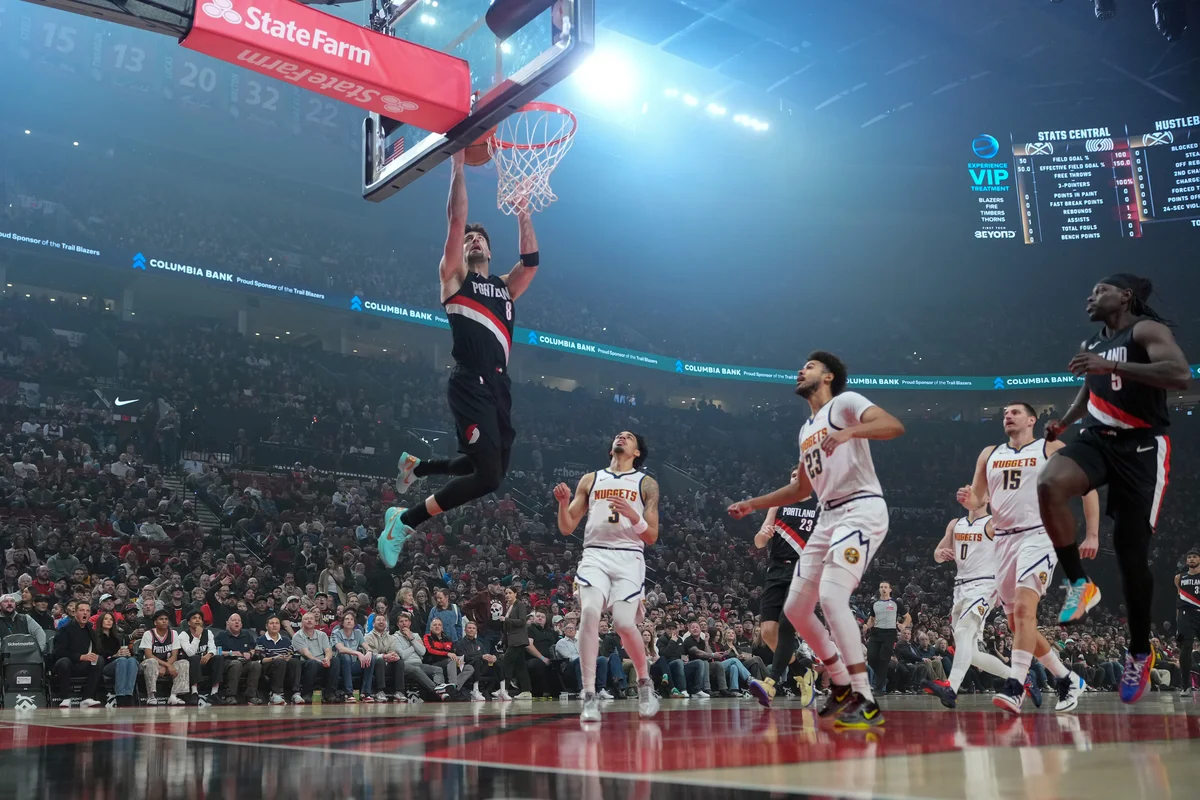
Deni Avdija’s two-year, $25 million deal is extraordinary not just for the player’s quality but for its rare descending salary structure and youth. Making $14.4 million this season, Avdija earns near the non-taxpayer mid-level exception, an exceptional bargain given his All-Star caliber at just 25 years old. His salary decreases by $1.25 million each year, placing him below 7% of the salary cap in the 2027-28 season, which aligns with his expected career peak.
Comparisons to Stephen Curry’s rookie extension highlight the historical excellence of Avdija’s contract. Curry’s final year paid him $12.1 million, while Avdija will make less than $12 million more than a decade later despite similar or better performance levels. This descending contract makes extending Avdija difficult since significant raises would still put him near mid-level exception money, requiring the Blazers to be financially creative to retain him.
Although Portland’s broader salary commitments to veterans like Jerami Grant and Jrue Holiday may challenge overall financial flexibility, the Avdija deal in isolation is a masterpiece of cost-effective team-building. The trade that acquired Avdija effectively landed a cornerstone player at a historically low price, offering the Blazers an enviable foundation for long-term competitiveness if they can continue to develop supporting pieces and manage their salary cap effectively.
