
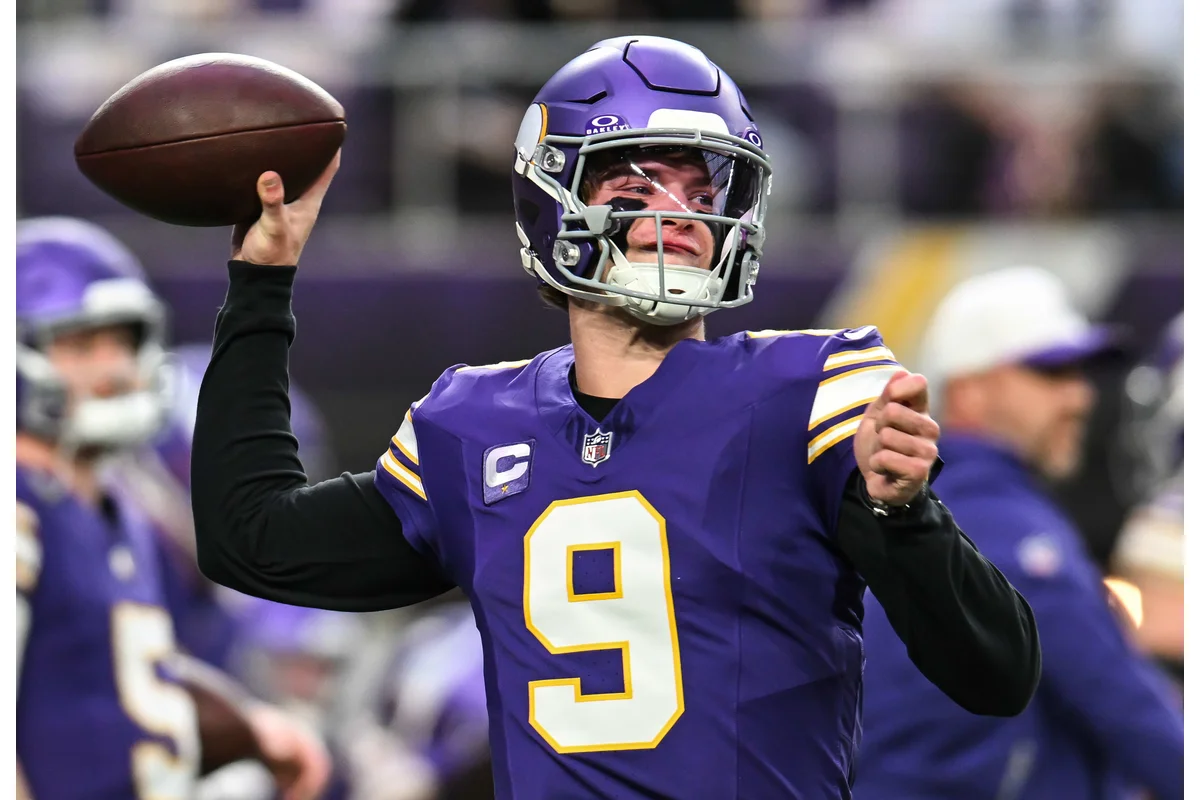
The Minnesota Vikings plan to acquire a new quarterback this offseason, possibly through a trade, though it remains uncertain whether that player will serve as genuine competition or simply as backup insurance for J.J. McCarthy. If the Vikings pursue the insurance route, they must ensure a stronger contingency plan than what was in place last year. Despite options to bring in another passer, the clearest and most straightforward path is centered on maintaining confidence in McCarthy, continuing the long-term investment the team has already made in him.
Although not universally advocated, there are compelling reasons supporting the decision to commit to J.J. McCarthy as the definitive starting quarterback if head coach Kevin O’Connell intends to place full trust in McCarthy’s development.
Key Arguments for Retaining McCarthy as the Starter in 2026
The case for Minnesota to secure J.J. McCarthy as their No. 1 quarterback rests on several vital considerations.
Young Talent Still on the Rise
At just 23 years old, McCarthy remains in the early phase of his career, far from the age when a quarterback is typically labeled a bust—usually around 25. Drafted at 21, he has faced significant challenges, including missing approximately 70% of games over two seasons due to injuries. His on-field performance during 2025 was inconsistent, with flashes of excellence mainly in a few critical moments and a strong December stretch.
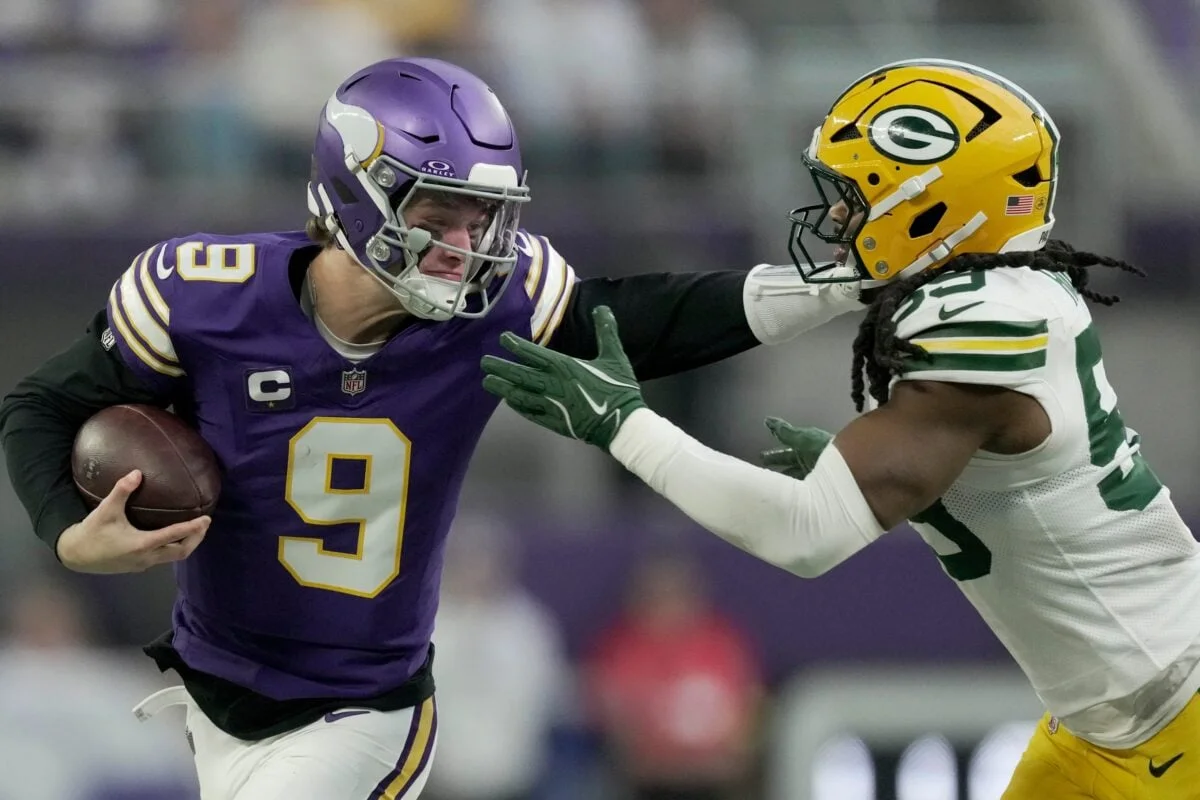
It is premature for any NFL team to abandon faith in a young first-round pick like McCarthy. The question facing Minnesota is whether it has the patience to continue nurturing his growth or prefers to hedge its bets by introducing competition at the quarterback position.
Kevin O’Connell’s Perspective on Developing Young Quarterbacks
About eighteen months ago, head coach Kevin O’Connell expressed a well-documented viewpoint on quarterback development during an appearance on the Rich Eisen Show:
“I just think as a whole, there’s not enough emphasis put on the organization’s role in the development of the position, meaning I believe that organizations fail young quarterbacks before young quarterbacks fail organizations.”
This philosophy suggests that if O’Connell truly believes in this principle, trading McCarthy or replacing him without fully backing his progress would contradict his own stated approach.
O’Connell further elaborated, emphasizing the long and difficult journey every quarterback embarks upon:
“Just overall 30,000-foot view, I think it’s important to understand that every single one of these guys is on a journey. A very difficult journey. That they need the support, they need the teammates around them, they need the systems in place to ultimately try to maximize who they are and what their potential is because you’re still drafting players off of potential.”
“And then everything that happens from that moment to when that potential becomes a reality is really on the organization if you’ve got the right guy that you’re bringing in.”
O’Connell’s dedication to organizational responsibility for quarterback development may lead to McCarthy remaining the frontrunner for the starting role come September 2026.
In September 2024, O’Connell added:
“I do believe there’s some times where things just don’t work out, and then getting a chance to kinda wipe the slate clean and get a restart while still using your previous experiences to kinda shape how you’re gonna work, why you’re gonna work, why things are important to you, will only make guys better in the end and I think we’ve seen some examples of that in our league as well over the last few years.”
Learning from Past Mistakes with Sam Darnold
Earlier, in March 2025, the Vikings allowed quarterback Sam Darnold to leave in free agency to join the Seattle Seahawks, choosing neither to re-sign him nor to utilize the franchise tag as leverage for a trade. Darnold had thrown 35 touchdowns prior to his departure, highlighting the team’s missed opportunity to retain a potentially productive quarterback.
Failing to develop McCarthy effectively could push Minnesota into a similar scenario: releasing him only to see him succeed elsewhere. Such an outcome would be disheartening for Vikings fans and detrimental to the organization’s reputation and long-term plans.
Drawing Parallels to Jared Goff’s Career Trajectory
McCarthy’s first 10 starts mirror Jared Goff’s initial 2016 NFL experience. A decade later, Goff is regarded among the league’s top 12 quarterbacks, demonstrating that early struggles do not necessarily preclude lasting success. This comparison offers a reminder that players like McCarthy can indeed “figure it out” with time and proper support.
McCarthy’s Performance During Key 2025 Matches
After recovering from injury in 2025, McCarthy returned to play consecutive games against NFC East teams including Washington, Dallas, and New York, all defensively vulnerable squads. During this stretch, he displayed the skill set and poise of a top-tier quarterback, performing at a level worthy of Pro Bowl consideration. Unfortunately, an injury during the game against the Giants interrupted his momentum, a recurring theme during his early career.
This shows that McCarthy is not a player who has failed to demonstrate high-level capabilities; rather, his potential shines most clearly when healthy.
Mastering Complex Throws Amid Fundamental Challenges
Interestingly, McCarthy has excelled at the difficult, high-risk throws but has struggled at times with the simpler fundamentals of quarterback play. Nick Akridge of Pro Football Focus highlighted this in December 2025, noting:
“Putting impressive throws on tape: McCarthy’s season-long big-time throw rate is now 7.2%, tied for the highest among all quarterbacks in the NFL. There’s no denying the pressure on McCarthy. The Vikings went all-in on him as their franchise quarterback this offseason, and the early returns were uneven.”
“But development was always going to take time, and over the past few weeks, the confidence and decisiveness have clearly shown up on tape. These remaining games are crucial for his growth, and if McCarthy continues to look like he did in Week 15, Minnesota should be right back in the NFC mix next season.”
If McCarthy can handle difficult throws under pressure, it is reasonable to expect that, with appropriate coaching and support, he can improve on the basics and become a more consistent and reliable quarterback.
One remarkable example of his talent was a swift touchdown pass to Jalen Nailor, demonstrating McCarthy’s ability to deliver impressive plays under game conditions.
Ownership’s Expectations and the Pressures on McCarthy
Though it may be tempting to replace McCarthy with a more established or comfortable alternative, the Vikings’ ownership, known as the Wilf family, is likely to expect head coach Kevin O’Connell to either develop McCarthy successfully or face the consequences. If McCarthy does not meet expectations, a transition of leadership, including the quarterback position, could follow.
However, the Wilfs’ strong support of O’Connell suggests that McCarthy will be given a fair opportunity to prove himself rather than being dismissed prematurely.
McCarthy’s Strong Finish to the 2025 Season
Statistical analysis of McCarthy’s 2025 season reveals a stark contrast between his early and late performances. From Weeks 1 through 13, he ranked last in NFL quarterback metrics such as Expected Points Added (EPA) and Completion Percentage Over Expected (CPOE). Yet, from Week 14 to Week 18, he rose dramatically to become the sixth-best passer in the league based on those same advanced statistics.
This turnaround indicates tangible progress and validates the argument against abandoning him as the team’s quarterback.
With the momentum McCarthy built at the end of his rookie starting season, the Vikings face a crucial decision. Should they continue entrusting him with the lead role, banking on potential and growth, or seek alternatives that may not offer the same upside?
Nine has been replaced by JJ McCarthy who immediately throws a beautiful TD to Jalen Nailor
— SleeperVikings (@SleeperVikings) December 15, 2025
