
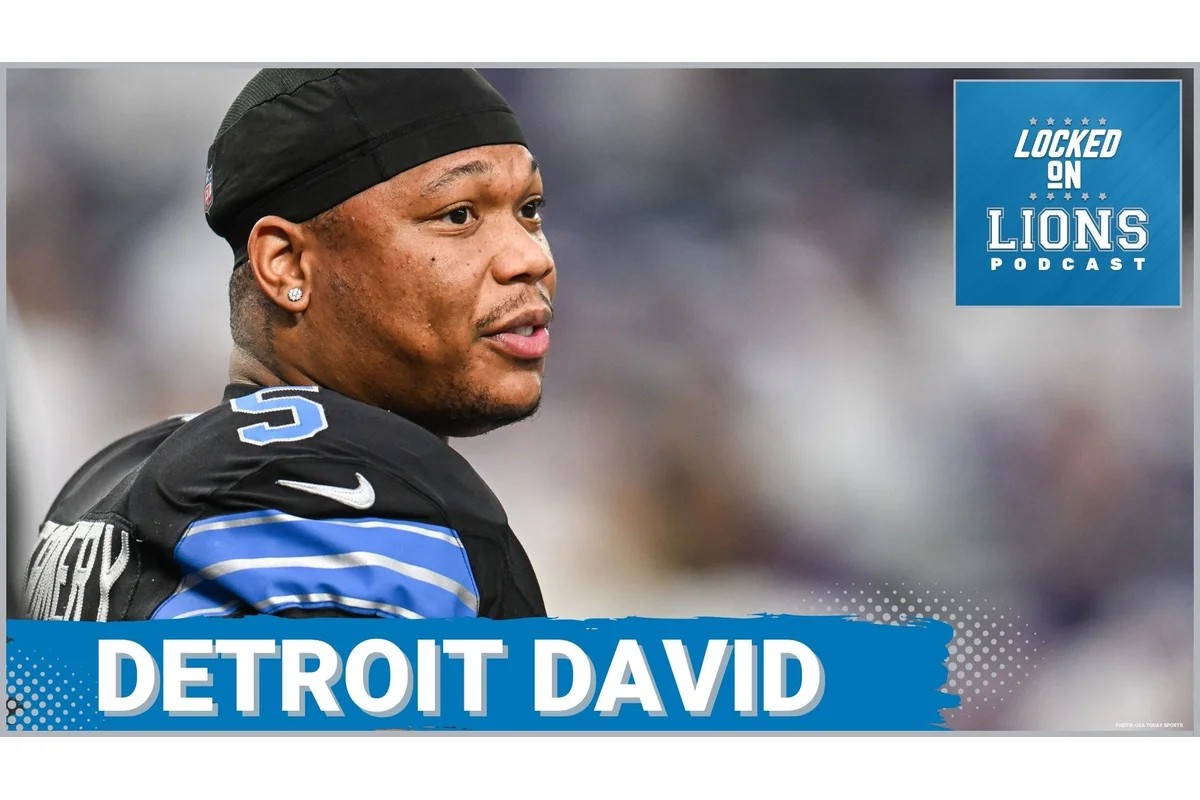
Following the recent NFL season, Detroit Lions general manager Brad Holmes indicated the team would explore trade possibilities involving running back David Montgomery, emphasizing the player’s right to be in a role that fully maximizes his talents. This development brings into focus Montgomery‘s future with the team amid ongoing discussions concerning his usage and fit in Detroit‘s offense.
Jahmyr Gibbs Voices Support for Montgomery’s Decision
At the Pro Bowl Games about a month after Holmes’ statement, Jahmyr Gibbs, Montgomery’s backfield partner, expressed his stance regarding the situation. Speaking with Dave Birkett of the Detroit Free Press, Gibbs stated,
“Of course I want David back,”
and added,
“The whole team would want David back, but it’s ultimately up to him. He’s going to do what’s best for him and his family and whatever he decides to do I’m going to support 100%. But of course we want him back, though.”
Gibbs’ support underscores the respect and camaraderie between the two running backs, who have formed a productive tandem over recent seasons.
Dynamic Duo’s Performance and Changing Roles in Detroit’s Backfield
Over the past three seasons, Montgomery and Gibbs have shared duties in Detroit’s backfield, combining physical power with blazing speed. Together, they have compiled 6,086 rushing yards, 2,099 receiving yards, and 82 total touchdowns, establishing themselves as one of the NFL’s premier running back pairs.
However, Montgomery’s role diminished in the latter part of the 2025 season, as Gibbs, who will turn 24 next season, emerged as a dominant solo rushing threat. Montgomery, now 28, experienced career lows, including only 158 rushing attempts and 716 rushing yards, marking the first time he averaged fewer than 10 carries per game in his seven-year career.
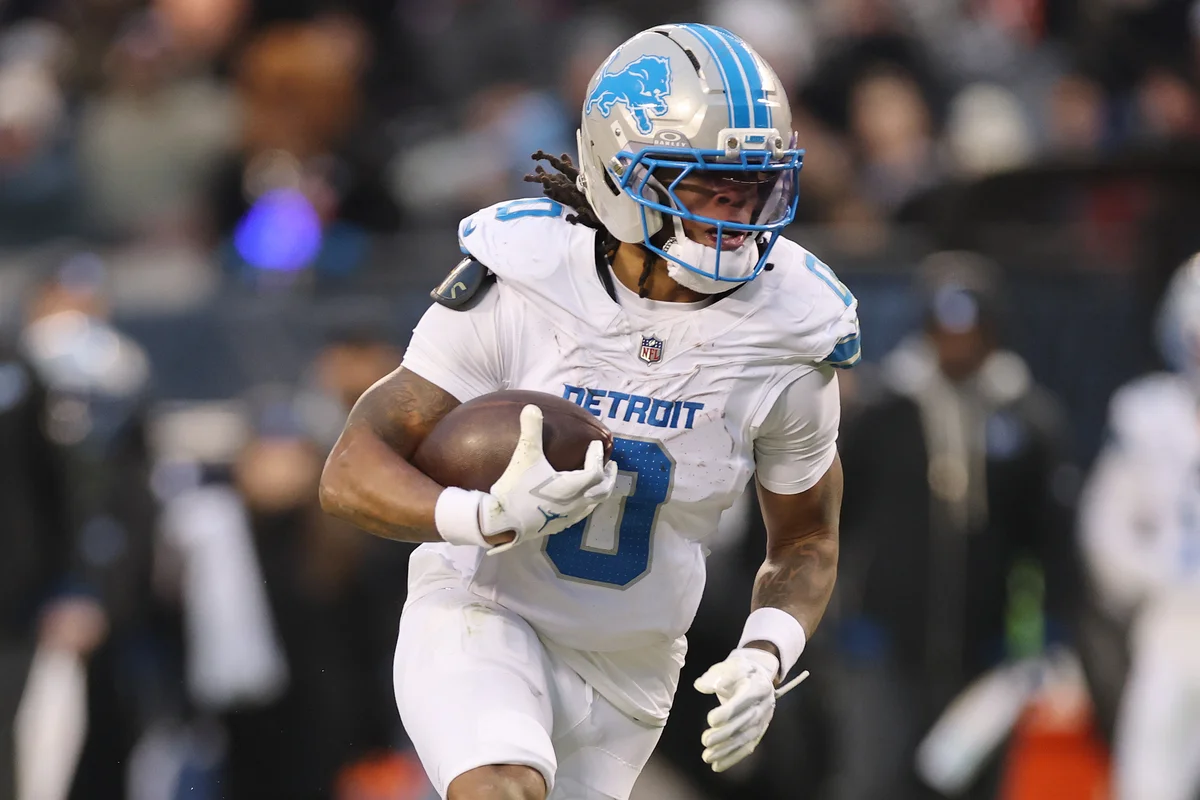
Much of Montgomery’s reduced workload occurred in the final stretch, as Detroit leaned heavily on Gibbs to generate offense while competing in a playoff race. After carrying the ball ten or more times in seven of the first nine games, Montgomery reached double-digit carries only once in the remaining contests.
Financial and Strategic Implications of a Potential Trade
If the Lions decide to trade Montgomery, the financial consequences would be modest. According to Over The Cap data, a trade before June 1 would result in $4.9 million in dead money but save $3.5 million against the salary cap. Post-June 1, the dead money shrinks to $2.4 million, with $6 million in cap savings.
Additionally, the arrival of offensive coordinator Drew Petzing, who has experience running offenses centered on a single lead back, signals potential tactical shifts. Petzing previously relied mainly on James Conner as a feature back for the Arizona Cardinals in 2023 and 2024 before injuries forced him to broaden his running back usage. This background suggests Detroit’s offensive system may increasingly highlight a singular primary runner rather than a two-back rotation.
Team Outlook and Possible End of an Era
While most players, including Gibbs, would prefer to maintain the successful partnership, the evolving offensive approach and Montgomery’s decreasing workload open the door for a trade if a suitable offer emerges. Such a move would conclude the “Sonic and Knuckles” duo—Montgomery and Gibbs’ nickname reflecting their complementary playing styles—with Gibbs embodying the quick, electric burst, and Montgomery symbolizing the powerful force.
This transition could mark a significant turning point for Detroit’s backfield, as it seeks to balance veteran experience with emerging talent under a new offensive philosophy. Fans can expect developments to unfold as trade talks progress and team strategies take shape ahead of the next NFL season.
