
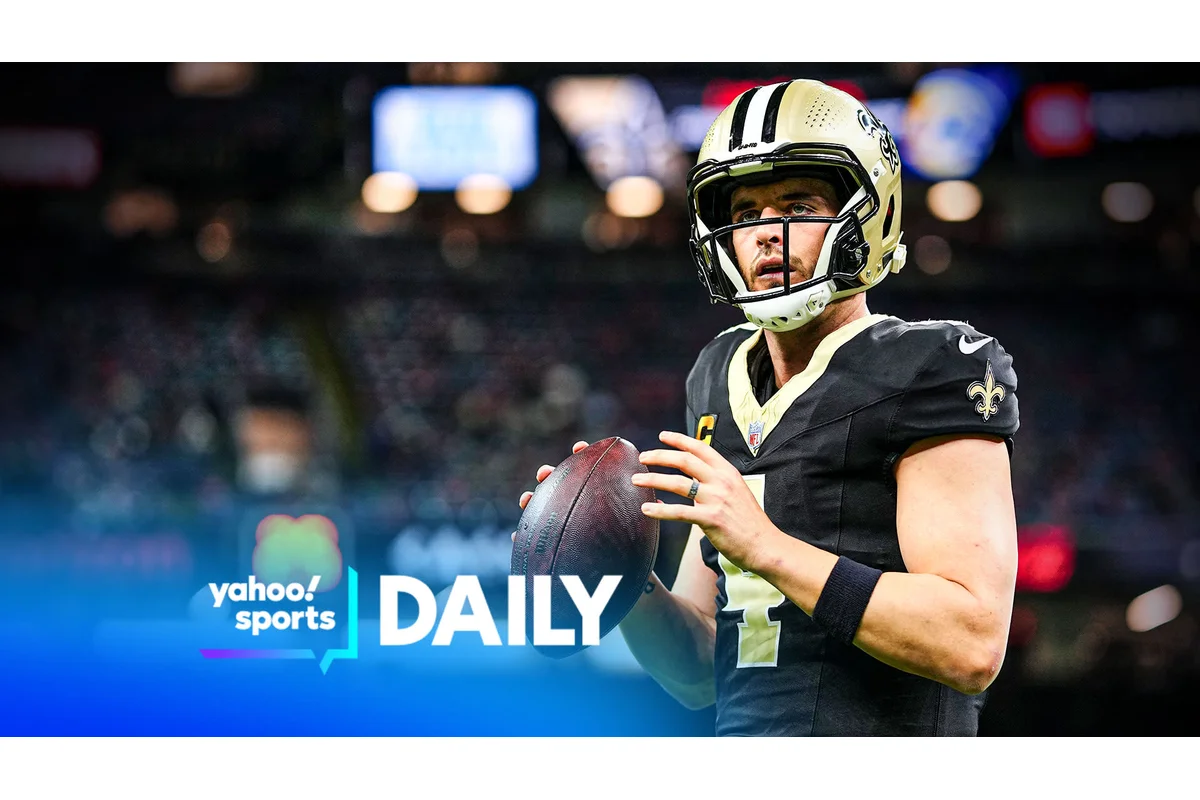
Recently, Derek Carr sparked conversations about a possible return to the NFL after hinting at unretirement, triggering speculation about his next destination. Among the teams linked to Carr, the Minnesota Vikings have emerged as a notable contender, according to a report from NFL.com, placing them in the spotlight concerning the ongoing Derek Carr Vikings rumor.
The Vikings’ interest in Carr reflects their search for a seasoned quarterback, especially given uncertainty around J.J. McCarthy’s role. While this connection might appear unlikely to some, it persists as long as Minnesota continues exploring alternatives to their current starter.
The Latest on Derek Carr’s Potential Role in Minnesota
Contrary to rumors that Carr’s career might be over, recent speculation hints at him remaining active in the league. NFL.com analyst Nick Shook named the Vikings as one of the teams considering Carr. Shook pointed out that Minnesota could offer Carr an opportunity either as a backup or someone vying for the starting quarterback position during training camp, particularly because McCarthy has yet to prove himself as a franchise quarterback after his initial season.
Shook stated,
“If Carr is interested in manning a backup role that could include a camp competition for the starting job, he’ll find that in Minnesota. J.J. McCarthy didn’t cement his role as the Vikings’ franchise quarterback in his first season as their starter and has plenty of work ahead of him this offseason.”
— Nick Shook, NFL Analyst
He added,
“Minnesota might not exercise as much patience in 2026, either, not after they watched their playoff hopes evaporate this past season because of unreliability under center.”
— Nick Shook, NFL Analyst
According to Shook, Carr’s veteran presence could help Minnesota recover from recent instability at the quarterback position, an issue former Vikings General Manager Kwesi Adofo-Mensah admitted misjudging before his departure in January. Carr’s experience might also create healthy competition for McCarthy, providing a motivator for the young quarterback’s development.
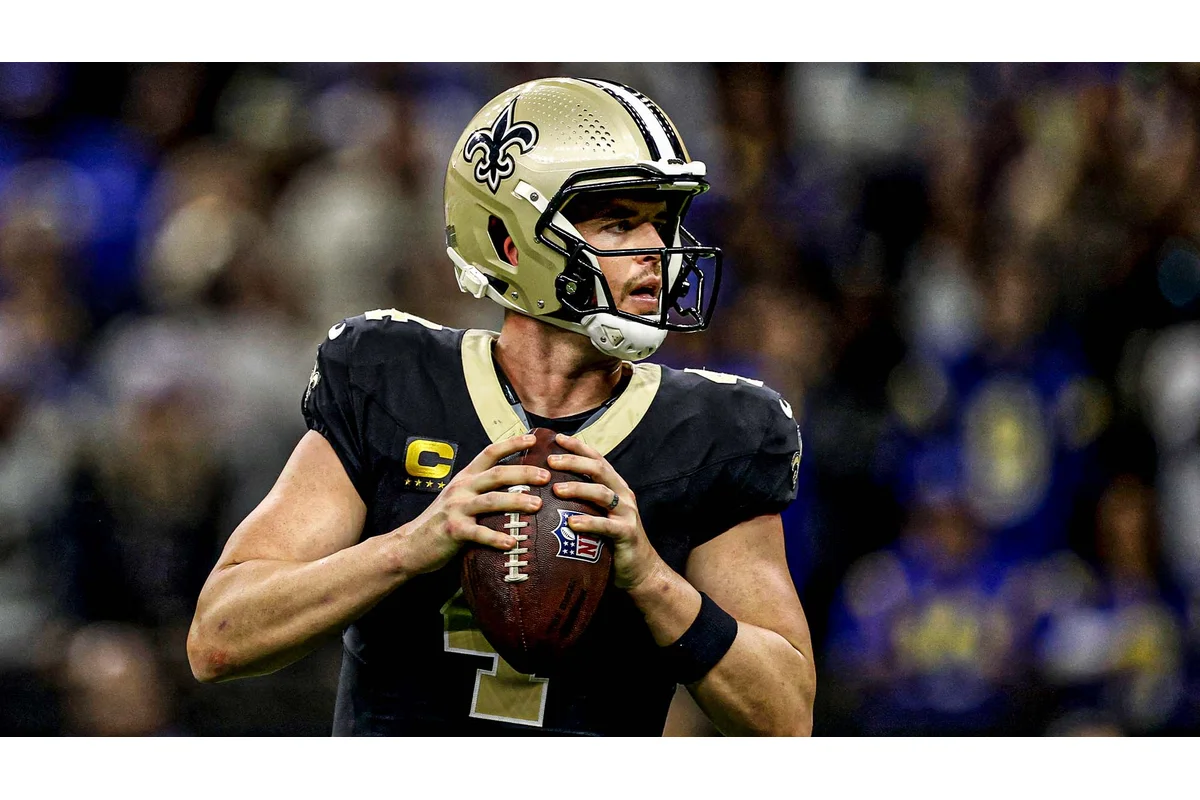
As highlighted by Shook,
“Carr would address Minnesota’s need for a proven veteran capable of handling the job — an area which former GM Kwesi Adofo-Mensah admitted he’d misjudged prior to being fired in January — and could also push McCarthy in camp. Carr might also be enticed by the presence of Justin Jefferson, Jordan Addison and T.J. Hockenson.”
— Nick Shook, NFL Analyst
However, whether this scenario materializes depends heavily on Carr’s willingness to compete for a starting role or settle for a backup position. Factors like financial feasibility and the Vikings’ salary cap constraints also weigh into any potential move.
Shook noted,
“Ultimately, this fit might depend on whether Carr is interested in competing for a job, or if he’d rather walk into a situation that has him penciled in as QB1. Money matters, too, and the Vikings have a salary cap hole to dig out of before they can start thinking about Carr.”
— Nick Shook, NFL Analyst
Besides Minnesota, Carr’s name has appeared in rumors involving the Pittsburgh Steelers, New York Jets, and Miami Dolphins.
Derek Carr’s Career Performance and Potential Fit
Although Carr did not play during the 2025 season, having briefly retired, his track record over a standard 17-game NFL season underscores his reliability. His average stats typically include over 4,100 passing yards, 26 touchdowns, 11 interceptions, and a 65.1% completion rate. With nearly 170 games started, Carr brings a wealth of experience to any team looking for quarterback leadership.
His career record stands at 77 wins and 92 losses, a reflection largely impacted by spending much of his tenure with the struggling Oakland Raiders franchise. Statistically, Carr’s efficiency and effectiveness place him alongside quarterbacks like Kirk Cousins, as demonstrated by his decade-long ranking in EPA+CPOE metrics.
Year-by-year EPA+CPOE rankings for Carr show consistent performance: 16th in 2016, 19th in 2017, climbing as high as 7th in 2019, and maintaining solid positions through 2024. This track record suggests Carr offers a steady and competent option rather than a game-changing presence.
Given this background, Minnesota’s decision to pursue Carr would be influenced by their preference for veteran stability versus the uncertainty of McCarthy or other younger quarterbacks emerging from the draft.
Trade Complexities Surrounding a Carr Acquisition
The path to bringing Carr to Minnesota involves trade negotiations since the New Orleans Saints retain his contractual rights. This dynamic complicates the Vikings’ interest, as the Saints might demand a draft pick in exchange for Carr, even if the asking price is relatively modest.
While the financial and draft cost might not be prohibitive, this ownership control adds a layer of complexity to Carr’s potential unretirement and return to active play.
A Tradition of Veteran Quarterbacks Defines Minnesota’s Approach
Looking at the Vikings’ recent history, signing veteran quarterbacks as immediate starters is a well-established pattern. Over approximately 35 years, Minnesota has looked outside the draft to fill this position, bringing in names like Sam Bradford, Matt Cassel, Kirk Cousins, Randall Cunningham, Sam Darnold, Jeff George, Brett Favre, Case Keenum, Jim McMahon, Donovan McNabb, and Warren Moon.
This reliance on experienced quarterbacks rather than developing draft picks sets the Vikings apart from many other NFL teams and explains why Carr’s name remains relevant in their offseason planning.
Accepting Carr as a potential starter fits this model, maintaining the Vikings’ reputation for choosing cautious and proven options over riskier bets on emerging players. However, it also places the team in a middling position league-wide, reflecting hesitancy to fully commit to McCarthy’s growth and instead opting for a familiar but unlikely path to a Super Bowl.
