
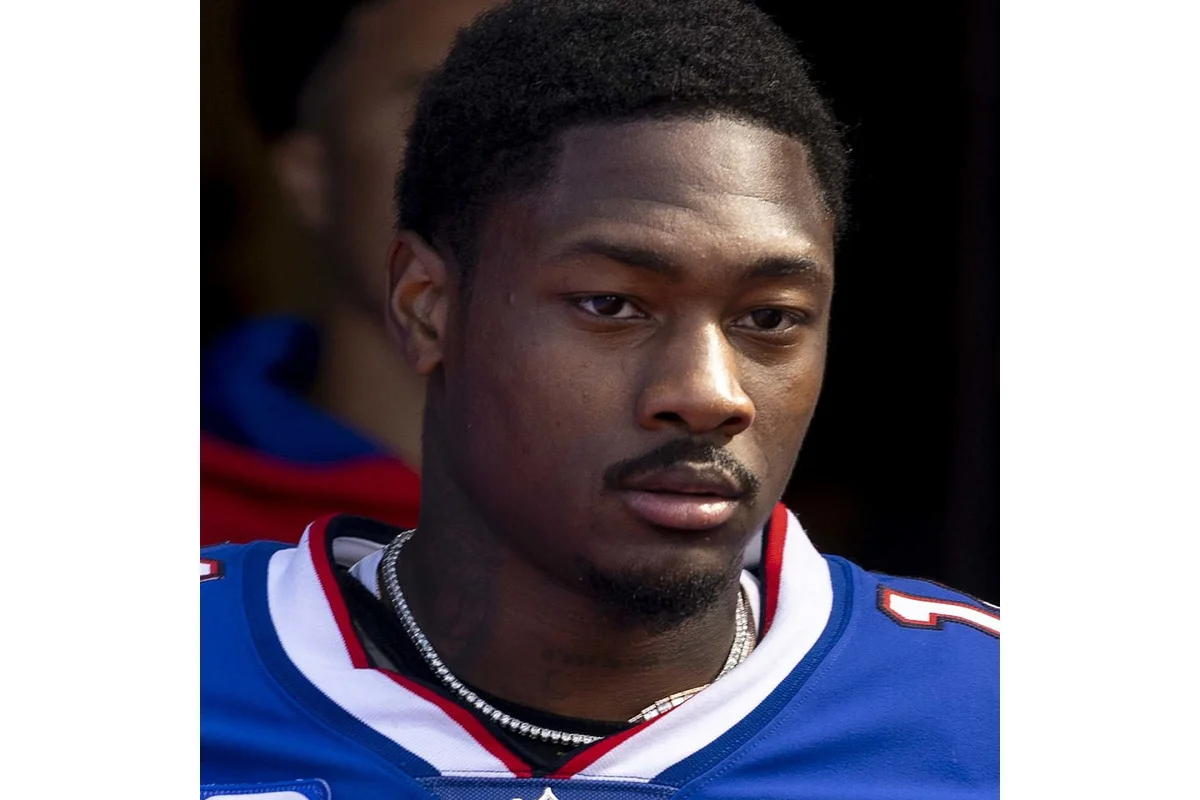
Following a grueling seven months featuring 21 games, three exhibitions, and a disappointing Super Bowl appearance, the New England Patriots’ 2025 campaign officially concluded, but the questions surrounding their roster and strategy remain far from settled. Central to these discussions is the Stefon Diggs Patriots future as the team evaluates contract concerns and positional needs heading into next year.
The Patriots’ record and performance in 2025 set the stage for critical decisions about talent retention, draft strategies, and defensive adjustments, particularly with the looming free agency and coaching staff changes on the horizon.
Sam Darnold’s Role and Quarterback Play in the Postseason
The postseason exposed the value of mistake-free quarterback play, with Sam Darnold clearly standing out amid the chaos. Darnold recorded zero turnovers compared to his counterpart Drake Maye’s three, while providing superior pocket mobility by absorbing five fewer sacks and maintaining an average snap-to-throw timing equivalent to the league’s MVP runner-up.
Darnold’s ability to evade sacks extended drives in ways Maye’s offense struggled to replicate, as Maye’s 14.9% sack rate in the playoffs nearly doubled his regular season figure and proved detrimental during critical moments. This exposed Maye’s need to improve decision-making by relying more often on throwaways and checkdowns, something the Patriots’ Super Bowl-winning efforts demonstrated as essential, if unglamorous, tactics.
Uncertainty Surrounding Stefon Diggs’ Return for the Patriots
One of the most pressing concerns for the Patriots centers on whether Stefon Diggs will suit up for the team again in 2025. Despite his importance as the leading receiver and a cultural leader under head coach Mike Vrabel, contract and playoff performance issues cast doubt on his future.
Diggs is set to carry a steep salary cap hit of $26.5 million next season, yet only $1.7 million of his base salary is guaranteed. This financial imbalance poses challenges both for the front office and Diggs himself, given that the three-year deal signed last spring effectively served as a trial period, acknowledging the risk of signing a 31-year-old player recovering from a significant ACL injury.
While Diggs managed to achieve the Patriots’ first 1,000-yard receiving season since 2019, questions remain about whether this level represents his career ceiling. His playoff contributions were noticeably limited—accumulating just 110 receiving yards across four postseason games, a total surpassed by teammates and even some players eliminated early from the playoffs. Opposing defenses appeared relatively unbothered by Diggs’ presence in critical moments.
Now approaching his 33rd birthday, Diggs faces the reality of an NFL career marked by early success in Buffalo and Minnesota, followed by a gradual decline in his ‘honeymoon’ status as a marquee receiver. The Patriots face a conundrum: retain their best receiver while committing a high salary to an aging player with recent playoff struggles, or risk a costly dead cap hit of $9.7 million if they release him without a post-June 1 designation, or $8 million if they pursue a trade.
Addressing Patriots’ Offensive Weapons and Playmaking Needs
Beyond Diggs, the Patriots’ offense requires reinforcements capable of generating explosive plays outside designed routes. DeMario Douglas, the team’s premier run-after-catch specialist, accounted for only 26% of offensive snaps, underscoring a lack of depth in dynamic receiving options. Meanwhile, running back TreVeyon Henderson struggled with blitz pickups and maximizing rushing yards due to insufficient field vision, limiting his effectiveness on the ground.
Experts suggest the Patriots might explore available free agents to bolster their receiving corps, though top options like Colts wideout Alex Pierce are expected to draw competitive offers and likely command salaries that could strain the team’s cap space. Alternative avenues include targeting other free agents such as Romeo Doubs, pursuing trades, or focusing on the draft to infuse young, cost-effective talent.
Prioritizing Edge Pass Rush in Offseason Strategy
The Patriots’ pass rush emerged as a critical area demanding attention. K’Lavon Chaisson, who posted a breakout season at age 26, enters free agency, representing a potential market overpay risk for teams given his youth and recent production. Losing Chaisson would leave the Patriots with veterans Harold Landry, Anfernee Jennings, and Elijah Ponder, but still a glaring deficiency at outside linebacker.
Consequently, the team is expected to address the edge rush through both free agency and the draft, or possibly seek impactful trades to fill this gap. One high-profile possibility is trading their No. 31 overall first-round pick, along with additional late-round picks or younger reserves such as DeMario Douglas, to acquire Raiders defensive end Maxx Crosby—an elite pass rusher with 10 sacks and 28 tackles for loss last season and a noted misfit in Las Vegas.
Crosby’s style aligns with Mike Vrabel’s demand for high-effort, aggressive defenders, making such an acquisition a potential game-changer for the Patriots’ defense. Reports suggest Crosby has communicated his unwillingness to play for the Raiders again, which opens the door for a trade, should the team act decisively.
Evaluating Will Campbell’s Performance and Positioning
Will Campbell’s performance at left tackle during the Super Bowl drew heavy criticism after he allowed eight pressures, predominantly in the fourth quarter. However, former players and analysts offered perspectives attributing his struggles to technical flaws rather than lack of talent, which is encouraging given Campbell’s elite athleticism but physical limitations such as shorter arms and wingspan.
During the regular season, Campbell excelled relative to rookie offensive tackles in recent years, allowing sacks in only four games and frequently grading above average per Pro Football Focus evaluations. Despite a rocky postseason finish, the Patriots appear committed to Campbell as their left tackle, with coach Vrabel emphasizing his future growth and ruling out position changes for the young lineman.
Will (Campbell)’s 22 years old. He’s our left tackle. He’ll get better, he’ll get stronger. There were moments where he played well, moments where he blocked the guy. There’s plays he’d like to have back. We’re not moving Will to guard, to center, to tight end or anywhere else. So, I don’t know what to tell you.
— Mike Vrabel
Defensive Coordinator Vacancy and Coaching Adjustments
In other off-field developments, the Patriots announced the opening of their defensive coordinator position, reassigning Terrell Williams to a new role. Williams, recently declared cancer-free after a four-month battle with prostate cancer and managing another prior health issue, served as head coach Mike Vrabel’s top defensive hire last season. Nevertheless, the emergence of inside linebackers coach Zak Kuhr as the defensive play-caller has altered the coaching landscape.
Kuhr led a late-season defensive shift toward a high-blitz scheme that greatly contributed to the Patriots’ defensive dominance down the stretch. As a young and highly regarded coach, Kuhr is attracting attention for coordinator positions elsewhere, making it logical for the team to promote him to retain his talents and maintain momentum.
While candidates such as Jim Schwartz and Shane Bowen remain in consideration, the internal option of Kuhr provides continuity and reward for the defense’s recent success.
Significance and Outlook for the Patriots’ Upcoming Season
The Patriots enter the offseason facing a turbulent blend of challenges and opportunities. The uncertainty of Stefon Diggs’ contract and role, the pressing need for dynamic offensive playmakers, and the quest to secure an elite edge pass rusher all combine to shape a critical juncture in the franchise’s trajectory.
Decisions regarding Will Campbell’s development, the defensive coordinator role, and potential blockbuster trades like the pursuit of Maxx Crosby could define New England’s identity for years to come. With Mike Vrabel at the helm and the roster poised between veteran experience and youthful promise, the Patriots aim to build on their AFC championship aspirations despite internal and external pressures heading into 2025.
