
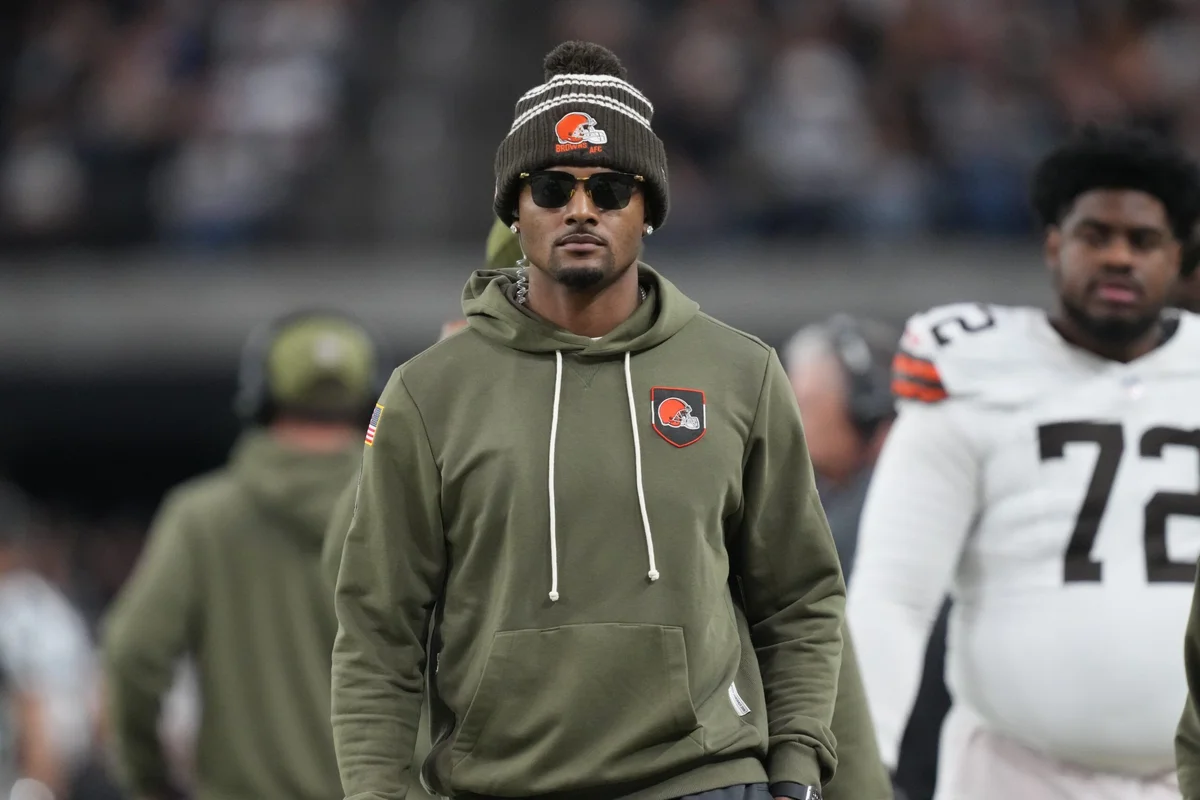
Despite Cleveland Browns fans’ dissatisfaction, Deshaun Watson is expected to remain under contract with the team through 2029 due to the fully guaranteed nature of his five-year, $230 million deal signed after his trade in March 2022. Browns owner Jimmy Haslam has publicly acknowledged that the trade—exchanging multiple high draft picks with the Houston Texans—was a significant error, yet Cleveland is locked into the agreement for now.
Complex Contract Extensions Ensure Long-Term Financial Obligations
The Browns solidified their financial commitment in December 2024 by restructuring Watson’s deal. They added two new contract years for 2029 and 2030, which will void shortly after Super Bowl LXIII in February 2029. Meanwhile, existing void years for 2027 and 2028 were converted into active contract years carrying minimum salaries. The 2029 base salary, pegged at an unsecured $200 million, is scheduled to become fully guaranteed early in the 2027 league year.
How the Browns Plan to Handle Watson’s Release
Cleveland plans to release Watson with a post-June 1 designation in March 2027, just before his 2029 salary guarantee kicks in. This designation allows teams to release two players annually with delayed cap implications, treating the cap hit as if the release happened after June 1. The Browns must carry Watson’s entire cap number until June 2 despite him no longer being on the roster, but the player’s salary is removed from the books afterward unless guaranteed.
Impact of Post-June 1 Designation on Salary Cap
Using a post-June 1 designation means only the current year’s bonus proration counts against the salary cap immediately, while future proration charges are postponed until the next league year, typically in March. For Watson, this approach lets the Browns manage cap hits from multiple prior contract restructures during the 2027 and 2028 seasons, helping them navigate salary cap constraints.
Upcoming Contract Restructures to Address Cap Challenges
Before the 2026 league year begins on March 11, the Browns will need to execute another contract restructure to alleviate salary cap pressure, as Watson carries the team’s largest 2026 cap number at $80,716,534. By converting $44.7 million of his fully guaranteed $46 million 2026 base salary into a payment structure that defers cap charges, Cleveland can free up roughly $35.76 million in cap space.
Projected Dead Money and Its Record-Breaking Scale
Even with careful financial planning, the Browns will face historic dead money charges when releasing Watson in 2027, totaling $86,206,864. This figure surpasses the $85 million dead money owed by the Denver Broncos after releasing quarterback Russell Wilson in 2024. Watson’s dead money will be split with approximately $34.7 million charged in 2027 and $51.5 million in 2028 before he is finally removed from Cleveland’s salary cap starting in 2029.
Breakdown of Dead Money Components
The $34.7 million in 2027 dead money includes prorated bonuses from contract restructures across 2023 ($8 million), 2024 ($8.7 million), 2025 ($8.94 million), and 2026 ($8.94 million). The $51.5 million for 2028 covers prorations from the 2024 restructure ($8.7 million), 2025 restructure ($15.9 million), and 2026 restructure ($26.8 million), reflecting the long-lasting financial implications of Watson’s deal.
Consequences of Releasing or Trading Watson Before Restructure
Releasing Watson this year without a restructure would produce $80.7 million in 2026 dead money plus $50.4 million in 2027 charges, adding up to a crippling $131 million cap hit. Conventional release is thus financially prohibitive. Additionally, a trade is not a practical option because Watson holds a no-trade clause and lacks trade value due to severe injuries, including a torn Achilles and a shoulder fracture, along with a noticeable performance decline.
Trade Limitations and Dead Money Implications
If a trade partner emerged after the 2026 salary adjustments, the Browns would still face $86 million in dead money in 2027, similar to releasing Watson conventionally after June 1. Trading Watson before June 2 would increase 2026 dead money to nearly $130 million following the restructure, reinforcing the difficulty of freeing cap space via trade.
Potential for Comeback Under New Coaching Staff
The coaching transition from Kevin Stefanski to Todd Monken introduces a glimmer of hope for Watson’s resurgence. Monken has expressed interest in Watson’s capabilities based on his prior success against teams he has coached. Recovering from multiple injuries, including the Achilles tears and a serious shoulder injury in 2023 that limited Watson to six games, a significant improvement would be surprising but potentially transformative for the Browns’ future.
