
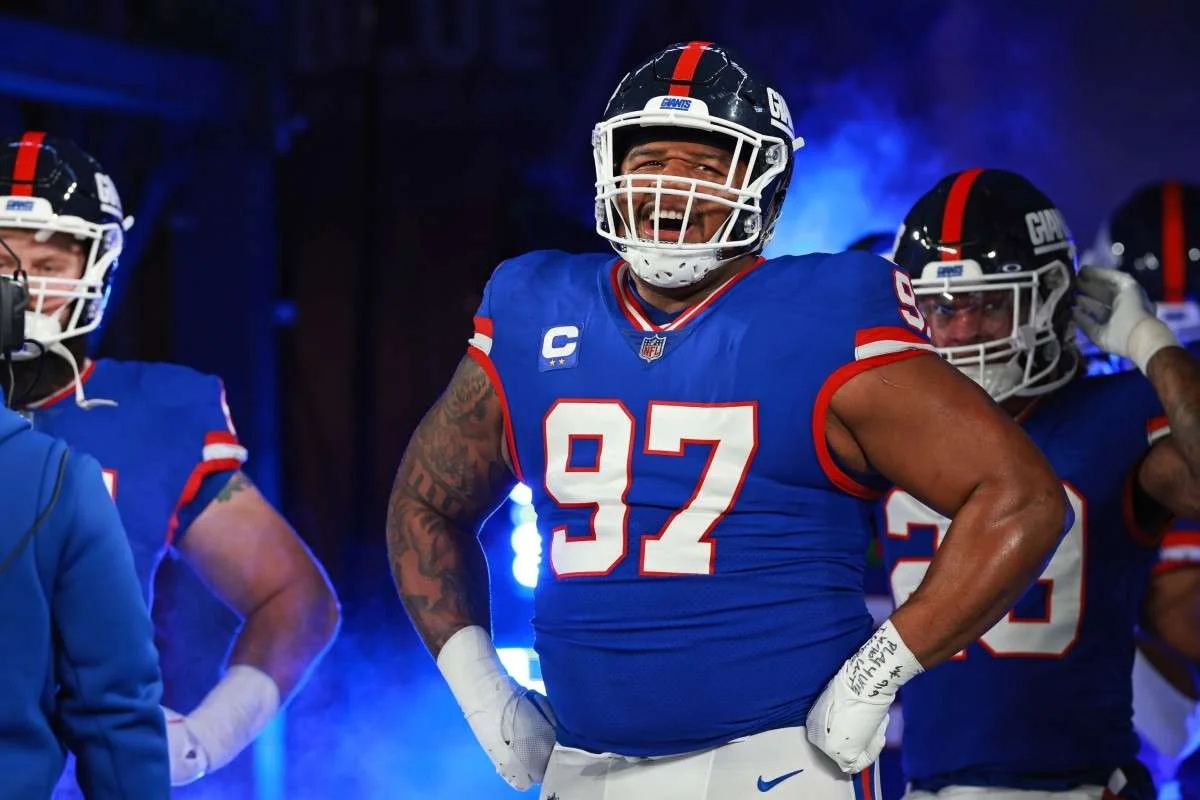
The New York Giants, entering their first offseason with head coach John Harbaugh, are aiming to rebuild a roster capable of contending for the playoffs. However, with only around $5 million in salary cap space—the 13th-lowest in the NFL—the Giants will need to make difficult financial moves to create room before free agency begins.
Among the key considerations is how to handle defensive lineman Dexter Lawrence’s contract situation, as his deal offers the team an option to release him with a relatively moderate cap penalty. This decision will heavily influence the Giants’ flexibility moving forward and affect their defensive core.
Evaluating Options for Dexter Lawrence’s Future with the Giants
Dexter Lawrence, recognized as an All-Pro defensive tackle, holds an option in his contract allowing the Giants to cut him this offseason while facing a $13.9 million cap charge, according to Spotrac. Yet Dan Duggan of The Athletic suggests that extending Lawrence could provide the Giants with financial benefits over time by distributing his cap hits across multiple years.
Topping the $26 million average annual salary Milton Williams secured from the Patriots in free agency last offseason is a fair outcome. With Lawrence already signed through 2027, a two-year extension worth $56 million would give him a $28 million average annual salary in the added years,
Duggan explained.
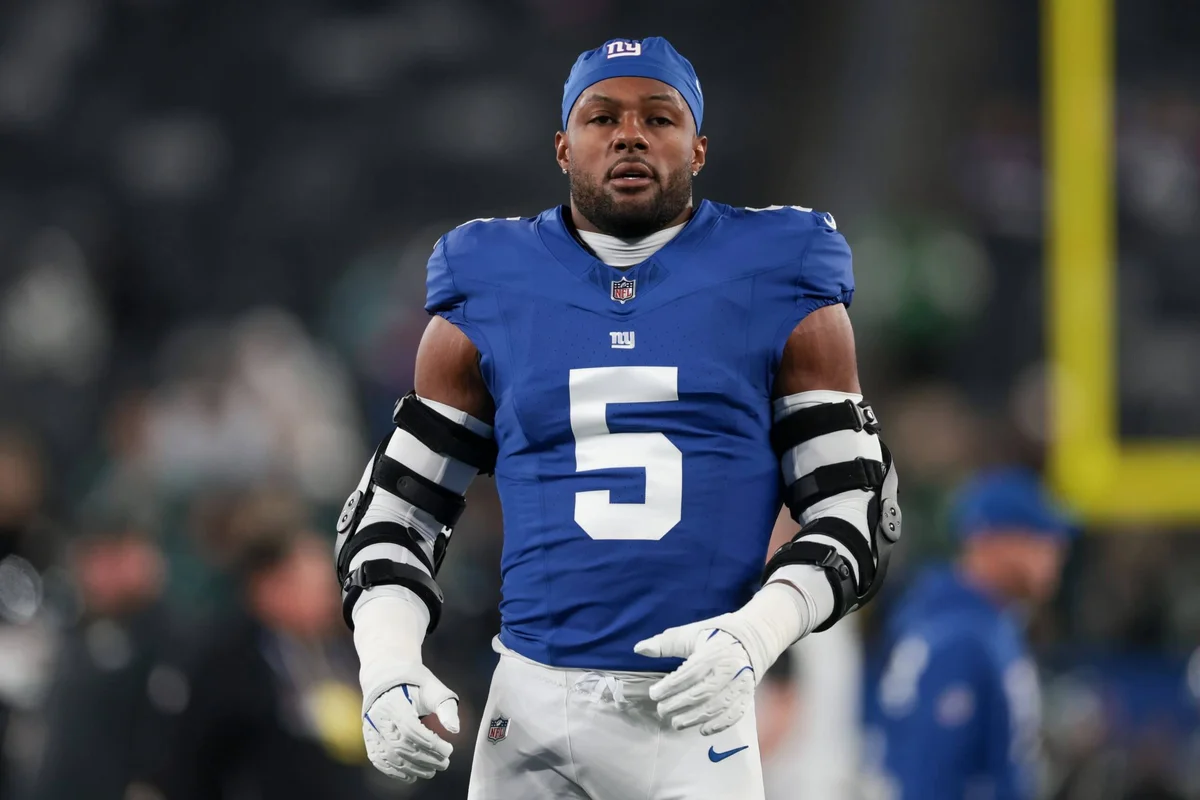
Beyond rewarding one of the team’s best players, another benefit of extending Lawrence would be lowering his $27 million cap hit in 2026. The Giants could easily create a few million in cap savings by spreading the cap charge from a signing bonus evenly throughout a new four-year deal.
While locking in Lawrence with a lucrative extension could boost player morale and signal the organization’s commitment to key contributors, the Giants must weigh this against concerns about his recent on-field performance and overall value for a high-priced contract.
Assessing Whether Dexter Lawrence’s Performance Justifies an Extension
Duggan further explored the possibility that the Giants might consider trading Lawrence to relieve cap pressure, though such a move comes with its own risks given his prior reputation as one of the league’s top defensive tackles.
The Giants will need to take a leap of faith either way. If they trade Lawrence, they’d be shipping away a player who was considered the best defensive tackle in the league as recently as last summer…But the Giants just watched Leonard Williams, who they traded in 2023, win a Super Bowl as part of a dominant Seahawks defensive line at age 31,
he noted.
On the other hand, committing to Lawrence would be risky based on his performance last season. There hasn’t been a clear explanation for his decline in production (nine sacks in 2024, a half-sack in 2025), but he’s still treated like a game-wrecker by opponents. I’m betting that the 28-year-old comes back motivated to reclaim his status as the most disruptive interior defensive lineman in the league.
Lawrence’s dip in effectiveness is largely attributed to an elbow injury he sustained in 2024, which limited his participation in offseason activities and also hampered his impact during the early 2025 season. Despite this, NFL players are often judged by their most recent performance, and Lawrence has not matched his previous level of dominance.
Implications for the Giants’ Roster and Salary Cap Strategy
The Giants’ upcoming decisions regarding Dexter Lawrence’s contract will have significant repercussions on their salary cap management and defensive lineup. Choosing an extension could provide short-term cap relief while maintaining a core defensive presence, but could also lock the team into a substantial financial commitment amid uncertainty about Lawrence’s form.
Alternatively, cutting or trading Lawrence would free cap space but may weaken the defensive front and potentially bolster rival teams, as evidenced by former Giant Leonard Williams winning a Super Bowl with the Seahawks after his trade.
Ultimately, the Giants’ front office must balance these factors carefully, considering both the financial constraints and the long-term vision for the defensive unit as they prepare for the 2026 season and beyond.
