

The Buffalo Bills have made a significant roster move by allowing defensive end Joey Bosa’s contract to void ahead of the 2026 free agency period. This decision, part of a broader franchise-wide roster reshaping, has resulted in a dead cap charge approaching $29.6 million for the upcoming season, intensifying concerns about the team’s salary cap situation.
Alongside Bosa, several key players had their contracts voided, pushing the Bills into the top tier of NFL teams burdened with dead cap space. This strategic clearing is intended to give the Buffalo front office roster flexibility despite the looming financial penalties. The move highlights the team’s pressing need to address salary cap constraints while preparing for offseason transactions.
Dead Cap Consequences from Voided Contracts
The Bills faced a striking $29,661,000 dead cap hit in 2026 due to the voiding of five major contracts, according to Spotrac’s report on X. These affected players include linebacker Matt Milano ($11.071 million), defensive end Joey Bosa ($7.2 million), center Connor McGovern ($4.805 million), defensive lineman DaQuan Jones ($3.724 million), and defensive end A.J. Epenesa ($2.861 million). This collective charge propelled Buffalo from 26th to 10th in the league concerning dead cap liabilities.
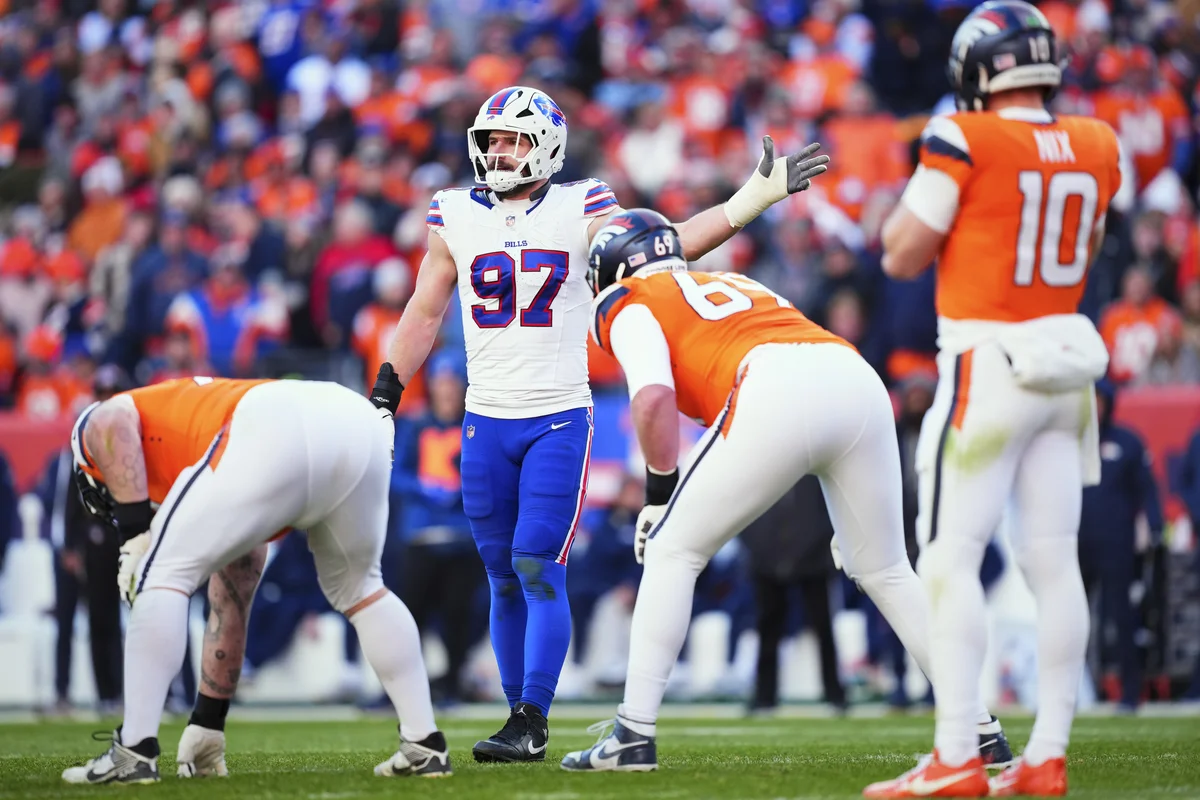
Before the contracts were allowed to lapse, the Bills carried less than $1 million in dead cap space, making this a drastic shift caused by a calculated front office decision. Although these cap hits represent a substantial financial hurdle, the Bills’ leadership views the move as necessary to gain clarity on the roster composition before free agency officially commences.
Last year, the Bills acquired Joey Bosa on a one-year deal, rewarding him for strong on-field performances that included five sacks, five forced fumbles, and 17 solo tackles. Similarly, Matt Milano re-signed for a one-year deal in 2025 valued at $6.3 million. Milano has been a staple for Buffalo since 2017, contributing consistently, including 3.5 sacks and 36 solo tackles last season. Despite their value on the field, the Bills chose not to renew these contracts in time, letting them expire and thus incurring the dead cap charges.
Players DaQuan Jones and A.J. Epenesa followed a comparable path, with their contracts voided as well, meaning all five now enter free agency, leaving open questions about their future with the franchise.
Strategic Implications of the Bills’ Cap Move
While the financial penalties are steep, the Bills are currently $15 to $20 million over the NFL salary cap, necessitating tough decisions. Voiding these contracts clears immediate roster spots and enables the team to approach free agency with a clearer picture, albeit at the cost of significant dead cap charges.
This tactic reflects the urgency and complexity within the Bills’ front office as they attempt to balance cap management with maintaining a competitive roster. With several key contributors now free agents, Buffalo faces difficult choices about which players to target for re-signing and which veterans to let go while pursuing new talent.
Loss of Key Assistant Coach Adds to Team Challenges
The offseason upheaval extends beyond player contracts, as the Bills also lost one of their integral assistant coaches. Ronald Curry, the quarterbacks coach responsible for much of Josh Allen’s development, left Buffalo to join the Denver Broncos, reuniting with former head coach Sean Payton. This departure signals another blow to the franchise’s offensive continuity.
Curry began his tenure with the Bills in 2024 and played a critical role in Allen’s performance. Under his coaching, Allen completed nearly 70% of his passes for 3,668 yards and 25 touchdowns in the 2025 season, achieving a passer rating of 102.2 and a QBR of 65.4. The quarterback’s growth under Curry’s mentorship had been evident since the previous season when Allen earned the NFL MVP title and posted a career-high QBR of 74.8.
With Curry’s exit, the Bills lose a vital figure in Allen’s development pipeline. Notably, it was the Broncos—Curry’s new team—that eliminated the Bills from the recent playoffs, edging them out 33-30 in overtime, deepening the sting of his departure.
Before Buffalo, Curry spent eight years with the New Orleans Saints in various offensive roles, including six seasons working alongside Sean Payton. Now, Curry will coach the Broncos’ wide receivers, stepping into a position once held by Keary Colbert, whose dismissal stemmed from the head coach’s dissatisfaction with the receiving corps’ performance. Curry’s NFL background as a wide receiver positions him well to improve this unit, much like he did with Allen’s quarterback play.
Future Prospects and Organizational Impact
The voiding of Joey Bosa’s contract and those of four other prominent players marks a pivotal juncture for the Buffalo Bills. While the dead cap consequences tighten the team’s short-term finances, they open the door for roster recalibration as the franchise prepares for 2026. The Bills must decide how to rebuild their defense and support their offense without key coaches and veterans, all while managing a salary cap that leaves little room for error.
Head coach Joe Brady’s staff reshuffling will have significant ramifications, especially with Curry’s exit creating a void in quarterback mentorship. The Bills will need to find new ways to sustain Josh Allen’s growth trajectory amid these changes. The combination of player contract voids and coaching staff departures signals a season of transition and uncertainty for the organization.
As free agency unfolds, the Bills face difficult priorities: weighing the value of re-signing seasoned contributors against the financial realities of dead cap impacts. Fans and analysts alike will be watching closely to see how Buffalo navigates this critical period, determining the team’s competitive outlook for the coming season and beyond.
The #Bills had 5 contracts void this week, creating $29,661,000 of dead cap in 2026.
LB Matt Milano ($11.071M)
ED Joey Bosa ($7.2M)
C Connor McGovern ($4.805M)
DL DaQuan Jones ($3.724M)
ED A.J. Epenesa ($2.861M)Buffalo now ranks 10th in the NFL in dead cap this season.
— Spotrac (@spotrac) February 19, 2026
