
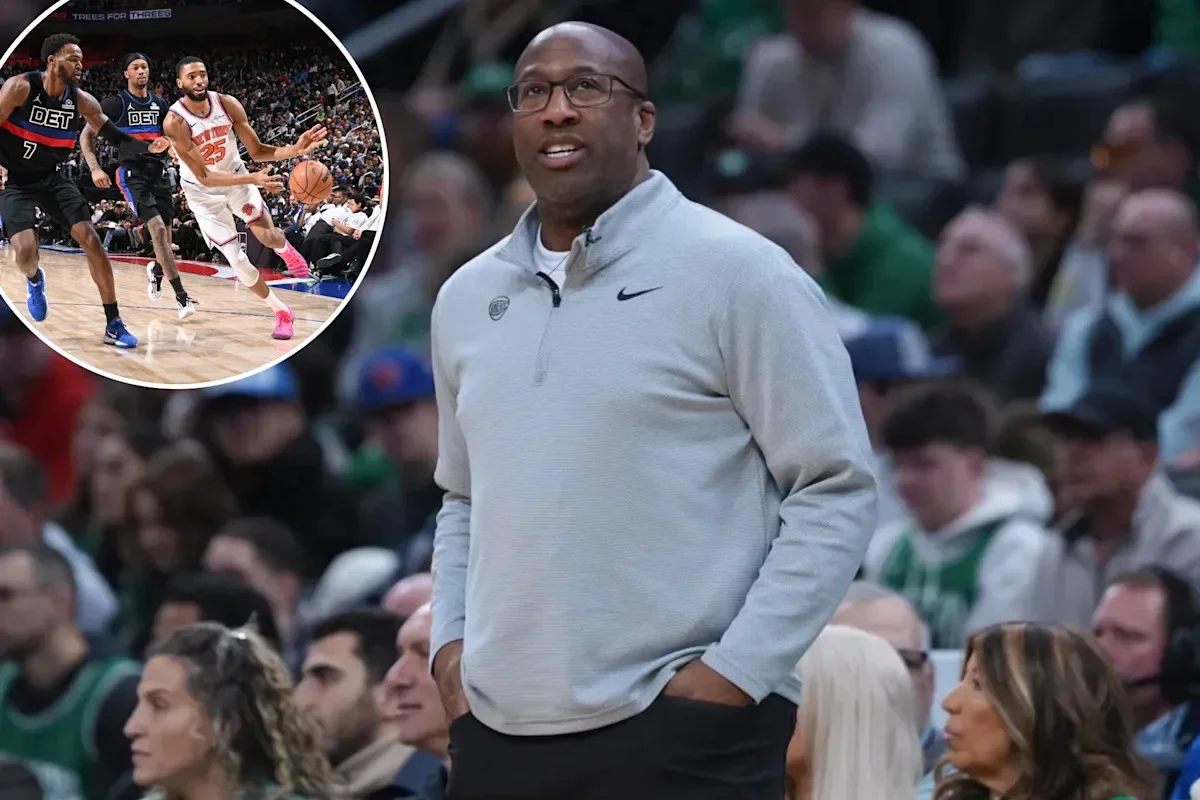
The New York Knicks anticipated a strong frontcourt addition when they signed Guerschon Yabusele last summer, but his time with the team ended almost before it truly began. Head coach Mike Brown explained that Yabusele’s difficulties were not related to his effort or skill but to the roster’s configuration and available playing time.
Speaking prior to the Knicks’ 105–99 victory over the Chicago Bulls—where Yabusele scored 13 points and grabbed 11 rebounds against his former team—Brown clarified that the French player’s best NBA position is as a small-ball center, a role the Knicks could rarely offer.
The position he’s shown he’s best in in the NBA — the small-ball center spot — we just didn’t have the minutes consistently for him to be there,
Brown said, via The New York Post.
And then when he was at the 4, for us, because of our centers, the matchups weren’t always there.
Because of these factors, Yabusele could not secure steady minutes, leading to his eventual departure despite initial optimism about his signing.
High Hopes Met With Limited Playing Time
Yabusele joined the Knicks as their most prominent offseason acquisition, signing a two-year contract worth $12 million after showcasing his skills during a successful comeback with the Philadelphia 76ers. Yet, under Mike Brown’s system, the 30-year-old forward averaged under nine minutes per game, contributing 2.7 points and 2.1 rebounds on limited opportunities.
His role frequently changed, and he often found himself sidelined when team rotations or matchups shifted. Brown emphasized the issue was never about Yabusele’s talent.
Because he’s a good player, Brown said.
Started for the French national team. We all know what they did. The style of play is a little bit different.
Challenges Within a Crowded Frontcourt
The Knicks’ frontcourt was already crowded with established centers Karl-Anthony Towns and Mitchell Robinson, both logging heavy minutes. This significantly limited Yabusele’s chances to perform in his favored position of a pick-and-pop big man, reducing his ability to make an impact.
And then it’s tough because we have Karl-Anthony playing heavy minutes, and we have Mitchell playing heavy minutes,
Brown said.
So we had to pick and choose when he was on the floor and how we were going to play him.
Yabusele’s strengths—floor spacing, perimeter shooting, and serving as a small-ball center—are best utilized by teams that can offer a more consistent role at the center spot, a luxury the Knicks struggled to provide.
Transitioning to New Opportunities in Chicago
Confronted with these challenges, the Knicks moved swiftly. Yabusele consented to modify his contract, giving up his second-year player option, and was traded to the Chicago Bulls in exchange for guard Dalen Terry. This trade set off a sequence of deals culminating in the Knicks acquiring Jose Alvarado from the New Orleans Pelicans, who has since contributed energetic, impactful minutes off the bench.
With Chicago, Yabusele found consistent playing time and a renewed role. His averages have improved notably, posting 10.6 points, 6.3 rebounds, and 2.3 assists while shooting 43.2% from three-point range in over 25 minutes per game—nearly triple the minutes he logged in New York.
Yabusele Opens Up About His Departure and New Chapter
Following his exit from the Knicks, Yabusele candidly discussed how difficult the experience had been for him. He highlighted that passion for competing outweighed any financial considerations when it came to the challenges he faced in New York.
We can always see the side of the money and talk about it,
Yabusele said in an interview with SNY.
But at the end of the day the passion is more than just the money. It’s being out there… competing at a high level because I’m a competitor first.
He also acknowledged how the lack of playing time affected him personally.
The situation with New York was a little bit different for me because I wasn’t really playing,
Yabusele explained.
Being able to be on another team and try to bring value on the court was really important.
Now in Chicago, Yabusele’s confidence and enjoyment have returned.
I love it out there with the team, the guys, the coaches,
he commented.
They did a great job of welcoming me. It just makes it easy for me to have confidence and feel good on the court.
Mutual Benefits From the New Direction
The trade proved beneficial for both parties. The Knicks alleviated a congested frontcourt and added a valuable contributor in Alvarado, who has energized their second unit. Meanwhile, Yabusele regained a meaningful role and rhythm with the Bulls.
According to Mike Brown, the outcome reflected unavoidable realities rather than shortcomings in ability or commitment. The misalignment was rooted in timing, roster structure, and positional needs—factors that made this promising situation untenable in New York but workable elsewhere.
Sometimes, as Brown suggests, such logistical details determine whether a player thrives or struggles, showing the delicate balance teams must navigate in roster construction.
