
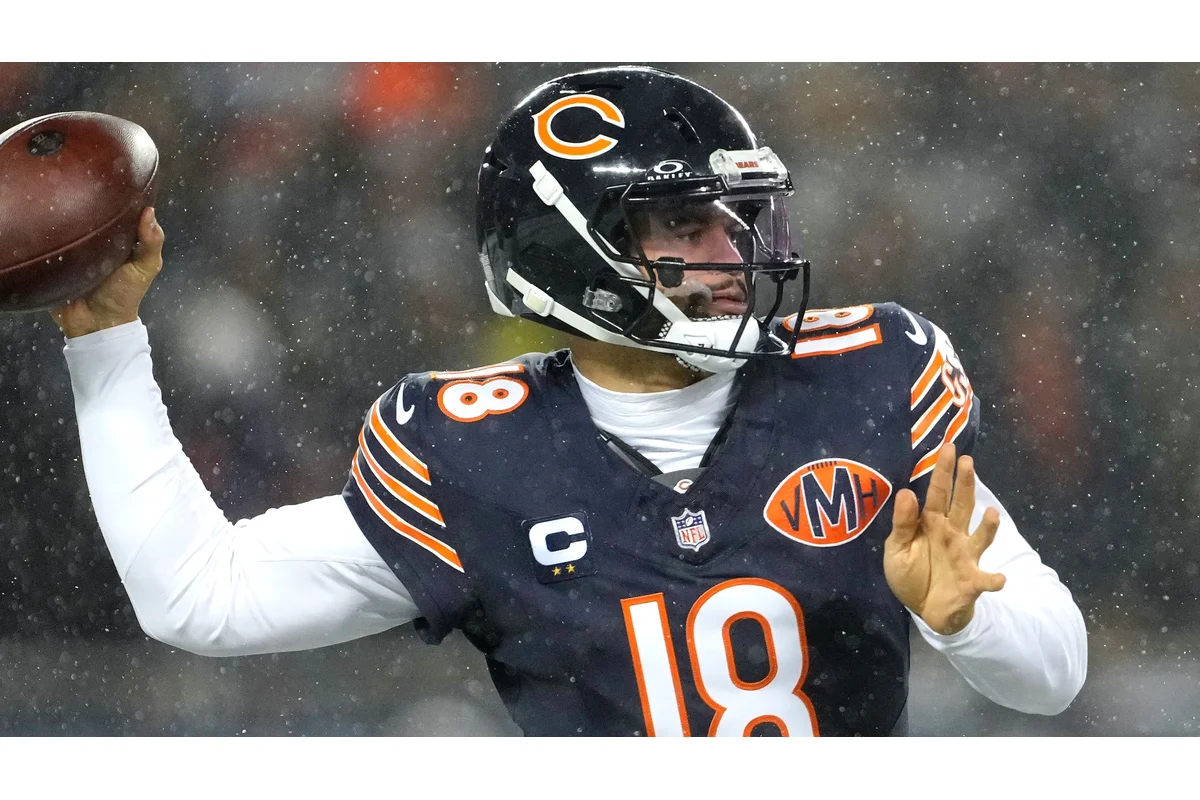
Caleb Williams‘ decision not to participate in the throwing drills at the recent NFL combine has sparked debate, with some questioning its impact on his career prospects. An NFL analyst compared Williams’ choice to that of fellow quarterback Fernando Mendoza, who also opted out of throwing at the combine, emphasizing that skipping this portion does not necessarily harm a player’s long-term potential.
Comparing Decisions: Mendoza and Williams on Skipping Throws
Former Denver Broncos safety Su’a Cravens publicly responded to reports that Mendoza would not throw at the combine, expressing understanding for the move. Cravens highlighted how Williams faced similar scrutiny after his decision, yet advanced successfully in the NFL. In a post addressing critics, Cravens noted the inconsistent backlash towards quarterbacks.
“We all know how you fans and ‘experts’ love to pick & choose (y’all) outrage when it comes to QBs getting drafted lol.” he posted. – Su’a Cravens, Former Broncos Safety
Following this, Cravens pointed to the harsh reaction Williams faced when he skipped throwing drills.
“Caleb was talked about like a murderer for not throwing at the combine 🤣🤣🤣,” he posted in a follow-up. – Su’a Cravens, Former Broncos Safety
Williams was selected first overall by the Chicago Bears in the 2024 NFL Draft and has since completed a promising rookie season, which included a rare playoff victory against the Green Bay Packers.
Recent Examples Highlight Risks of Skipping Combine Throws
While Williams’ draft status remained strong despite skipping the throwing drills, other quarterbacks have experienced different outcomes. Shedeur Sanders, a member of the 2025 draft class, also chose not to throw at the combine and subsequently faced a dramatic decline in draft stock. Expected by many to be selected as early as the second round, Sanders ultimately slid to the fifth round, raising questions about his future stability in the league.
Statistically, Sanders outperformed Mendoza in several key categories during their final college seasons, including completion percentage and total passing yards. Mendoza, however, led in touchdown passes and interceptions, illustrating contrasting strengths and weaknesses. Sanders’ slide in the draft underscores that although skipping throwing drills does not always affect prospects, it remains a risky strategy.
Mendoza’s Strategy and Its Possible Effects
Fernando Mendoza’s choice to forgo throwing at the NFL combine mirrors a conservative approach, likened to managing the clock late in a close game. While cautious play can sometimes backfire, excessive pressure might also cause damage. Mendoza’s best path forward is to focus on his own strengths and accept whatever outcomes arise from the process.
As the offseason progresses toward the April draft, there remains uncertainty regarding how Mendoza’s decision will influence his positioning. Nevertheless, reports confirm he is in excellent physical condition heading into this critical period.
Implications for the NFL and Future Prospects
Caleb Williams’ trajectory provides some reassurance that bypassing certain combine activities does not inherently derail a quarterback’s opportunity to succeed at the professional level. Yet, the example of Shedeur Sanders serves as a warning that such choices can have drastic consequences. For Fernando Mendoza, the coming months will be crucial in determining whether his gamble pays off or leads to complications in his draft status and early NFL career.
As fans and analysts continue to debate these strategies, the performances and developments of these quarterbacks will be closely watched, especially given their potential to face each other in NFL stadiums in the near future.
Curious to see what reactions this gets… We all know how you fans and “experts” love to pick & choose yal outrage when it comes to QBs getting drafted lol https://t.co/aD5FBbsiJj
— Su’a Kristopher Cravens (@SuaKCravens) February 22, 2026
Caleb was talked about like a murderer for not throwing at the combine 🤣🤣🤣
— Su’a Kristopher Cravens (@SuaKCravens) February 22, 2026
