
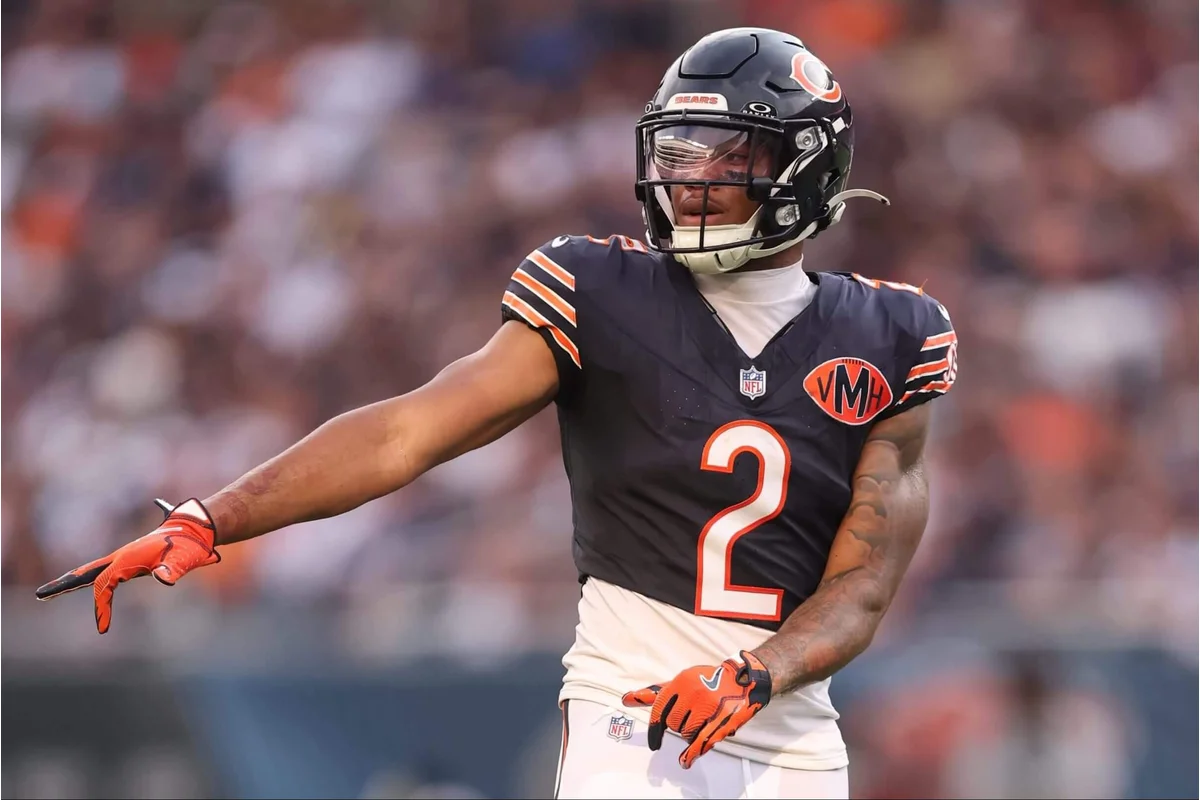
INDIANAPOLIS — The Chicago Bears are at a pivotal crossroads as they prepare for the 2026 season, with the NFL scouting combine marking a critical milestone in shaping the team’s direction. Discussions at this week’s combine will influence how the Bears proceed through the offseason, especially amid salary cap challenges and roster evaluations. Central to these talks is the uncertain status of wide receiver DJ Moore and his place in the team’s long-term plans.
Bears Leadership Addresses Offseason Challenges and Roster Moves
General manager Ryan Poles and head coach Ben Johnson held a press briefing on Tuesday, offering insights into the Bears’ current state following the combine. Poles revealed he has received inquiries about backup quarterback Tyson Bagent’s availability as teams consider roster adjustments. He also mentioned ongoing uncertainty about whether the Bears will receive compensatory draft picks under the Rooney Rule after Ian Cunningham, the former Bears GM, departed for the Atlanta Falcons.
Despite the offseason just beginning, the Bears are already over the salary cap, which poses a difficult hurdle for adding new talent and managing existing contracts. Poles must maneuver roster decisions carefully to avoid further complications before the new league year begins in mid-March.
DJ Moore’s Contract and Role Raise Crucial Questions
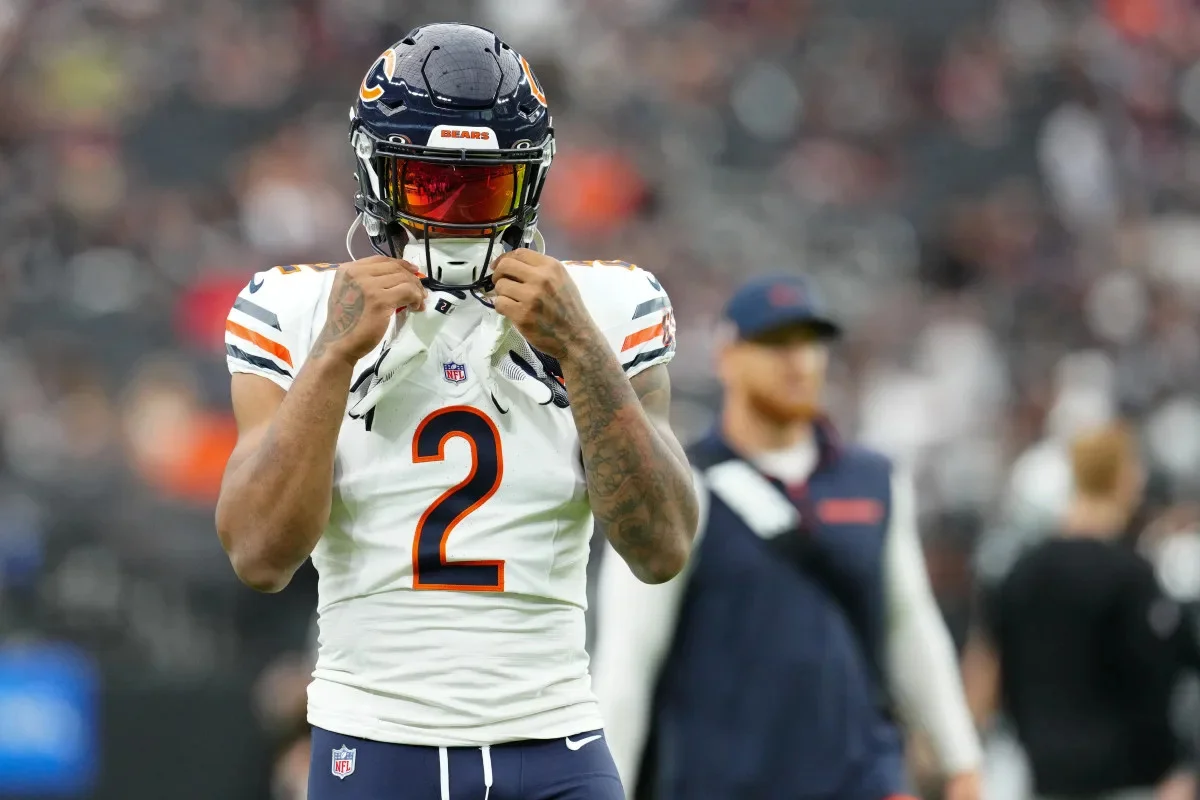
DJ Moore’s significant $28.5 million cap hit set for 2026 places him as the highest-paid player on the Bears roster, sparking debate about his long-term viability with the team. Last season, Moore recorded 50 receptions for 682 yards and six touchdowns — solid production but arguably not reflective of a top-paid player’s output. Poles described his outlook on Moore’s future as open-ended, emphasizing the need to evaluate various roster configurations.
I have to have conversations to see what, like I said, the best combination of players we can bring in,
Poles said.
We want him here. We think highly of him. He’s a great teammate. He has been productive pretty consistently over the last however many years he’s been here. So I have nothing but great things to say about him. But this is the time now where we have to look at all the different scenarios to see what can allow us to put the best team out there.
Moore was a cornerstone of a 2023 trade that sent the No. 1 overall draft pick to the Carolina Panthers and ultimately helped the Bears acquire quarterback Caleb Williams. Ahead of the 2024 season, Chicago secured Moore to a lucrative four-year, $110 million contract extension that activates in 2026, ensuring he is under team control for several more years.
Leadership and Locker Room Value Highlight Moore’s Importance
The Bears’ coaching staff and front office praise Moore’s contributions beyond just statistics. Known for his reliability, leadership, and football IQ, Moore has not missed a game since 2020, solidifying his role as a key team figure. Head coach Ben Johnson remarked on Moore’s versatility and knowledge of multiple receiver positions, praising his dependability amid injuries and lineup shifts.
He probably knew all the roles of the receivers better than anybody else we had (at receiver),
Johnson said.
The X, the Z, F, it really didn’t matter. He was a guy we knew we could count on. If guys go down, he can step in. There really wasn’t anything we shied away from in terms of the route tree that he could or could not do.
Financial Constraints Likely to Shape Roster Decisions
Although Moore is well-regarded, his salary raises concerns amid competition from younger talent. First-round picks like Rome Odunze and Colston Loveland had strong seasons, sometimes overshadowing Moore’s production. Poles noted the team’s effort to get Moore the ball consistently despite injuries affecting other receivers and key offensive players.
I know Ben was very intentional with getting him the football to create opportunities,
Poles said.
But when you have Colston start to pop up, Luther (Burden), Cole (Kmet), Rome was going through different (injuries) throughout the season, but started hot early — so a unique situation overall. But I know we were happy with him throughout the entire season.
The Bears currently exceed the salary cap by over $4 million after cutting special teams contributor Amen Ogbongbemiga. Larger cap savings may come from difficult decisions such as restructuring contracts or potentially parting with key defensive players like linebacker Tremaine Edmunds, who could provide $15 million in relief but whose departure would deepen team needs in linebacker, defensive line, left tackle, and safety positions.
There’s a couple guys we’ve got to make decisions on,
Poles acknowledged.
This is a unique situation where we’ve gotten our roster in a position where we have a lot of talented players, a lot of guys getting paid well, and that puts some constraints on the cap. So we’ve got to make some tough decisions.
Though contract restructures could offer short-term cap space, Poles cautioned that deferred payments only postpone financial obligations.
At some point you’ve got to pay that bill,
he said.
Future of Key Defensive Players Further Clouds Financial Picture
Safety is another area presenting pressing challenges. Both Kevin Byard III and Jaquan Brisker—players with multiple accolades—are approaching contract renegotiations likely demanding higher salaries. Byard carried an $8.5 million cap load last season, while Brisker’s was $4 million. With four safeties currently unsigned for next season, Poles admitted that retaining all especially amid salary pressures will be difficult.
It’s actually four safeties that are not under contract for next year,
Poles said.
Kevin’s a special player. I have no problem saying that’s a player that we would like to have back. But, again, when you add the other safeties into that mix and all the other decisions we have across the roster, with cap restraints and things like that, it’ll be a challenge.
Balancing Cap Savings and On-Field Value at Skill Positions
Potential savings from releasing tight end Cole Kmet or running back D’Andre Swift are large but come at a cost for the offense. Kmet’s departure could free $8.4 million but incur $3.2 million in dead money, while cutting Swift would save $7.47 million with $1.33 million in dead money penalties. The Bears’ offense has relied on Kmet’s pairing with Loveland, and the dual rushing attack involving Swift and Kyle Monangai helped Chicago rank third in rushing yards per game.
Poles emphasized the team must weigh financial advantages against the difficulty of replacing productive players. We’re working through that, he said.
I feel pretty good about the guys you just mentioned being here. But again, there’s a lot more calls coming in, interest in these guys, that we have to kind of sequence that out to see how it impacts our team.
Changes in Coaching Staff Highlight Pursuit of Leadership and Detail
The Bears have also experienced turnover in key coaching positions. Former offensive coordinator Declan Doyle left to join the Baltimore Ravens, prompting Johnson to address Doyle’s professionalism and communication skills while signaling the search for similar qualities in his successor.
If you didn’t know that he was 29 years old, you wouldn’t blink an eye,
Johnson said.
The guy is seasoned beyond his years. (He) has a great way of communicating. He’s very clear.
Johnson promoted former pass game coordinator Press Taylor, who previously served as offensive coordinator with the Jacksonville Jaguars under Doug Pederson. Despite internal candidates like wide receivers coach Antwaan Randle El and quarterbacks coach J.T. Barrett, Taylor emerged as the best fit.
We interviewed outside of the building,
Johnson said.
Certainly we have a number of guys in the building that I feel very strongly about as well. Not just Press.
Press in particular was a guy that checked all the boxes of what I was looking for,
Johnson continued.
He did a phenomenal job last year. He’s very smart, very detailed, did some things behind the scenes that people probably don’t realize, and I know he’s got the respect of these players.
Maintaining Momentum After Losing Key Coaching Talent
Johnson also praised former running backs coach Eric Bieniemy, who left to reunite with Andy Reid and the Kansas City Chiefs as offensive coordinator. Johnson noted the significant impact Bieniemy had on the team’s rushing success—highlighting both Swift’s career-best year and the breakout season of seventh-round pick Kyle Monangai—and acknowledged the difficulty of replacing him.
He brings a demanding presence. The standard is the standard with Eric Bieniemy and those are big shoes to fill.
To fill the vacancy, Johnson recruited Eric Studesville, who spent eight seasons coaching running backs for the Miami Dolphins and earned the title of associate head coach during his final four seasons there.
I do feel strongly about Eric Studesville … a guy that I’ve worked with before,
Johnson said.
He’s been a part of really good rushing offenses in the past and I know he’s going to bring a great flavor for us.
Caleb Williams’ Season Highlights and Off-Field Spotlight
The Bears’ young quarterback, Caleb Williams, enjoyed a breakout season that ended with a playoff appearance, but his athletic performance took a turn in a recent NBA Celebrity All-Star 3-point shooting contest. Williams finished last with only four points, narrowly trailing comedian Druski.
Johnson addressed the situation with a mixture of humor and support.
I know what everyone’s thinking: Does Caleb have NBA aspirations? And the answer is no,
Johnson said with a smile.
I think football is his calling.
He also revealed he had sent Williams a meme of a poor shooter prior to the contest and acknowledged,
Spoke that into existence, didn’t I?
Significance and Outlook for the Bears Moving Forward
The Chicago Bears stand at an uneasy junction as the team wrestles with salary cap limits, key free agent decisions, and the looming question of how to incorporate valuable but costly players like DJ Moore. While the team clearly values Moore’s leadership and production, financial realities necessitate thorough evaluation of all roster options. Leadership changes on coaching staffs and ongoing maneuvering behind the scenes further underscore a franchise intensely focused on balancing immediate impact with future flexibility.
As offseason negotiations progress, the Bears’ decisions will influence not only their roster construction but also their competitive outlook entering 2026 and beyond, as General Manager Ryan Poles and Head Coach Ben Johnson seek to build a roster capable of sustained success.
