
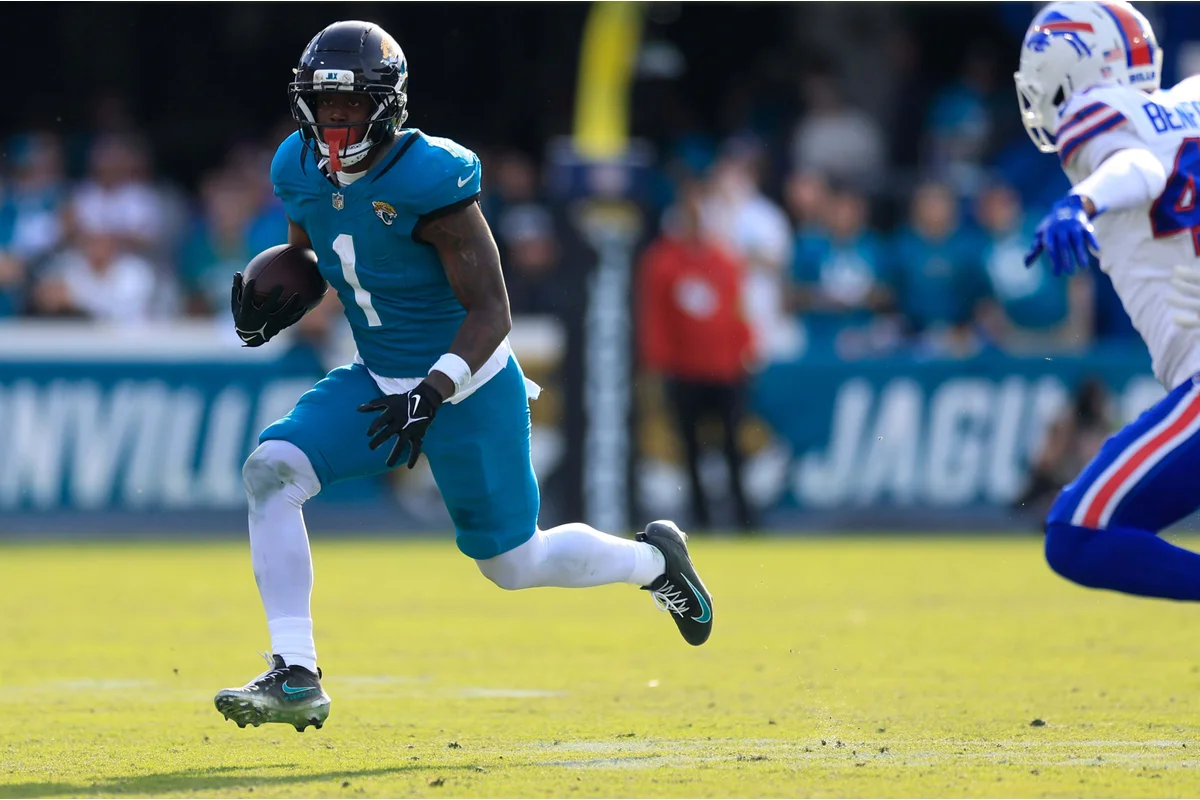
As the NFL offseason approaches, numerous running backs including Travis Etienne are poised for significant changes in 2026. With the free agency window opening soon, teams are preparing to reshape their rosters while eyeing competitive advantages in the pursuit of the Super Bowl champion Seattle Seahawks.
Top-Tier Running Backs Expected to Secure Lucrative Deals
The highest echelon of running backs, featuring Breece Hall, Kenneth Walker III, and Travis Etienne, is projected to command contracts ranging from $10 to $15 million annually. Following Javonte Williams’ recent three-year, $24 million re-signing with Dallas, it sets a strong benchmark for comparable players.
Breece Hall, recently achieving his first 1,000-yard rushing season despite playing for a struggling Jets offense, remains young at 24 years and is noted for his athleticism and explosiveness. The Jets might consider applying the franchise or transition tag to retain him, although other teams could provide a better environment for his talents.
Kenneth Walker III, the current Super Bowl MVP, completed his second 1,000-yard campaign recently. Known for his sporadic bursts of big plays, he has been a vital asset despite some inconsistencies. Teams valuing dynamic upside will likely pursue him aggressively.
Travis Etienne, who just notched his third 1,000-yard rushing season in four years, has maintained his primary role with the Jacksonville Jaguars, defying expectations of losing his starting spot to rookie Bhaysul Tuten. At 27, Etienne is approaching the age where a running back’s production may decline, which could affect his contract length and terms.
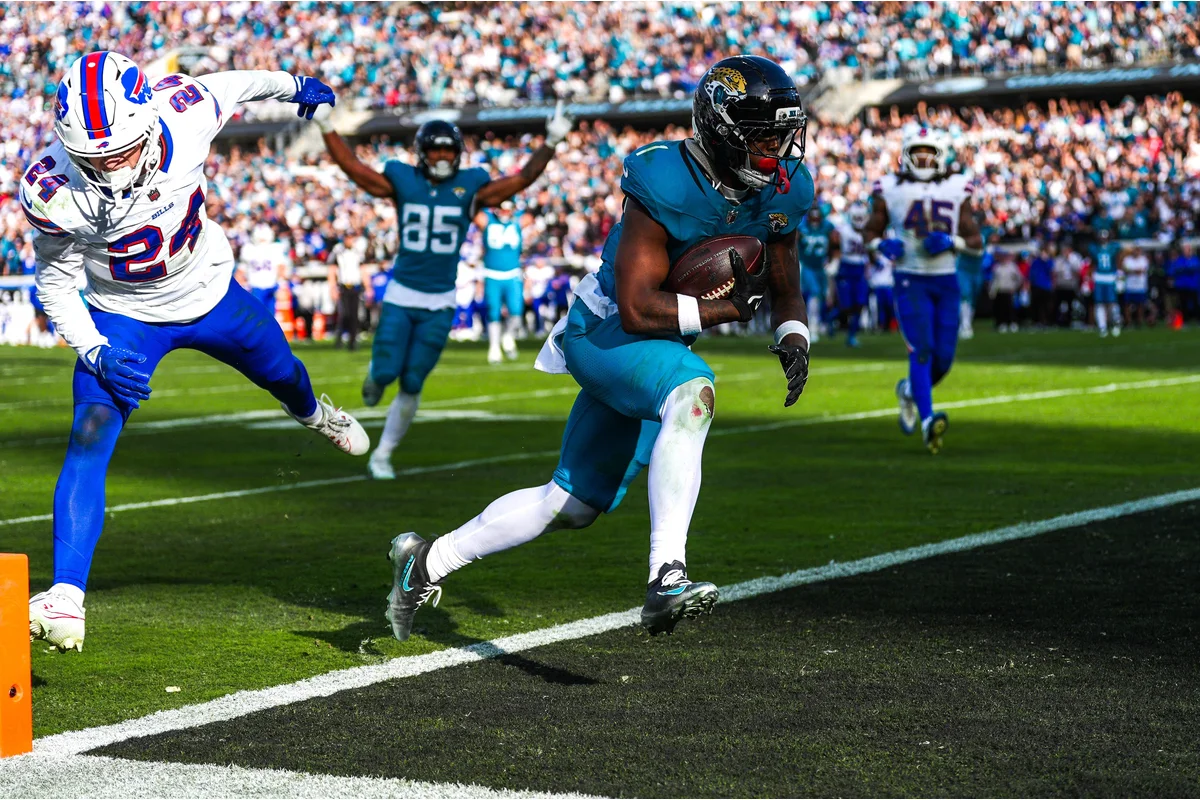
Potential landing spots for these elite backs include the Jets, Seahawks, Jaguars, Chiefs, Texans, Saints, and Cardinals.
Mid-Level Running Backs Filling Offensive Roles in Committees
The second tier consists of players projected to earn between $3 million and $8 million yearly. This group includes Rico Dowdle, Kenneth Gainwell, Tyler Allgeier, Rachaad White, Brian Robinson, and Kimani Vidal (exclusive rights free agent).
Rico Dowdle has displayed back-to-back 1,000-yard seasons with consistent catching ability, though his high production was concentrated in a short October span, and his yards per attempt outside that period dipped below four. Still, his power running style could complement a two-back system.
Kenneth Gainwell improved across multiple rushing and receiving categories in 2025, becoming a key contributor in the Steelers’ offense. His reliability in pass protection and third-down situations makes him valuable for long-term roles.
Tyler Allgeier showed promise as a rookie and has been the secondary running back to Bijan Robinson recently. Although his efficiency suffered last season, his affordable contract and usage patterns suggest upside as a cost-effective option.
Rachaad White primarily serves as a third-down specialist known for his pass-catching and blocking skills. While important for offensive schemes, his limited special teams participation could diminish his appeal with advancing age.
Brian Robinson, usually a backup to Christian McCaffrey, has been a productive reserve with over 700 yards rushing in his initial three seasons. He is unlikely to become a lead back but remains a practical component in a running back group.
Kimani Vidal demonstrated flashes of promise while covering for an injured Omarion Hampton, finishing with 643 rushing yards and receiving snaps in passing situations. The Chargers, holding his exclusive rights, seem willing to keep him within their committee.
Likely fits for these committee backs include the Panthers, Steelers, Buccaneers, Chargers, Texans, Saints, and Cardinals.
Running Backs Facing Recovery and Proving Grounds Amid Injuries
The third tier focuses on running backs with injury concerns who may command contracts between $2 million and $4 million. This group contains JK Dobbins, Najee Harris, Austin Ekeler, and Isiah Pacheco.
JK Dobbins suffered a season-ending foot injury after averaging an impressive 5.0 yards per carry with the Broncos. Despite his on-field production, his injury history suggests that teams might only offer one-year “prove-it” contracts.
Najee Harris tore his Achilles tendon early in the season following previous eye issues that limited his training camp participation. Achilles injuries are notably severe for running backs, especially those already struggling with efficiency, but his status as a former first-round pick is likely to secure him another opportunity.
Austin Ekeler, also recovering from an Achilles tear, is entering his 31st year this offseason and has shown signs of slowing. Still, he remains prized for his dependable role on third downs and positive locker room presence, suggesting that teams looking for role players may find limited but meaningful opportunities for him.
Isiah Pacheco’s performance has declined since a significant leg injury ended his 2024 campaign prematurely. His yards per carry dropped from 4.7 in his first two seasons to 3.8 afterward, with his role reduced behind Kareem Hunt. Some team might see potential in his earlier production if he can regain form.
Backup Running Backs with Varied NFL Futures
The final tier includes backup players likely to earn between $1 million and $2 million annually, such as Michael Carter, Kareem Hunt, Devin Singletary, Nick Chubb, Chris Rodriguez (restricted free agent), Sean Tucker (restricted free agent), Emanuel Wilson (restricted free agent), and Keaton Mitchell (restricted free agent).
Among veterans, most are past their prime with limited effectiveness. Michael Carter stands out as relatively efficient, Kareem Hunt excels in short-yardage situations, and Nick Chubb occasionally convinces fans he can return to peak form despite a noticeable decline last season.
The restricted free agents in this group attract more intrigue. Sean Tucker has shown flashes of high potential when given opportunities in Tampa Bay but has remained behind players like Bucky Irving and Rachaad White on the depth chart. Should the Buccaneers part ways with White, Tucker appears the leading candidate to take on expanded responsibility.
Keaton Mitchell offers notable speed but shares his backfield with Derrick Henry and Justice Hill, limiting his chances to emerge as a lead option. Still, as a restricted free agent, he is expected to remain with his current team and contribute as a speed element within a running back committee.
Anticipated Impact and Roster Moves Heading into Free Agency
The upcoming NFL free agency period is set to bring significant roster turnover, especially among running backs like Travis Etienne and his peers. Top-tier runners are expected to secure multi-million-dollar contracts, while mid-level and backup players will fill specialized roles or prove themselves after injuries.
Teams aiming to enhance their rushing attacks must balance investment in proven stars, committee contributors, and recovering players. How franchises such as the Jets, Seahawks, Jaguars, Chiefs, and Buccaneers navigate these decisions will shape their offensive identities for the upcoming seasons. Meanwhile, players facing injury recoveries must demonstrate their health and effectiveness to maintain their careers.
With the depth of talent and variables surrounding these running backs, the 2026 offseason promises to be a pivotal period in the NFL’s evolving landscape.
