
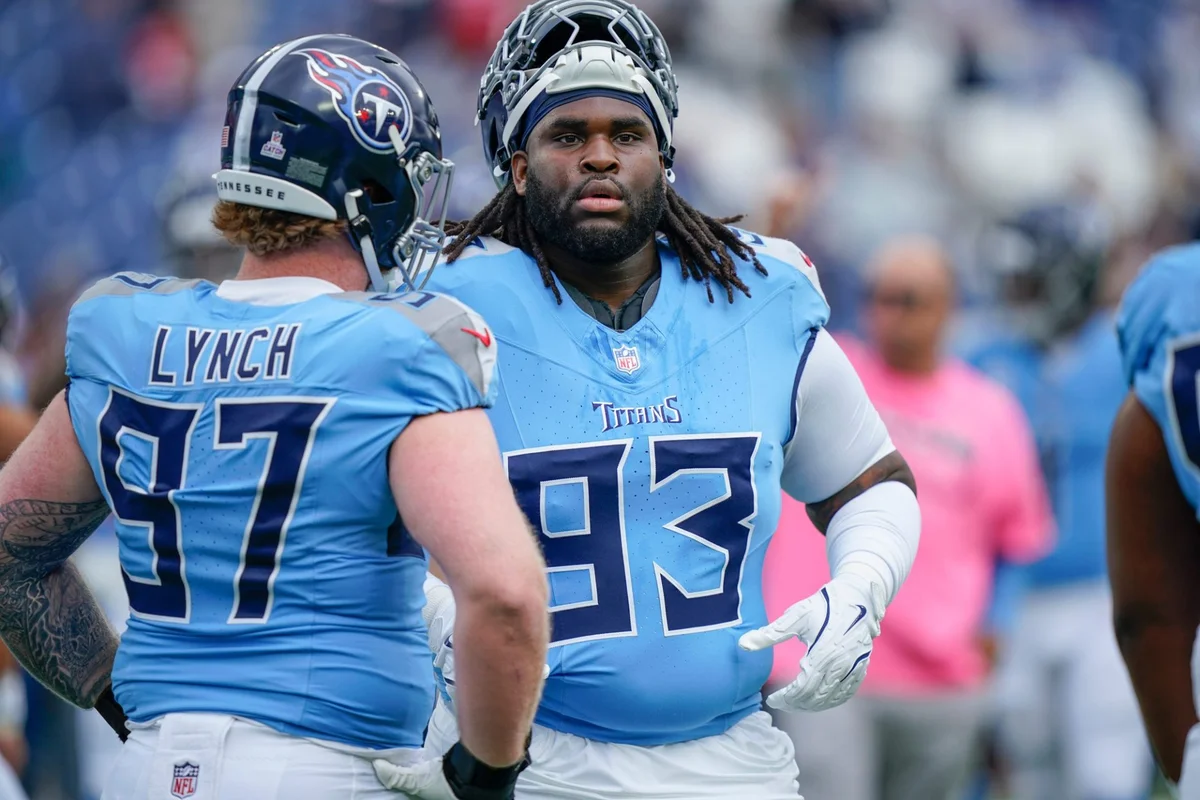
The New York Jets are set to trade edge rusher Jermaine Johnson II to the Tennessee Titans in exchange for nose tackle T’Vondre Sweat, according to CBS Sports NFL insider Jonathan Jones. Although the deal was confirmed recently, it will be officially processed when the new league year begins in March. This move highlights both teams’ attempts to reshape their defensive units ahead of the upcoming season.
Background on Johnson and Sweat’s Careers and Roles
Jermaine Johnson II, selected by the Jets as the 26th overall pick in the 2022 draft under head coach Robert Saleh, reunites with Saleh who was recently hired as the Titans’ head coach. Johnson’s trade follows the Jets’ pattern of moving other prominent first-round defensive players such as cornerback Sauce Gardner to the Indianapolis Colts and defensive lineman Quinnen Williams to the Dallas Cowboys. In his 14 appearances for New York last season, Johnson started 13 games and recorded 43 tackles, six quarterback hits, and three sacks. Over 47 games spanning four seasons, Johnson has amassed 131 tackles, 27 quarterback hits, and 13 sacks, with his peak performance coming in 2023 when he earned Pro Bowl honors after recording 7.5 sacks.
On the other hand, T’Vondre Sweat was a second-round pick by the Titans in 2024 who has shown promise over his initial two seasons, accumulating 85 tackles and three sacks. The Jets, grappling with a defense that allowed the fourth-most rushing yards in the league last year (2,371), view Sweat as a critical addition to bolster their run defense. Sweat’s size, at 6 feet 4 inches and 366 pounds, makes him a formidable presence in the interior defensive line.
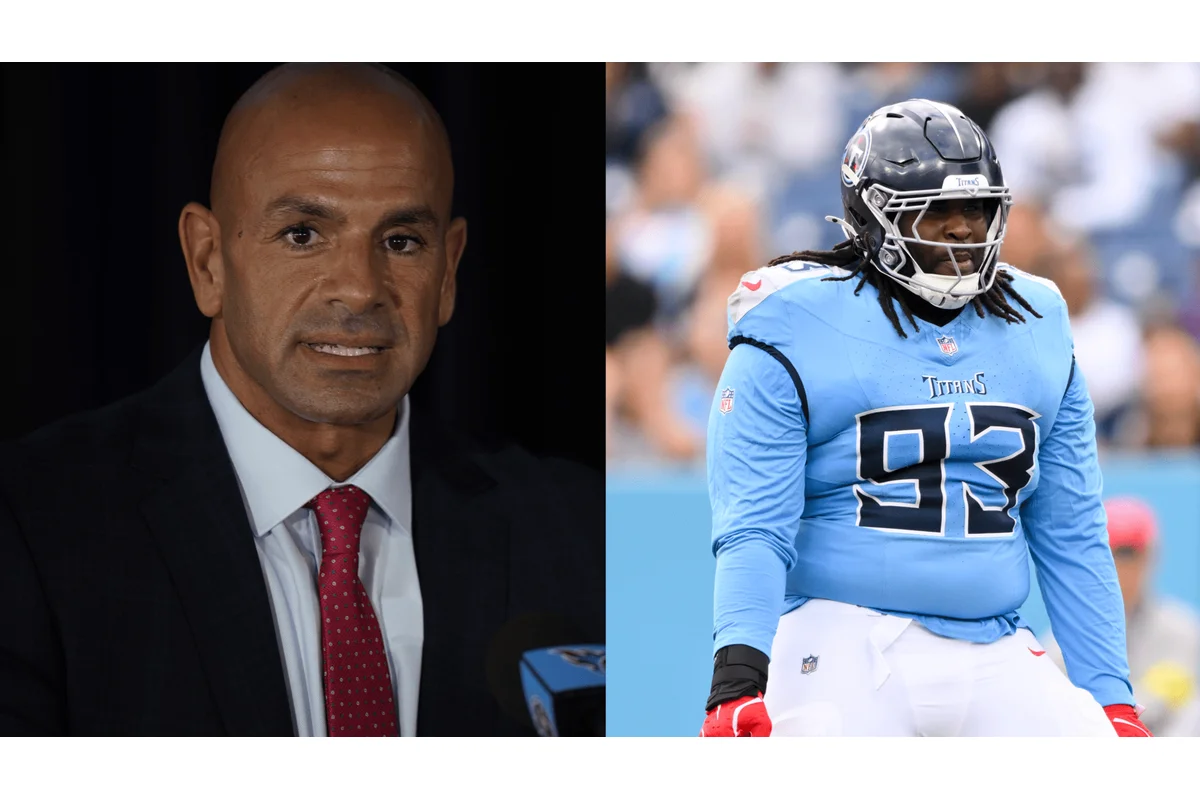
Evaluating the Trade: Jets’ Perspective and Defensive Depth
Analyst Zach Pereles gave the Jets a B+ grade for this trade, emphasizing Sweat’s physicality and efficiency. Sweat is not only massive but also technically skillful; Pro Football Focus ranked him as the fifth-best interior defensive lineman and the fourth-best run defender in the 2025 season. While he lacks the pass-rushing prowess of Titans teammate Jeffery Simmons, Sweat still managed a respectable 9.4% pressure rate and ranked 19th out of 112 interior defenders with a 74.1 pass rush grade from PFF.
Sweat’s playing time has been inconsistent — he participated in two-thirds of the Titans’ snaps as a rookie and just around half last year, additionally missing five games due to an ankle injury. Despite that, New York’s defensive tackle rotation, featuring dependable veteran Harrison Phillips and promising seventh-round pick Jowon Briggs, offers solid support alongside Sweat. This depth addresses a significant weakness in a defense that conceded 46 explosive rushes last season, one of the league’s highest totals.
Three factors make this trade particularly advantageous for New York. Sweat remains on his rookie contract with two years left, compared to Johnson’s single year remaining on his fifth-year option. Sweat is also younger, at 24 years old, versus Johnson’s 27, providing longer-term value. Finally, holding the No. 2 overall pick in the 2026 NFL Draft puts the Jets in a strong position to acquire another EDGE defender complementary to Will McDonald IV, supported by a growing EDGE group that includes Arvell Reese, Rueben Bain, and David Bailey. Combined with additional high draft selections and the existing defensive line, the Jets can ambitiously rebuild both sides of their squad after a challenging season.
What the Trade Means for Tennessee Titans’ Defensive Strategy
The Titans received a B- grade from Pereles, reflecting uncertainty about the short-term impact of this deal. Titans head coach Robert Saleh once remarked on Sweat’s physical abilities, stating,
“[Sweat’s] a big man, and he has much faster feet that people realize. Is it going to be easy for him? It’s not, it’s a lot of work and it is physically demanding to play d-line in our system.”
This underscores the challenges Sweat may face adapting fully to Tennessee’s defensive schemes.
Tennessee’s pressing need is sustained pass rush, an area weakened by the loss of key players. While Jeffery Simmons delivered 11 sacks last season, the next top contributors managed five or fewer sacks. Jihad Ward, who had five sacks, is entering free agency, and Dre’Mont Jones, another significant pass rusher, was traded midseason to the Baltimore Ravens. The Titans are betting on Johnson to reinvigorate their ability to pressure quarterbacks, although his 2024 season was hampered by an Achilles injury, followed by a subpar 2025 performance, where his 9.5% pressure rate placed him near the bottom half of frequent pass rushers.
Another point against Tennessee is that Johnson is in the final year of his rookie contract’s fifth-year option, while Sweat still has two years remaining, which slightly diminishes Tennessee’s control over defensive line personnel in the near future.
Titans’ Roster Moves and Future Plans amid Cap Space
Saleh’s arrival has already triggered a roster overhaul, including the release of starting center Lloyd Cushenberry and safety Xavier Woods just prior to this trade. Tennessee currently holds nearly $100 million in effective salary cap space, the highest in the NFL, enabling them to be aggressive in free agency or the draft. Their No. 4 overall pick provides flexibility to address defensive needs, whether through acquiring a pass rusher, adding to their secondary, or supporting quarterback Cam Ward’s offense.
Pairing Simmons with a disruptive edge rusher is a clear tactical move by the Titans, and if Johnson can regain his pre-injury form, this trade could represent a significant boost beyond initial expectations.
Looking Ahead: Implications for Both Teams
This trade between the Jets and Titans marks an important moment for each franchise’s defensive rebuild. The Jets add a younger, powerful run-stuffer who fits their need to improve against the rush while preserving salary cap flexibility and draft capital. Meanwhile, the Titans acquire a former Pro Bowler who could reenergize their pass rush if he recovers from injury and adapts fully to their defensive system.
As both teams merge fresh talent with strategic planning, the coming months and seasons will reveal how this swap affects their competitive trajectories. New York’s growing defensive line depth and abundance of draft picks signal eagerness to rebound from a difficult season. Tennessee’s large cap space paired with focus on pressuring quarterbacks and shoring up defense suggests further roster moves may be imminent as Saleh shapes his team.
In a rare player-for-player trade in the NFL, the Jets trade Jermaine Johnson to the Titans and receive DT T'Vondre Sweat, source says.
— Jonathan Jones (@jjones9) February 26, 2026
