
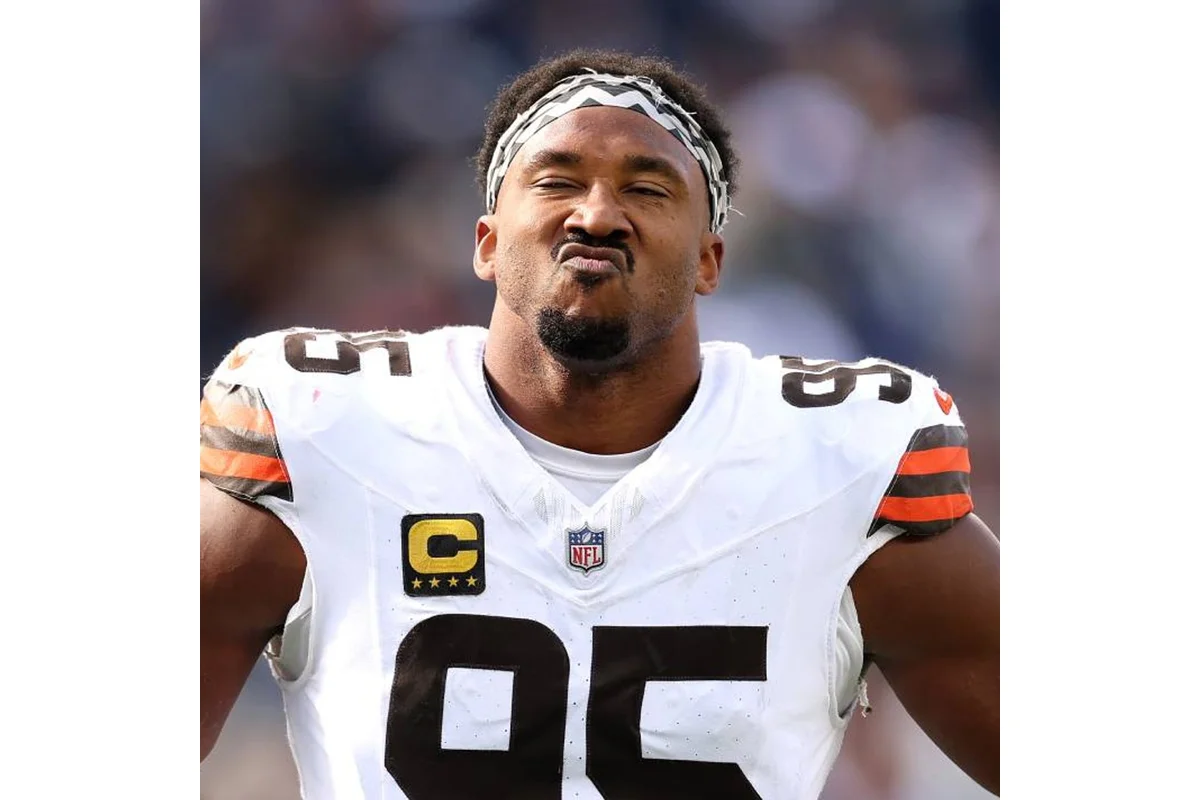
After a dismal three-win season that underscored the Cleveland Browns’ failure to progress, pressure mounted to rethink the team’s direction. The looming question this offseason centers on the Myles Garrett trade discussion, as the Browns confront the challenge of managing their star defensive end amid considerable internal turmoil.
Despite Myles Garrett’s public push for a trade and the severe setback to quarterback Deshaun Watson’s 2025 season due to a reruptured Achilles tendon, Browns owner Jimmy Haslam opted to retain Garrett, rewarding him with a record-setting contract extension. The extension made Garrett the highest-paid non-quarterback in NFL history, but the team’s struggles at quarterback persisted, resulting in a disappointing 5-12 finish.
Why the Browns Remained Committed to Myles Garrett
This past offseason, while the NFL scouting combine in Indianapolis typically stimulates trade rumors, talk concerning Garrett has been notably muted since his four-year, $160 million extension signed last March. Insider Dan Graziano noted on ESPN’s Get Up that the Browns appear unlikely to pursue a Garrett trade in the current offseason.
“They could,” Graziano said.
“The extension that they did last offseason doesn’t prohibit that in any way for the acquiring team, doesn’t crush the Browns on dead money. But they’ve never indicated any interest in doing it.”
While some analysts believe the Browns might entertain trade offers, Haslam’s apparent refusal to part with a future Hall of Famer persists. Former NFL GM Mike Tannenbaum suggested on the same show that the Browns simply might not have received an offer tempting enough to accept.

Tannenbaum proposed a hypothetical trade with the Detroit Lions involving Garrett being exchanged for two first-round picks plus 24-year-old wide receiver Jameson Williams. ESPN analysts, including host Mike Greenberg and former executive Louis Riddick, agreed such a deal would be appealing in theory.
The Browns Have Probably Missed Their Optimal Opportunity to Trade Garrett
The reality, however, as Louis Riddick explained, is harsher: if the Browns were going to trade Garrett, it should have happened last year when the demand was strongest. Cleveland’s salary cap situation entering 2026 is precarious, requiring significant contract restructures for players like Deshaun Watson and cornerback Denzel Ward to create space for new acquisitions.
Trading Garrett at this time would bring additional financial burdens. A move before free agency in March would incur roughly $41 million in dead money against the cap, which is $17.4 million more than his current $23.6 million cap hit. Although trades executed after June 1 can split dead cap charges across two years, the Browns would face diminished trade value post-draft due to roster and budget constraints in the summer.
Riddick stated, “I understand why they didn’t listen. I understand why you’re reluctant to do this kind of thing, but that’s usually because you’re just not being honest about where you’re at in terms of your own program building, and where your organization is. And that’s what the Browns are doing. That’s what teams always do when you’re talking about premium players like this. That’s why they don’t like entertaining this kind of thing.
But hey, they’re still where they’re at. They’re still not anywhere closer to contending in their division or in the conference overall. And now the contract is even more prohibitive. They’re going to have to take a massive hit in order to trade this young man. They’re in a bad spot. I don’t see them trading him. I don’t think it’s going to happen. It should have happened a year ago.”
The Strategic Choices Behind Garrett’s Recent Contract
Last spring, the Browns decided to secure Garrett for the long term rather than trade him, aiming to build their team around a cornerstone defensive player. General manager Andrew Berry succeeded in not only retaining Garrett but also acquiring an additional first-round pick via a trade with the Jacksonville Jaguars. The Browns appear focused on accumulating future draft assets to bolster the roster.
Nevertheless, the persistent absence of a reliable franchise quarterback remains a glaring weakness that overshadows these moves. Without addressing that vacancy, Cleveland’s chances of competing meaningfully remain slim, regardless of their defensive assets or draft capital.
The Disparity Between Trade Speculation and Reality
The speculative trade scenarios swapping Garrett for draft picks or young players like Jameson Williams fail to move the needle substantially, reflecting deeper issues within the franchise rather than genuine opportunities to pivot. Analysts’ enthusiasm for possible trades contrasts sharply with the limited practical options available to Cleveland, which continues to wrestle with a challenging cap situation and organizational indecision.
This ongoing predicament leaves the Browns in a precarious position, with their most valuable defensive talent locked into an expensive contract and limited flexibility to reshape their roster effectively. Consequently, the Myles Garrett trade discussion highlights not only individual player negotiations but also broader franchise struggles that remain unresolved heading into the new NFL year.
Should the Browns be listening to trade offers for Myles Garrett? 🤔
—@RealTannenbaum reveals an offer the Browns shouldn’t refuse… pic.twitter.com/U8epBMdLdR
— Get Up (@GetUpESPN) February 27, 2026
